GitHub Repo Confusion Campaign Injected Malware Into Forked Repositories
Supply Chain Risk · 8 sources · Updated 5mo ago · First seen May 25, 2026

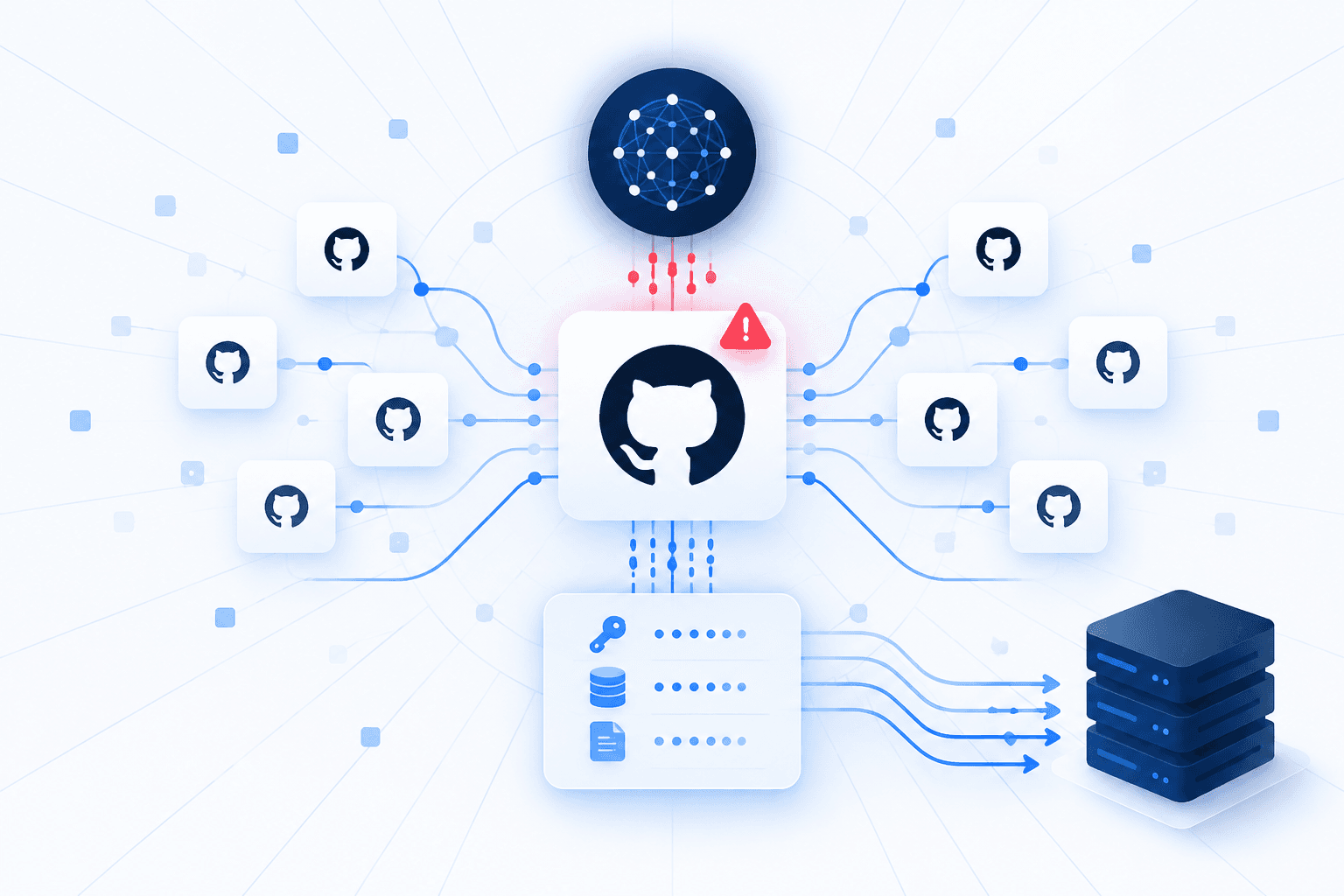
GitHub has been hit by a large-scale repo confusion campaign in which attackers fork legitimate projects, keep names and appearances close to the originals, and inject heavily obfuscated malicious code intended to steal passwords, cryptocurrency wallets, and other developer secrets. Apiiro reported that the operation was largely automated and tied to more than 100,000 infected repositories, while Ars Technica said the broader attack generated millions of malicious repositories and exploited the difficulty users face distinguishing authentic projects from poisoned forks.
Multiple GitHub repositories later carried security issues warning that malicious code had been injected via compromised accounts, including projects such as django-restful-admin, ImportNURBS, siriraj-assist, ood_coverage, issued, and bottom-up-attention-vqa. The notices indicate the campaign was not limited to fake lookalike repos but also reached legitimate codebases through account compromise, extending the supply-chain risk to developers who clone, fork, or build from affected repositories while GitHub continues removing abusive content through reporting, manual review, and machine-learning-based detection.
Why it matters
Impact assessment
This campaign affects software developers, engineering teams, CI/CD environments, and organizations that clone, fork, build, or trust code from GitHub repositories. The impact is potentially severe because the malicious code is designed to steal passwords, cryptocurrency wallets, and developer secrets, creating downstream risk of source-code compromise, credential theft, and broader software supply-chain intrusion.
The scope is broad rather than narrowly targeted. Reporting ties the activity to more than 100,000 infected repositories, with broader estimates in the millions of malicious repositories or forks, and there are indications that both fake lookalike repositories and legitimate repositories accessed through compromised accounts were involved.
Supporting details
- Affected populations:
- Developers cloning or forking GitHub repositories
- Organizations relying on open-source code from GitHub
- Build systems and CI runners that automatically fetch repository content
- Maintainers of repositories whose accounts may have been compromised
- Severity drivers:
- Theft of passwords and developer secrets can enable follow-on access to source control, cloud, package registries, and production systems
- Malicious code in trusted repositories creates supply-chain exposure beyond the initial victim
- Reputational and operational damage is likely if poisoned code is redistributed internally or to customers
- Scope indicators:
- Apiiro reported impact to more than 100,000 repositories
- Ars Technica reported millions of malicious repositories/forks generated in the broader campaign
- GitHub did not dispute Apiiro’s scale estimates in cited reporting
- Known in-the-wild activity:
- Yes; this is described as an ongoing campaign on GitHub
- Security issue notices on multiple repositories stated malicious code had been injected via compromised accounts