AgentTesla v3 Phishing Chain Used Five-Stage JavaScript Loader and SMTP Exfiltration
Malware Intelligence · 5 sources · Updated 5mo ago · First seen Apr 25, 2026

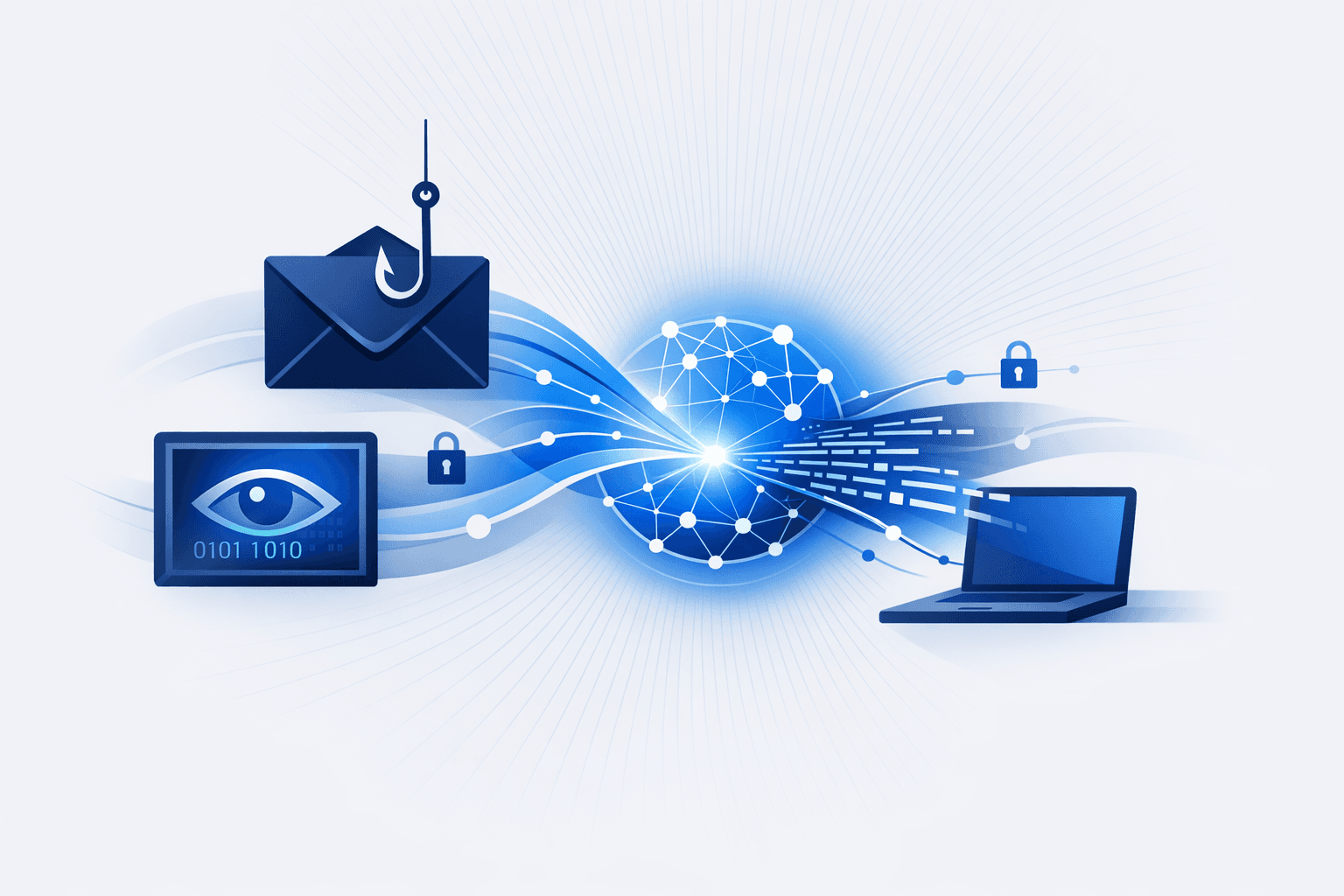
Breakglass Intelligence reported a credential-stealing campaign delivering AgentTesla v3 through spear-phishing emails masquerading as purchase orders or request-for-quote documents. The infection chain used a heavily obfuscated JavaScript or JScript attachment that launched XOR-decrypted PowerShell, reflectively loaded a .NET component identified as DEV.dll, and performed process hollowing into aspnet_compiler.exe to run the final payload. The malware established persistence through %APPDATA%\GLOZVJ\GLOZVJ.exe, a Startup shortcut, and an HKCU\Run value named GLOZVJ, while a watchdog loop re-injected the payload if the host process was terminated.
The payload harvested credentials and data from more than 40 browsers, over 20 email clients, FTP and VPN software, Discord tokens, Windows Credential Manager, clipboard contents, screenshots, and keystrokes, then exfiltrated the data over SMTP through mail.cottondreams.org on a Ukrainian VPS at 31.222.235.198. Reports said the server used Exim, Dovecot, nginx, OpenSSH, ProFTPD, and FASTPANEL, and that plaintext SMTP credentials and weak certificate hygiene exposed poor operator security. Breakglass linked the infrastructure to activity dating back to domain registration in March 2024 and related samples seen since January 2025, assessing the operation as a persistent, financially motivated AgentTesla MaaS campaign with possible overlap with West African BEC-style tradecraft.
Why it matters
Impact assessment
This campaign targets Windows users across business environments through spear-phishing emails themed as purchase orders or request-for-quote documents. Organizations with users handling procurement, sales, finance, or inbox-based external communications are most exposed because the payload steals credentials and sensitive data from browsers, email clients, FTP tools, VPN software, Discord, and Windows Credential Manager.
The impact is high for affected endpoints because AgentTesla v3 enables credential theft, session/token theft, keylogging, clipboard capture, and screenshot collection, creating immediate risk of account compromise, business email compromise, follow-on intrusion, and data loss. The operation appears persistent and financially motivated rather than narrowly targeted, with related infrastructure active since at least March 2024 and related samples observed since January 2025.
Supporting details
- Delivery method: spear-phishing emails with fake purchase order and RFQ lures.
- Affected population: Windows users executing JavaScript or JScript attachments via Windows Script Host.
- Data at risk: browser credentials, email client credentials, FTP credentials, VPN credentials, Discord tokens, Windows Credential Manager secrets, clipboard contents, screenshots, and keystrokes.
- Operational impact: stolen credentials can enable mailbox takeover, VPN access, lateral movement, fraud, and BEC-style abuse.
- Scope: recurring MaaS-style campaign with multiple related samples and long-lived infrastructure, indicating broader reuse beyond a single victim set.
- Exploitation status: active campaign observed in the wild by Breakglass Intelligence in March 2026.
- Actor assessment: financially motivated AgentTesla MaaS operator or subscriber, with possible overlap with West African BEC-style tradecraft.