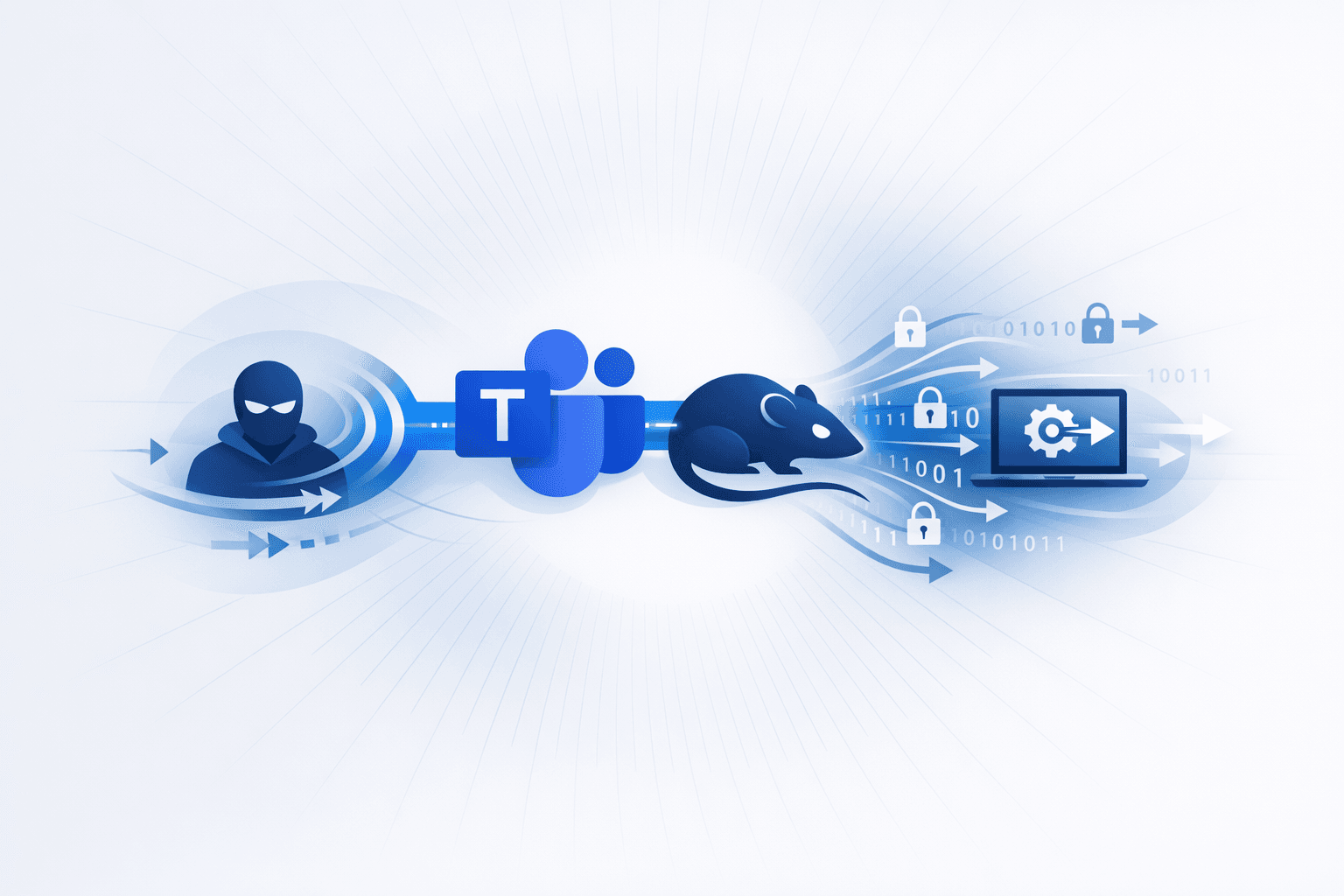
Spoofed GitHub IT Tools Spread EtherRAT via Ethereum-Based C2
Malware Intelligence · 6 sources · Updated 5mo ago · First seen Apr 9, 2026

Researchers reported a stealthy malware campaign targeting enterprise administrators, DevOps engineers, and security analysts by impersonating trusted administrative and developer utilities in malicious MSI installers. The operation used SEO poisoning to push victims toward spoofed tool listings and a dual-stage GitHub distribution chain in which benign-looking facade repositories redirected users to secondary repositories hosting the real payload, enabling operators to rotate malware quickly while preserving search credibility. At least 44 GitHub facade repositories spoofing IT tools were observed between December 2025 and early April 2026.
The payload, EtherRAT, is a multi-stage Node.js remote access trojan that downloads Node.js at runtime, establishes registry-based persistence, and executes through conhost.exe with a --headless argument to reduce visibility. Researchers said the malware uses layered AES-256-CBC encryption and retrieves its live command-and-control endpoint through public Ethereum RPC services and a hardcoded smart contract, effectively using the blockchain as a dead-drop resolver that complicates domain and IP takedowns. Reporting linked the campaign to prior EtherRAT and EtherHiding activity and said the tradecraft overlaps with malware previously associated with Lazarus Group, while also noting code similarities to Tsundere, a malware family tied in other research to MuddyWater (APT34).
Why it matters
Impact assessment
EtherRAT is targeting high-privilege enterprise users, especially administrators, DevOps engineers, security analysts, and network professionals who download niche IT utilities. The impact is severe because initial compromise of an admin workstation can lead to credential theft, lateral movement, enterprise-wide ransomware deployment, and large-scale data exfiltration.
The exposure is broader than a single targeted intrusion because the campaign used SEO poisoning and at least 44 spoofed GitHub facade repositories to reach victims searching for legitimate tools. There is confirmed real-world exploitation: investigators documented an April 2026 intrusion that progressed from a trojanized Sysinternals RAMMap MSI to domain-wide deployment of The Gentlemen ransomware.
Affected populations and products
- Enterprise administrators, DevOps engineers, security analysts, and network professionals
- Windows environments where users download administrative tools from search results or GitHub
- Spoofed tools included RAMMap, Tftpd64, PsExec, AzCopy, Sysmon, LAPS, Kusto Explorer, ProcDump, BgInfo, Autoruns, TCPView, Process Monitor, Process Explorer, WinDbg, Windows ADK, RSAT, Dameware, SecureCRT, ScreenConnect Client, Bitvise SSH Client, TeraTerm, AppLocker, PRTG Network Monitor, Beyond Compare, BarTender, VMware Tools, and others
Severity and business consequences
- High risk of enterprise compromise from a single privileged endpoint infection
- Confirmed outcomes included credential theft, Kerberoasting, AD reconnaissance, lateral movement, data exfiltration, and ransomware
- Operational disruption can be domain-wide due to malicious GPO deployment and server encryption
- Financial and reputational impact is high due to exfiltration to cloud storage and ransomware execution
Scope and exploitation status
- Campaign active from at least December 2025 through April 2026, with some reporting citing facade activity dating to December 2024
- Distribution scaled through SEO poisoning on Bing, Yahoo, DuckDuckGo, and Yandex
- Confirmed intrusion in April 2026 linked to the campaign
- Researchers linked tradecraft to prior EtherRAT/EtherHiding activity and noted overlaps with malware associated in other reporting with Lazarus Group and MuddyWater/APT34, but attribution remains unconfirmed in the provided reporting