MCP Security Gaps Expose AI Agents to Prompt Injection and Supply-Chain Abuse
Emerging Technology Risk · 18 sources · Updated 4mo ago · First seen Mar 19, 2026
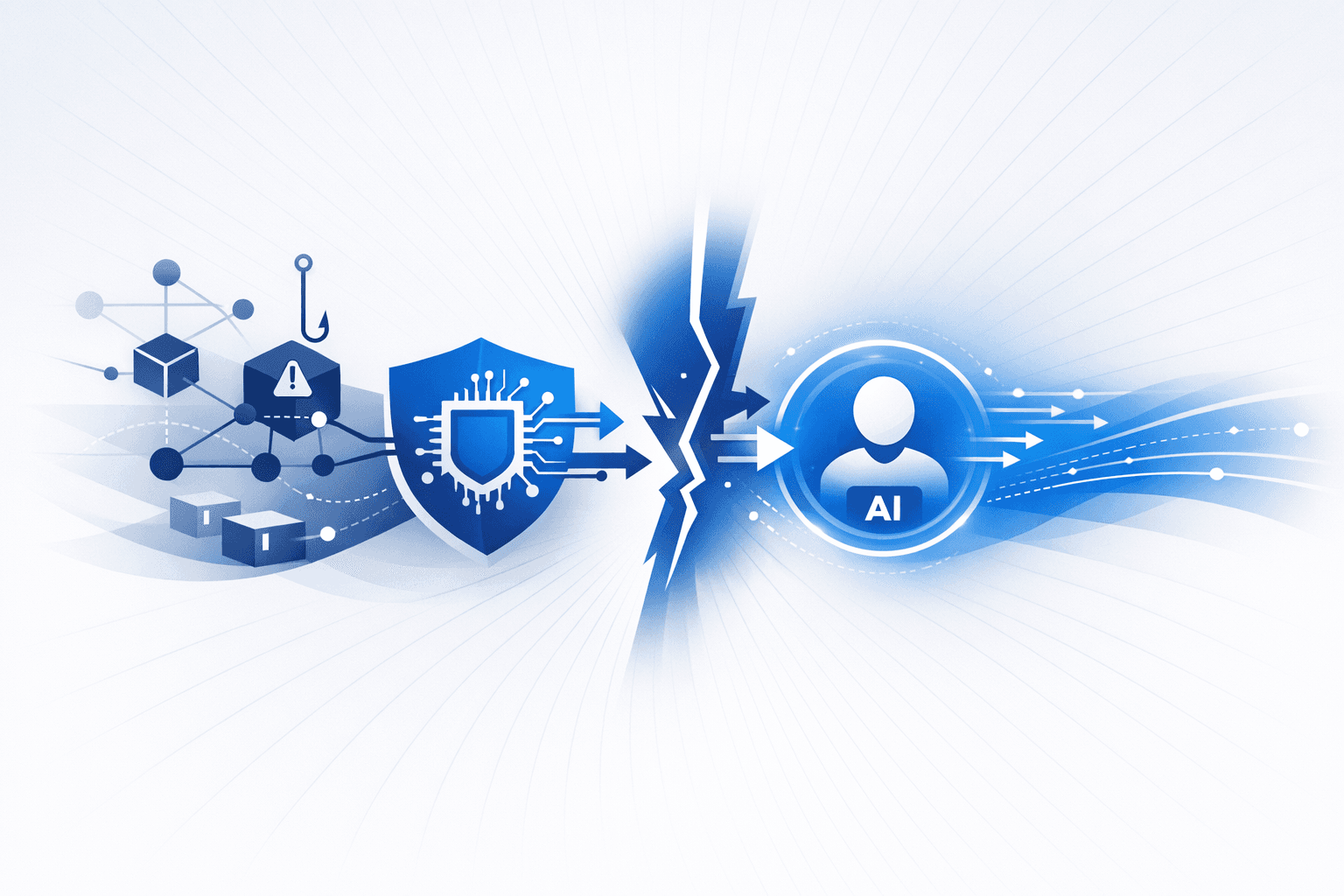
Security reporting and research warned that the Model Context Protocol (MCP) has opened a new attack surface for enterprise AI agents, allowing malicious content delivered through context windows, documentation, support tickets, GitHub issues, or untrusted MCP servers to trigger unauthorized actions without compromising the underlying model. Reported examples included WhatsApp data exfiltration, leakage of private repository data, abuse of a Supabase Cursor agent through crafted support tickets, and CVE-2025-6514, a high-severity OS command-injection flaw that could enable remote code execution via untrusted MCP servers.
A separate proof-of-concept targeting Andrew Ng’s Context Hub showed how poisoned API documentation served through an MCP server could silently steer coding agents into adding fake or malicious dependencies to generated projects, highlighting a software supply-chain risk in community-authored documentation pipelines. Across the coverage, researchers and vendors said perimeter controls and AI gateways are not enough because attackers or insiders can interact directly with MCP services; they urged organizations to treat MCP connectivity as privileged access, sanitize all context inputs, enforce policy and approval checks at the MCP server, restrict agent network and data access, and adopt zero-trust execution controls with auditable action receipts.
Why it matters
Impact assessment
MCP-connected enterprise AI agents are exposed to a high-impact trust-boundary and supply-chain risk that can drive unauthorized actions, sensitive data exfiltration, credential theft, and in some cases remote code execution. The affected population includes organizations using Microsoft 365 Copilot, Copilot Studio, Azure AI Foundry, Cursor-like coding agents, and any internal or third-party MCP servers, with exposure spanning finance, software development, cloud operations, and regulated data environments.
Supporting details
- Scope is broad, not niche: MCP is described as a de facto standard and rapidly growing integration layer for enterprise AI agents.
- Affected products and environments named in the reporting:
- Microsoft 365 Copilot
- Copilot Studio
- Azure AI Foundry
- Cursor editor and coding agents
- GitHub MCP server integrations
- Third-party MCP servers and community MCP tooling
- Impact types documented across references:
- Sensitive business data exfiltration, including invoice records and private repository contents
- Credential theft, including AWS credentials and Kubernetes configuration data
- Unauthorized external sharing and hidden outbound transmissions
- Potential software supply-chain compromise through insertion of fake or malicious dependencies
- Potential remote code execution via OS command injection
- Operational and reputational damage from agent misuse under legitimate identities
- Known exploitation and demonstrations in the wild or realistic proof-of-concept scenarios include:
- Microsoft’s poisoned tool-description exfiltration scenario against enterprise agents
- Invariant Labs’ 2025 tool-poisoning proof of concept that exfiltrated a private SSH key from Cursor
- GitHub issue-based agent hijacking that leaked private repository data
- WhatsApp history exposure via a malicious MCP server rug-pull demonstration
- Supabase Cursor agent abuse through crafted support tickets
- Mitiga’s fake interview repository attack that stole cloud credentials and performed reconnaissance in under two minutes
- Severity is elevated by the fact that actions can appear legitimate because agents operate with approved tools, valid user permissions, and normal API paths.
- Exposure is especially serious where agents have write access, terminal access, cloud credentials, business-system access, or autonomous multi-step execution enabled.