Model Context Protocol (MCP) Security Risks From Untrusted Tool Servers and Verifiability Gaps
Emerging Technology Risk · 9 sources · Updated 5mo ago · First seen Feb 17, 2026
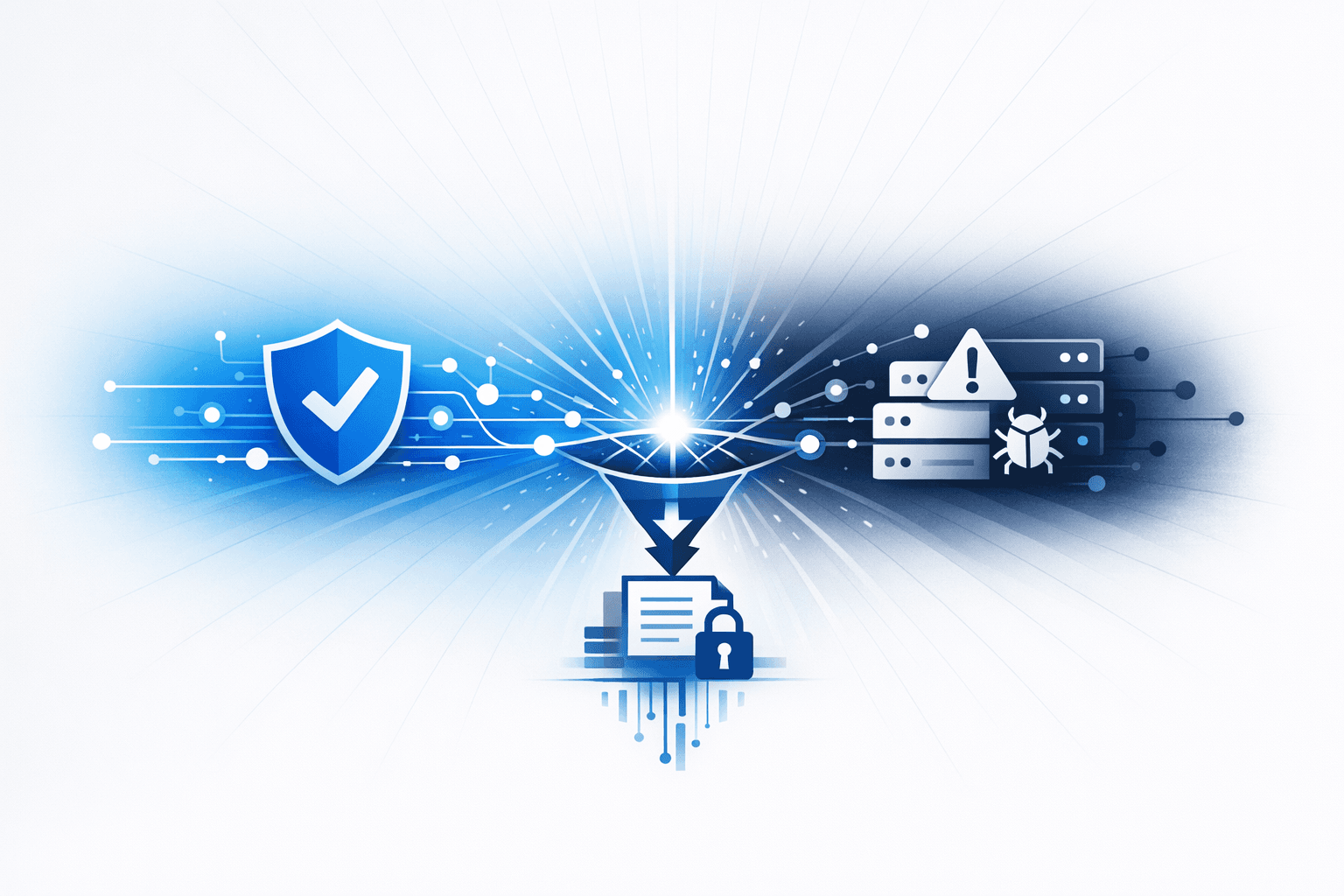
Security researchers warned that the Model Context Protocol (MCP)—used to let AI assistants connect to local tools and enterprise SaaS data—creates a significant attack surface when organizations install or authorize MCP “servers” and tool integrations. Praetorian highlighted that locally hosted MCP servers run with the user’s privileges and can therefore execute arbitrary commands, access local files, install malware, and exfiltrate data while masquerading as legitimate productivity tooling; it also described “MCP server chaining,” where a malicious local MCP server abuses data and actions flowing through a trusted remote integration (e.g., Slack/Google Drive) without needing to compromise the official provider.
Separately, Gopher Security emphasized a trust and auditability gap in MCP deployments: standard logging for remote tool execution can be incomplete or tampered with, and organizations often cannot prove what code ran or what parameters were used inside a remote “black box” execution environment. The post described “puppet”/interception-style scenarios where an attacker could alter an MCP request (e.g., changing tool-call parameters to trigger data exfiltration or unauthorized actions) while returning plausible “success” responses, and proposed cryptographic approaches (e.g., zero-knowledge proofs) to make MCP tool execution verifiable rather than relying on mutable logs.
Why it matters
Impact assessment
MCP deployments create a meaningful new enterprise attack surface for organizations using AI assistants, desktop LLM clients, and agent-to-tool integrations. The highest-risk populations are enterprises exposing MCP servers to external agents, users installing local MCP servers, and organizations connecting MCP to SaaS platforms such as Slack, Google Drive, Notion, Atlassian, databases, and internal web applications.
Impact can include local code execution with user privileges, credential and file theft, unauthorized SaaS actions, data exfiltration, persistence, and loss of audit integrity. Exposure is potentially widespread because MCP is being adopted as a general integration layer for AI tooling, but exploitation paths vary from opportunistic supply-chain abuse and exposed-server probing to targeted abuse of trusted enterprise integrations.
Known exploitation in the wild is not established in the provided material, but multiple sources describe practical proof-of-concept abuse and active attacker interest. The story indicates persistent attacks against MCP environments, direct probing of exposed MCP servers, and realistic attack chains involving poisoned tools, server chaining, and request tampering.
Affected entities and environments
- Enterprises deploying MCP servers for external agent consumption
- Desktop AI clients supporting third-party MCP servers, including OmniChat Desktop and Claude Desktop
- Organizations integrating MCP with SaaS and collaboration platforms
- Regulated sectors called out for auditability concerns: healthcare and finance
- Web applications exposing administrative or data-access functionality through MCP
Business and operational consequences
- Data loss through exfiltration of local files, credentials, email addresses, and enterprise SaaS data
- Operational disruption through unauthorized tool execution, excessive resource consumption, and possible destructive actions
- Financial and reputational damage from unauthorized transactions, data exposure, and weak audit defensibility
- Compliance risk where organizations cannot prove what remote MCP tools executed or with which parameters
Scope and exposure characteristics
- Widespread architectural exposure for organizations adopting MCP as an AI integration standard
- Targeted abuse possible through poisoned tool metadata, OAuth-connected enterprise tools, and lateral movement via privileged MCP workflows
- Supply-chain exposure through dynamic package retrieval for MCP server deployment
- Direct internet-facing exposure where MCP servers are reachable like APIs or web application interfaces