Mallory
← Back to News
ransomware-group-operationlateral-movement-methodpersistence-methodendpoint-security-bypass

Warlock Ransomware Expands SharePoint Intrusions With Stealthier Post-Exploitation

Threat Actor Intelligence · 2 sources · Updated 5mo ago · First seen Mar 17, 2026
Warlock Ransomware Expands SharePoint Intrusions With Stealthier Post-Exploitation

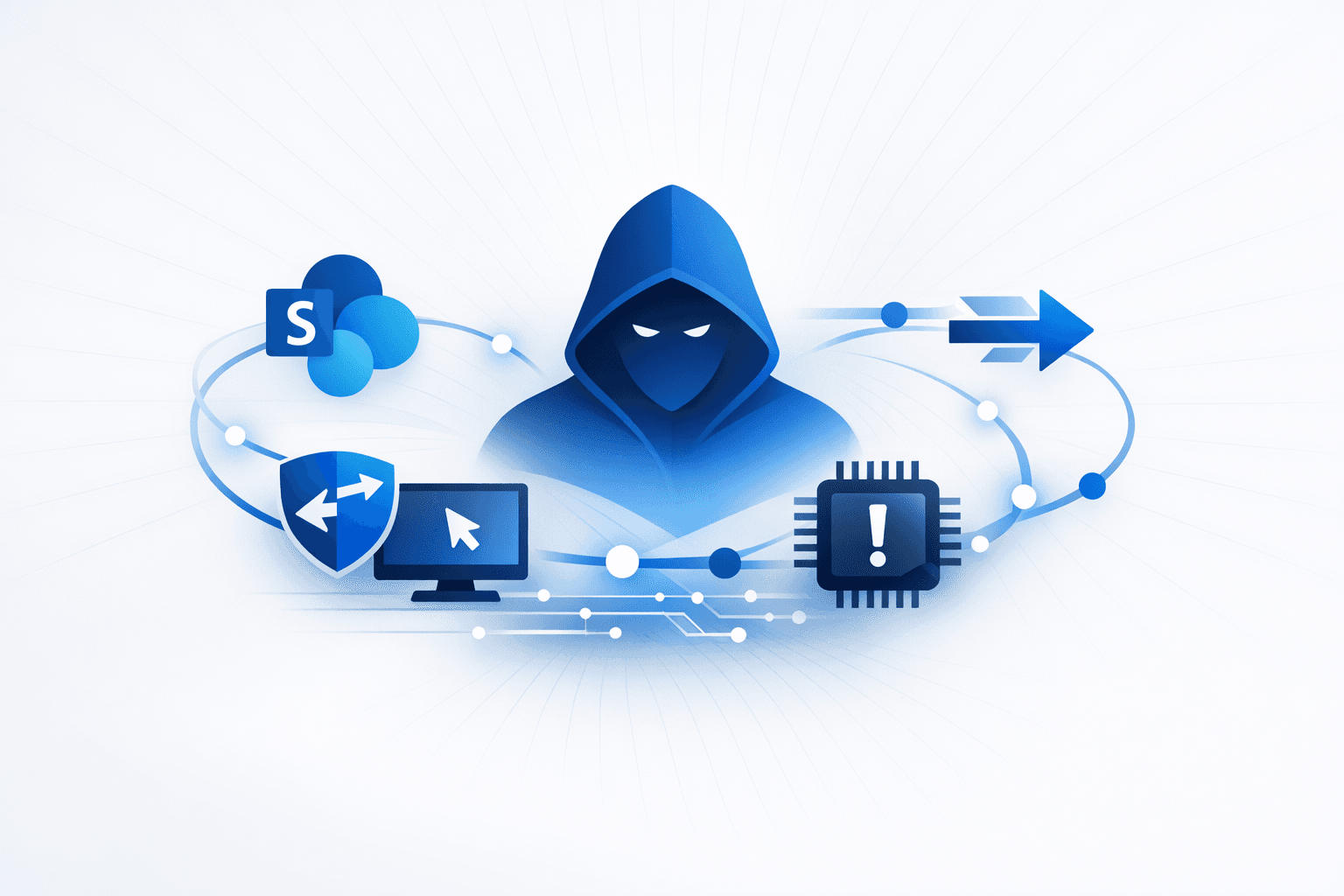
Warlock ransomware operators have continued exploiting unpatched Microsoft SharePoint servers, but recent intrusions show a more mature post-exploitation playbook focused on persistence, lateral movement, and evasion after initial access. Trend Micro reported the group is now using a bring your own vulnerable driver (BYOVD) technique involving the Nsec driver, alongside tools such as TightVNC and the Yuze reverse proxy, to move more quietly across victim networks and reduce the chance of detection. The activity has affected organizations in the technology, manufacturing, and government sectors, with observed victims in the U.S., Germany, and Russia.

Incident details show the operators escalating to full domain compromise by abusing credentials, resetting the built-in Administrator account, and adding users to the Domain Administrators group. They used PsExec, PowerShell Remoting, MSI-based deployment of TightVNC, and RDP-enabling utilities to maintain remote access and spread laterally, while web shells, tunneling, and other remote-control mechanisms supported persistence and command-and-control. The reporting indicates Warlock has kept its SharePoint exploitation path consistent, but has significantly strengthened the actions that follow compromise, giving defenders a clearer set of behaviors to hunt for beyond the initial server exploit.

Why it matters

Impact assessment

Warlock is targeting organizations running unpatched Internet-facing Microsoft SharePoint, with observed victimology concentrated in technology, manufacturing, and government organizations in the United States, Germany, and Russia. The impact is severe because the operators are progressing from SharePoint compromise to full domain compromise, enterprise-wide ransomware deployment, security-tool disablement, and data exfiltration.

This is a targeted but repeatable intrusion pattern rather than isolated opportunistic noise. Trend Micro documented a January 2026 case where the actors remained in the environment for 15 days before ransomware execution, indicating deliberate hands-on-keyboard operations and a high likelihood of major operational disruption, data loss, financial impact, and reputational damage.

Supporting facts

  • Affected product: on-premises Microsoft SharePoint, especially unpatched Internet-facing servers.
  • Affected sectors: technology, manufacturing, government.
  • Observed geographies: U.S., Germany, Russia.
  • Threat actor names: Warlock, also tracked as Water Manaul.
  • Known impact chain: initial SharePoint compromise, credential abuse, domain controller access, Administrator password reset, Domain Administrators group modification, ransomware deployment.
  • Known incidents in the wild: yes; Trend Micro reported observed intrusions and a January 2026 attack culminating in ransomware.
  • Business consequences observed or implied:
    • Enterprise-wide encryption via GPO-driven startup scripts
    • Data exfiltration to attacker-controlled S3 infrastructure
    • Security control suppression through kernel-level process termination
    • Persistent remote access through multiple redundant channels
    • Increased dwell time and stealth, raising recovery cost and investigation complexity
Know this adversaryTTPs, infrastructure, and targeting history in one profile.
Get the profile
Event timeline

How this story unfolded

Events from the most recent confirmed update back to the earliest known activity.

8 events · Dec 31, 2025 – Mar 16, 2026
  1. Mar 16, 20269mo ago

    Trend Micro publishes analysis of Warlock’s enhanced tradecraft

    Trend Micro disclosed details of the January 2026 intrusion, describing Warlock’s improved post-exploitation methods, expanded toolset, and use of stealthy tunneling and BYOVD techniques.

  2. Jan 20, 202610mo ago

    Ransomware execution drops lockdatareadme.txt note

    The attack’s impact phase culminated in ransomware execution across the environment, after which a ransom note named lockdatareadme.txt was dropped on affected systems.

  3. Jan 19, 202610mo ago

    Warlock stages ransomware via SYSVOL, NETLOGON, and Group Policy

    The operators placed ransomware components in SYSVOL and NETLOGON shares and configured Active Directory Group Policy startup scripts to execute the RunCryptor export from run.dll across the enterprise.

  4. Jan 18, 202610mo ago

    Data is exfiltrated to an attacker-controlled S3 bucket

    Before ransomware deployment, the intruders used a renamed rclone binary, TrendFileSecurityCheck.exe, to steal data from the victim network and transfer it to an attacker-controlled Amazon S3 bucket.

  5. Jan 17, 202611mo ago

    Warlock uses BYOVD to disable security tools

    The attackers abused the vulnerable NSecKrnl.sys driver in a bring-your-own-vulnerable-driver technique, using a renamed loader called TrendSecurity.exe to impair security products across the environment.

  6. Jan 16, 202611mo ago

    Attackers expand persistence, lateral movement, and covert access

    During the intrusion, the operators used PsExec, PowerShell Remoting, TightVNC, Velociraptor, VS Code CLI tunneling, Cloudflare Tunnel, Yuze, and RDP patching to move laterally and maintain multiple redundant access and command-and-control channels.

  7. Jan 15, 202611mo ago

    Warlock compromises a victim network in a January 2026 intrusion

    In January 2026, Warlock gained access to a victim environment and remained inside for about 15 days. The intrusion ultimately resulted in full domain-level control and preparation for enterprise-wide ransomware deployment.

  8. Dec 31, 202511mo ago

    Warlock continues exploiting unpatched SharePoint servers for initial access

    Warlock, also tracked as Water Manaul, continued using known Internet-facing Microsoft SharePoint vulnerabilities for intrusion, including CVE-2025-49706, CVE-2025-49704, CVE-2025-53770, and CVE-2025-53771. Researchers linked the group’s initial access activity to SharePoint worker processes.

Linked entities

Related entities

Vulnerabilities, threat actors, malware, products, organizations, breaches, and observables Mallory has linked to this story. Indicator values are masked here and available in full in the app.

Open in app →

Observables

9 linked

Indicator values are masked on this page. View all 9 in Mallory Domains, IPs, hashes, and URLs are exportable to your SIEM.

Do you run this?See this adversary's TTPs, infrastructure, and targeting history, correlated against your exposure.
Get the Full Actor Profile
Mallory platform

See the full picture, correlated to your attack surface.

This page covers what’s public. Mallory adds the parts that aren’t: which of your assets are affected, which threat actors are using it right now, and what to deploy next.

Exposure mappingMap indicators from this story to your assets and identify affected systems in minutes.
Threat actor evidenceEvery observed campaign, victim, and pivot linked to actors named in this story.
Associated malwareMalware, exploits, and IOCs connected to the activity described here.
Detection signaturesYARA, Sigma, and Snort rules deployed to your SIEM as soon as they’re published.
Scheduled alertsGet matching new stories delivered to your team as they break, not the next morning.
AI threadsAsk questions about this story and take action on the answers.