Phishing Campaigns Delivering Malware via Disguised, Signed Installers and Malicious Attachments
Social Engineering & Fraud · 2 sources · Updated 5mo ago · First seen Mar 12, 2026
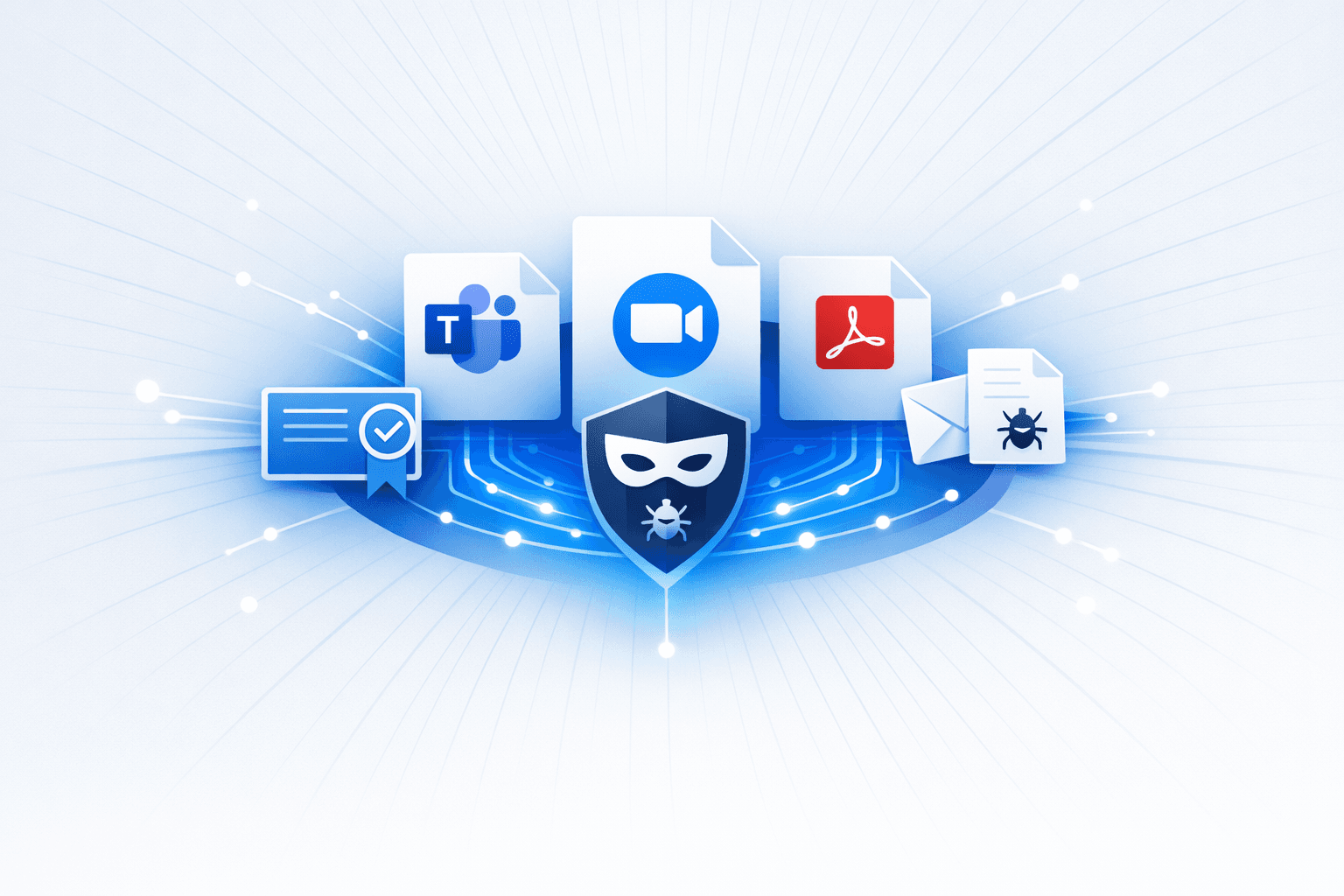
Security researchers reported active phishing activity targeting enterprise users by impersonating routine workplace workflows (e.g., meeting invites, invoices, and document notifications) to trick recipients into running malware. One campaign used executables masquerading as Microsoft Teams, Zoom, and Adobe Acrobat Reader installers (e.g., msteams.exe, zoomworkspace.clientsetup.exe, adobereader.exe, invite.exe) that appeared trustworthy because they were digitally signed with an Extended Validation (EV) certificate issued to TrustConnect Software PTY LTD. Microsoft Defender telemetry attributed the activity to an unknown threat actor and assessed the approach as a deliberate, multi-wave effort designed to bypass user suspicion and basic security controls.
After execution, the signed malware deployed remote monitoring and management (RMM) tooling—reported examples include ScreenConnect, Tactical RMM, and Mesh Agent—to establish persistent remote access and enable follow-on actions across affected environments. Separately, reporting also highlighted phishing lures distributing malicious ISO attachments embedded in job application/resumé-themed emails, reinforcing that attackers continue to rely on socially engineered business processes (recruiting and HR workflows in particular) to deliver initial payloads and gain a foothold.
Why it matters
Impact assessment
This activity targets enterprise users through common business workflows and HR/recruiting lures, making most organizations with email-exposed staff potential targets. The impact can be severe because successful execution leads to persistent remote access through legitimate RMM tools, enabling lateral movement, data theft, and follow-on malware deployment while blending into normal administrative activity.
The scope appears broader than a narrowly targeted intrusion set: researchers described multiple phishing waves active since February 2026, with lures themed around meeting invites, invoices, financial documents, and job resumés. Exploitation in the wild is confirmed through active phishing activity observed by Microsoft Defender telemetry and separate reporting on malicious ISO attachments in resumé-themed emails.
Affected populations
- Enterprise users receiving phishing emails impersonating workplace workflows
- HR and recruiting teams handling job applications and resumés
- Organizations that allow user execution of downloaded installers or ISO-mounted content
- Environments where RMM tools such as ScreenConnect, Tactical RMM, or Mesh Agent are not tightly controlled
Severity and business risk
- Persistent unauthorized remote access on compromised Windows endpoints
- Increased risk of credential theft, internal reconnaissance, lateral movement, and data exfiltration
- Operational disruption from incident response, endpoint containment, and possible ransomware or secondary payload delivery
- Reputational and financial impact if attackers pivot from initial access to broader enterprise compromise
Scope and incident status
- Multiple phishing waves reported since February 2026
- Themes include meeting invitations, invoices, financial documents, workplace notices, and resumés
- Active malicious email delivery and malware execution observed in the wild
- Use of signed binaries and legitimate RMM software increases likelihood of bypassing basic user trust and signature-based controls