Reports Highlight Shift Toward Identity-First Attacks and Phishing-Driven Intrusions
Social Engineering & Fraud · 2 sources · Updated 5mo ago · First seen Feb 28, 2026

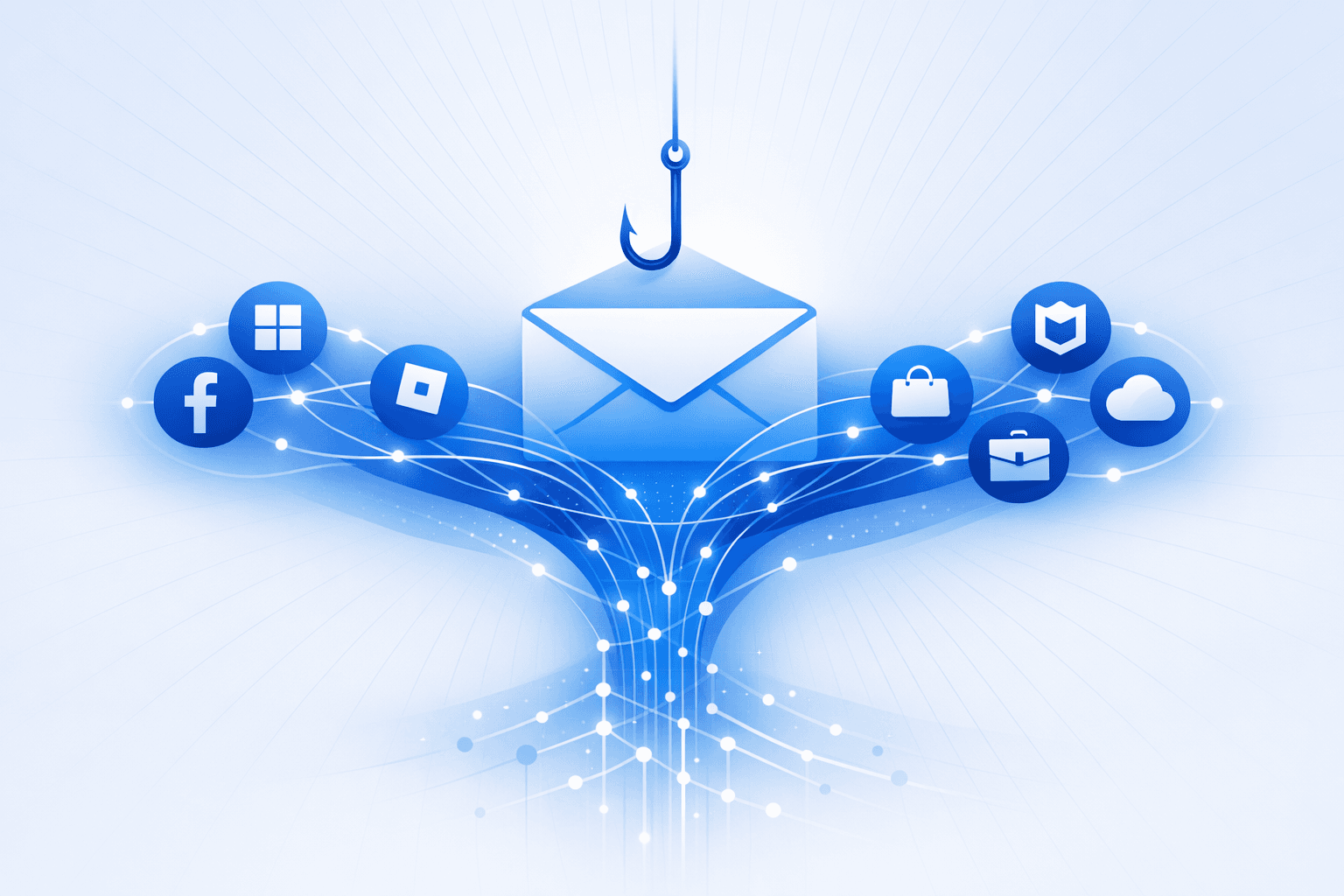
Recent reporting and vendor research indicate threat actors are increasingly prioritizing identity-based intrusion paths—notably phishing, credential theft, and Business Email Compromise (BEC)—over traditional vulnerability exploitation as the most common initial access vector. A Darktrace report cited by SC Media describes identity breaches as the leading entry point, alongside broader trends including accelerated breach tempo, increased automation, and “converging” tactics; it also notes exploitation can occur before public disclosure and that overall CVE volume rose by 20%+ year-over-year.
Email remains a dominant delivery mechanism in these identity-first campaigns. Darktrace telemetry referenced by SC Media reported 32M+ high-confidence phishing emails across its customer base, with many messages bypassing baseline controls (including 70% passing DMARC), targeting executives, using malicious QR codes, and leveraging newly registered domains. Separately, a SOCRadar analysis frames the U.S. financial sector as a disproportionate target for phishing and dark-web activity, emphasizing AI-enabled crime, persistent BEC, and third-party/supply-chain risk, and citing metrics such as ~48% of global financial phishing activity and ~23.5% of finance-related dark web threat activity attributed to the U.S. market.
Why it matters
Impact assessment
Identity-first intrusion paths are affecting all sectors, with disproportionate exposure for financial institutions, executive users, and organizations that rely heavily on email, cloud identity, outsourced IT support, and remote workflows. The business impact is high because these attacks enable account takeover, BEC fraud, data theft, ransomware staging, and downstream supply-chain compromise without requiring exploitation of a specific public CVE.
The scope is broad rather than narrowly targeted: reporting cites more than 32 million high-confidence phishing emails across a global customer base, with many bypassing baseline controls and 70% passing DMARC. Financial services appear especially exposed, with one source attributing 48.02% of global phishing activity and 23.52% of finance-related dark web threat activity to the U.S. market; the story also references active real-world abuse including help-desk social engineering, fraudulent remote IT worker infiltration, and ransomware access via phishing.
Supporting facts
- Identity breaches were reported as the leading initial access vector, surpassing vulnerability exploitation.
- Threat activity was characterized by accelerated breach tempo, increased automation, and converging tactics.
- Exploitation was observed to occur before public disclosure in some cases, increasing defender time pressure.
- Email remained a dominant delivery channel for intrusion activity.
- VIPs and executives were specifically targeted in phishing campaigns.
- Regional patterns cited in reporting:
- Europe: cloud- and email-focused intrusions
- Africa: rising ransomware activity
- Asia-Pacific: AI-driven threats
- Latin America: malware following credential theft
- Financial-sector-specific risks highlighted include BEC, dark-web monetization of stolen data, third-party compromise, and mobile-device-centric fraud.
- Known incident patterns referenced include Scattered Spider social engineering of IT help desks and North Korean fraudulent remote IT worker infiltration into U.S. companies.