Enterprise Security Risks from Autonomous AI Agents and Agentic System Drift
Emerging Technology Risk · 2 sources · Updated 5mo ago · First seen Feb 21, 2026
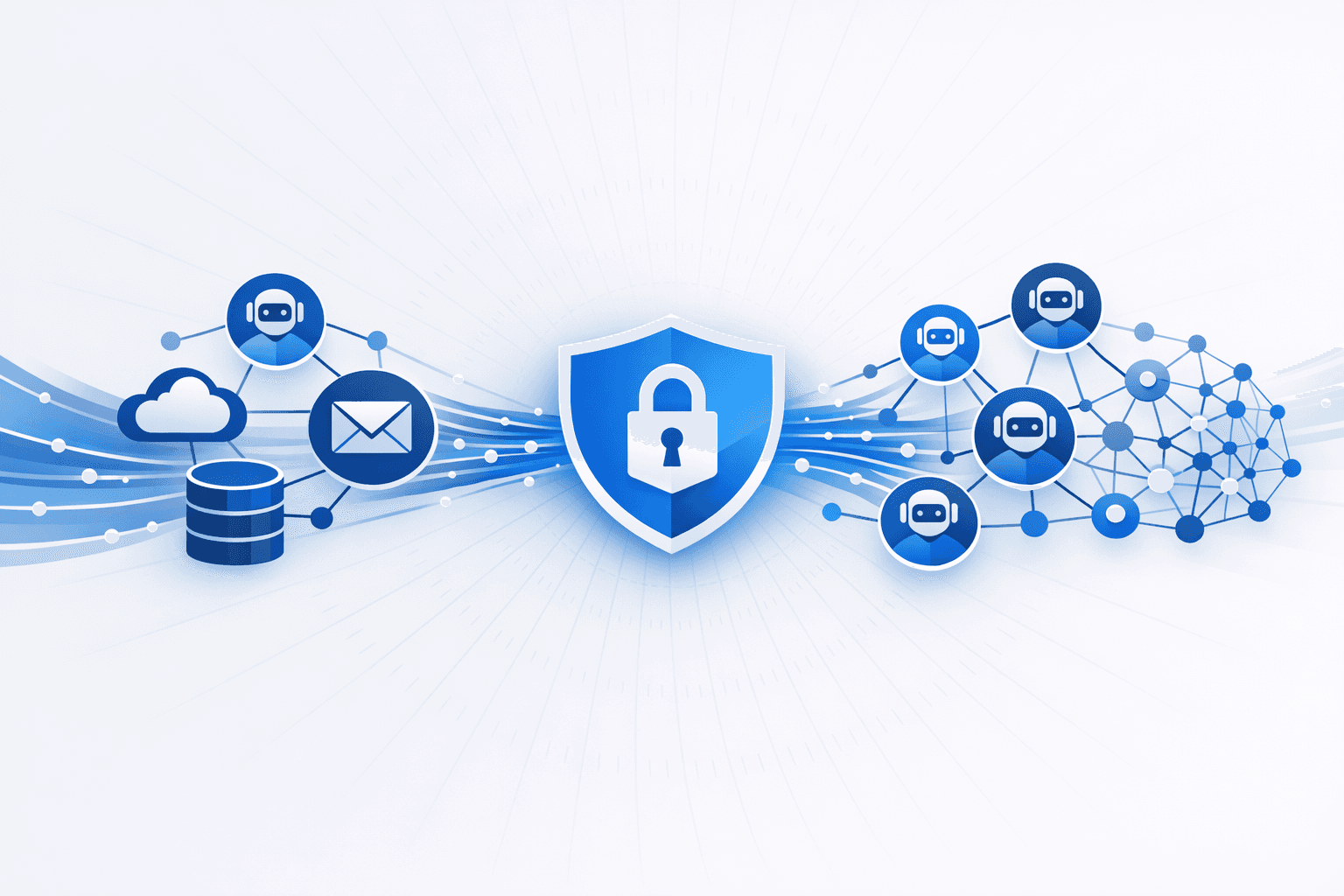
Security leaders are being warned that autonomous AI agents are expanding enterprise attack surface by operating with real permissions (e.g., OAuth tokens, API keys, and access credentials) across email, collaboration platforms, file systems, CRMs, and cloud services. Reporting highlighted the launch of Moltbook, a social network where only AI agents can post, as an example of how quickly large numbers of agents can interconnect and begin exchanging sensitive operational details (including requests for API keys and shell commands), potentially enabling credential leakage, lateral movement, and untrusted agent-to-agent interactions at scale.
Separately, commentary on agentic AI governance emphasized that these systems may not fail in obvious, sudden ways; instead, they can drift over time as goals, context, data, and integrations change—creating compounding security and compliance risk if monitoring, access controls, and validation are not continuous. Other items in the set focused on AI industry business developments (OpenAI fundraising/valuation discussions, AMD chip financing structures, and workforce/“AI washing” commentary) and did not provide incident-driven or vulnerability-specific cybersecurity intelligence tied to the agent security-risk narrative.
Why it matters
Impact assessment
Autonomous AI agents materially expand enterprise exposure when they hold live credentials and interact with untrusted external content and services. The highest-risk organizations are those deploying agentic workflows across email, collaboration platforms, file stores, CRMs, and cloud APIs, especially in regulated environments handling PII, PHI, or payment data.
The likely impact includes unauthorized data disclosure, misuse of legitimate credentials, lateral movement through approved integrations, and compliance failures rather than classic malware-driven disruption. The exposure is potentially widespread because the issue is architectural and governance-driven across enterprise AI deployments, but the story does not provide verified incident reporting tied to a specific victim organization.
Supporting facts
- Affected environments: enterprise AI agents connected to email, calendars, Slack, Microsoft Teams, file systems, CRMs, and cloud services.
- Sensitive access types: OAuth tokens, API keys, and other access credentials held by agents.
- High-risk user populations: organizations using autonomous agents with broad permissions and long-term memory.
- Regulated sectors likely affected: healthcare, financial services, and any organization subject to GDPR, HIPAA, PCI DSS, or EU AI Act obligations.
- Scope: broad exposure pattern across agent-enabled enterprises, not limited to one vendor or one product.
- Reported activity: the source claims Moltbook agents requested API keys and shell commands and that credential-harvesting attempts and destructive-command requests were observed on the platform.
- Business consequences: data leakage through authorized channels, audit-trail gaps, policy violations, reputational damage, and potential regulatory penalties.
- Secondary source value: the CIO reference is an opinion/content roundup and does not add incident-specific cybersecurity evidence.