North Korean IT Worker Infiltration of Remote Hiring Pipelines
Breach & Incident Intelligence · 7 sources · Updated 5mo ago · First seen Feb 21, 2026
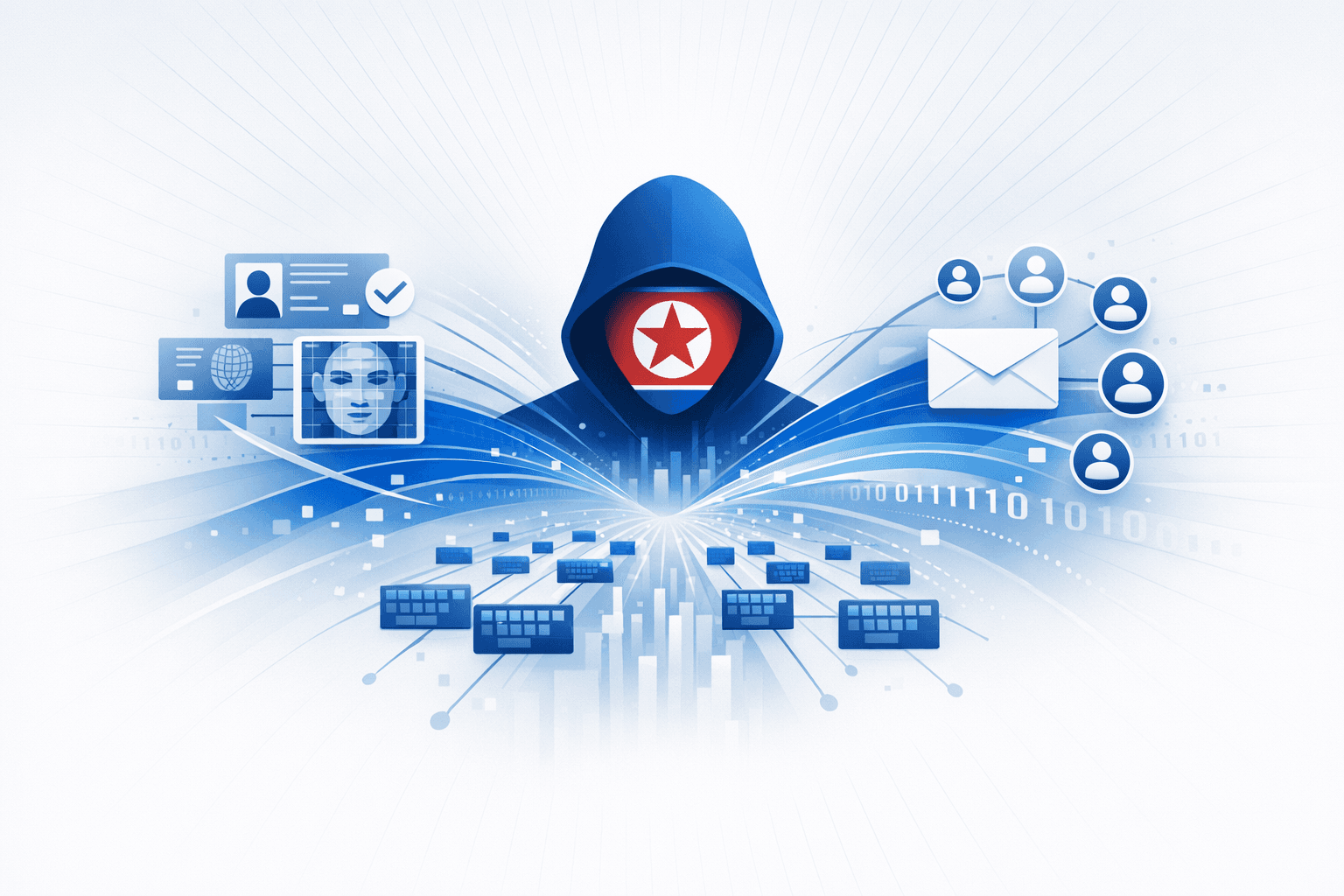
Reporting highlighted ongoing North Korean IT worker operations in which individuals use stolen identities, falsified resumes, and AI-enabled deepfakes to obtain remote roles at Western companies, creating direct insider-risk exposure once hired. The activity was described as affecting thousands of workers and Fortune 500 employers, with claims of "3,000 hands on keyboards" and roughly "30,000 different email addresses" in use to support multiple personas, generating wages that can total hundreds of millions of dollars annually and help fund the North Korean regime.
Recommended screening and verification measures focused on practical controls for remote hiring, including prompting candidates to perform live actions on video (e.g., wave), validating IP address/geolocation consistency with claimed location, and probing discrepancies in a candidate’s stated whereabouts. The reporting framed these checks as necessary to counter identity fraud and synthetic media used to pass interviews and onboarding, and to reduce the likelihood of granting network access to sanctioned or malicious actors operating under false identities.
Why it matters
Impact assessment
North Korean IT worker infiltration creates direct insider-risk exposure for organizations that hire remote technical staff, especially technology, crypto, DeFi, Web3, and large enterprise employers including Fortune 500 firms. Impact can include unauthorized network access, malware deployment, data theft, backdoor placement, sanctions exposure, and payroll diversion that funds the North Korean regime.
The scope is broad rather than isolated: reporting cites thousands of active operators, tens of thousands of email addresses, and prior access to hundreds of victim companies. Exploitation is occurring in the wild, with referenced incidents including a 2023 Arizona laptop-farm case, KnowBe4’s 2024 admission that it hired a DPRK worker who loaded malware, and SentinelOne’s 2025 tracking of 360 fake personas applying for roles.
Affected entities and populations
- Remote-first employers hiring software engineers, IT staff, contractors, and other technical roles
- Crypto, DeFi, and Web3 firms due to remote hiring norms, pseudonymous culture, and access to digital assets
- Large Western enterprises, including Fortune 500 companies
- HR, recruiting, identity-proofing, IT onboarding, and insider-risk teams
Severity and business consequences
- Insider access can enable malware deployment, proprietary data exfiltration, and persistence via planted backdoors
- Financial impact includes fraudulent wage payments and potential theft of digital assets or intellectual property
- Reputational and regulatory impact includes sanctions risk and failure of hiring and access-control processes
- Operational disruption can follow from incident response, credential resets, endpoint replacement, and trust remediation
Scope and known incidents
- Michael "Barni" Barnhart estimated "3,000 hands on keyboards" and roughly "30,000 different email addresses" supporting DPRK worker personas
- Reporting states one operator may manage up to eight personas
- U.S. federal agents raided an Arizona residence in 2023 tied to laptops used for work at more than 300 companies
- KnowBe4 reported in 2024 that a hired DPRK worker used access to load malware
- SentinelOne reported in April 2025 that it tracked 360 fake DPRK personas applying for jobs
- Reporting states many workers operate from China, with additional presence in Russia, Africa, and Southeast Asia