Malicious Chrome Extensions Used for Data Theft and VKontakte Account Hijacking
Supply Chain Risk · 2 sources · Updated 5mo ago · First seen Feb 16, 2026
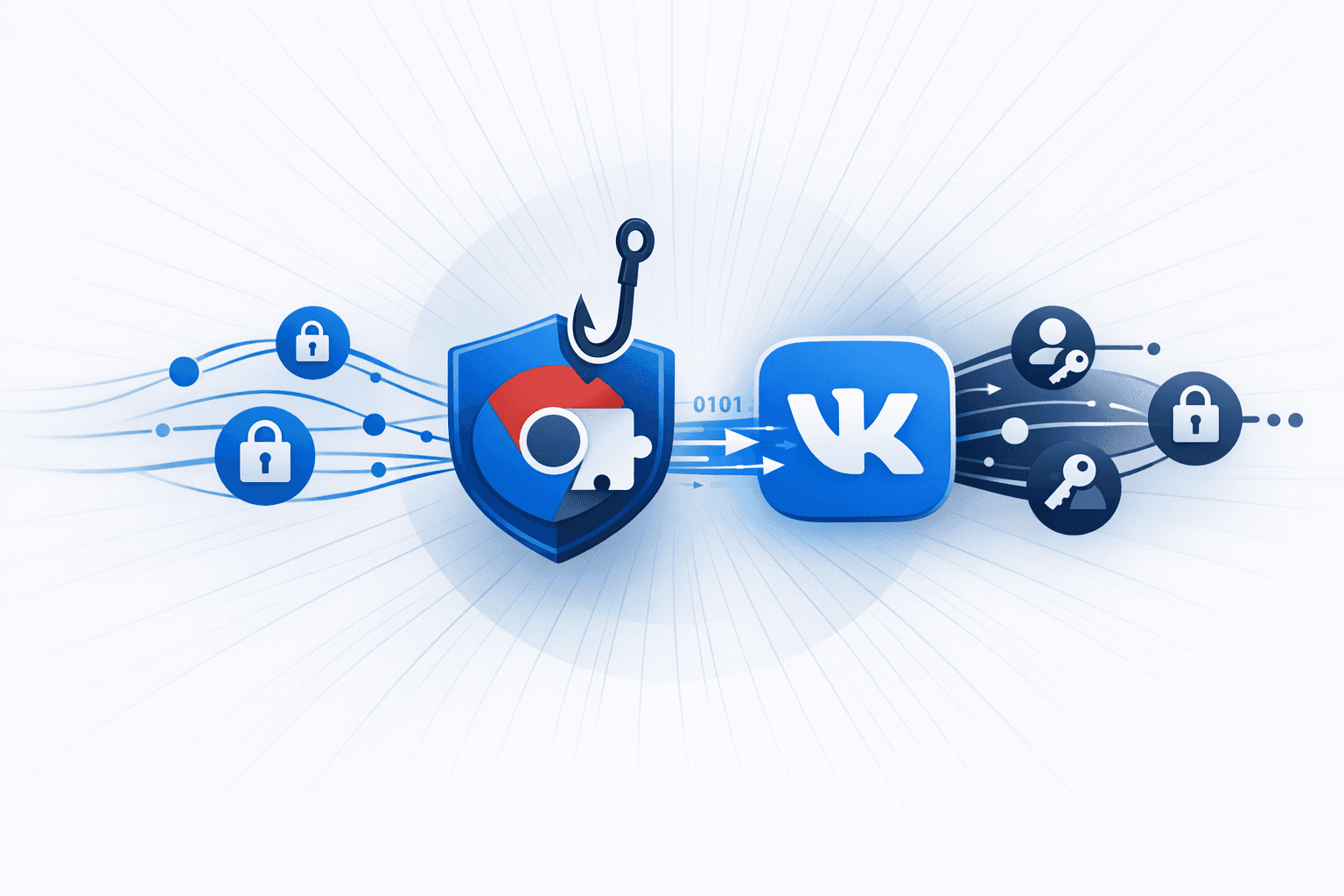
A malware campaign abused malicious Chrome extensions to compromise users and steal data, including a set of VKontakte-themed extensions that hijacked accounts at scale. Researchers reported that five related extensions (notably “VK Styles”, which reportedly reached ~400,000 installs before removal) were used to silently take over VKontakte accounts by subscribing victims to attacker-controlled groups, resetting settings on a recurring basis, and manipulating tokens to maintain persistence. The operation used a two-stage approach to evade detection: extensions fetched instructions/payload locations from a VKontakte profile’s HTML metadata and then executed attacker-controlled code retrieved from external infrastructure (including a GitHub account reportedly tied to the actor).
Separately, threat reporting highlighted a broader ecosystem issue in which 300+ malicious Chrome extensions with tens of millions of combined downloads were identified leaking or stealing user data, reinforcing the ongoing risk posed by browser extension supply-chain abuse. In contrast, Google also issued an urgent patch for an actively exploited Chrome zero-day, CVE-2026-2441 (use-after-free in CSS), but that vulnerability disclosure is a distinct event from the extension-based account takeover activity and should be tracked independently for patching and exposure management.
Why it matters
Impact assessment
This campaign affects Chrome users who installed VKontakte-themed extensions, especially VK users exposed to social-media customization tools. Impact is significant for affected users because the extensions enabled silent account hijacking, unauthorized actions, persistent manipulation of account settings, and likely secondary abuse of compromised accounts for promotion and propagation.
The scope is material rather than isolated: researchers reported more than 500,000 victims across at least five related extensions, with “VK Styles” alone reaching about 400,000 installs before removal. Exploitation occurred in the wild over an extended period from June 2025 through January 2026, indicating sustained operational success and a broader browser-extension supply-chain risk.
Supporting facts
- Affected population: Chrome users, particularly VKontakte users installing VK-themed customization/theme extensions.
- Primary abused product: Google Chrome extension ecosystem.
- Targeted platform: VKontakte (VK), described as Russia’s largest social network.
- Reported victim count: more than 500,000 VK users.
- Named malicious extension: “VK Styles.”
- Reported install base for “VK Styles”: about 400,000 before removal.
- At least five related extensions shared the same malicious infrastructure.
- Observed impact: account hijacking, forced group subscriptions, recurring settings resets, and persistence through token/cookie manipulation.
- Exposure pattern: active malicious campaign, not a theoretical weakness.
- Separate but distinct issue mentioned in reporting: Chrome zero-day CVE-2026-2441 should be tracked independently and is not part of the extension hijacking activity.