Mallory
← Back to News
privacy-surveillance-policycybersecurity-regulationtelecommunications-sector-threat

Russia Uses DNS Blocking and Throttling to Disrupt WhatsApp and Telegram and Push State-Backed MAX Messenger

Regulatory & Policy · 6 sources · Updated 5mo ago · First seen Feb 13, 2026
Russia Uses DNS Blocking and Throttling to Disrupt WhatsApp and Telegram and Push State-Backed MAX Messenger

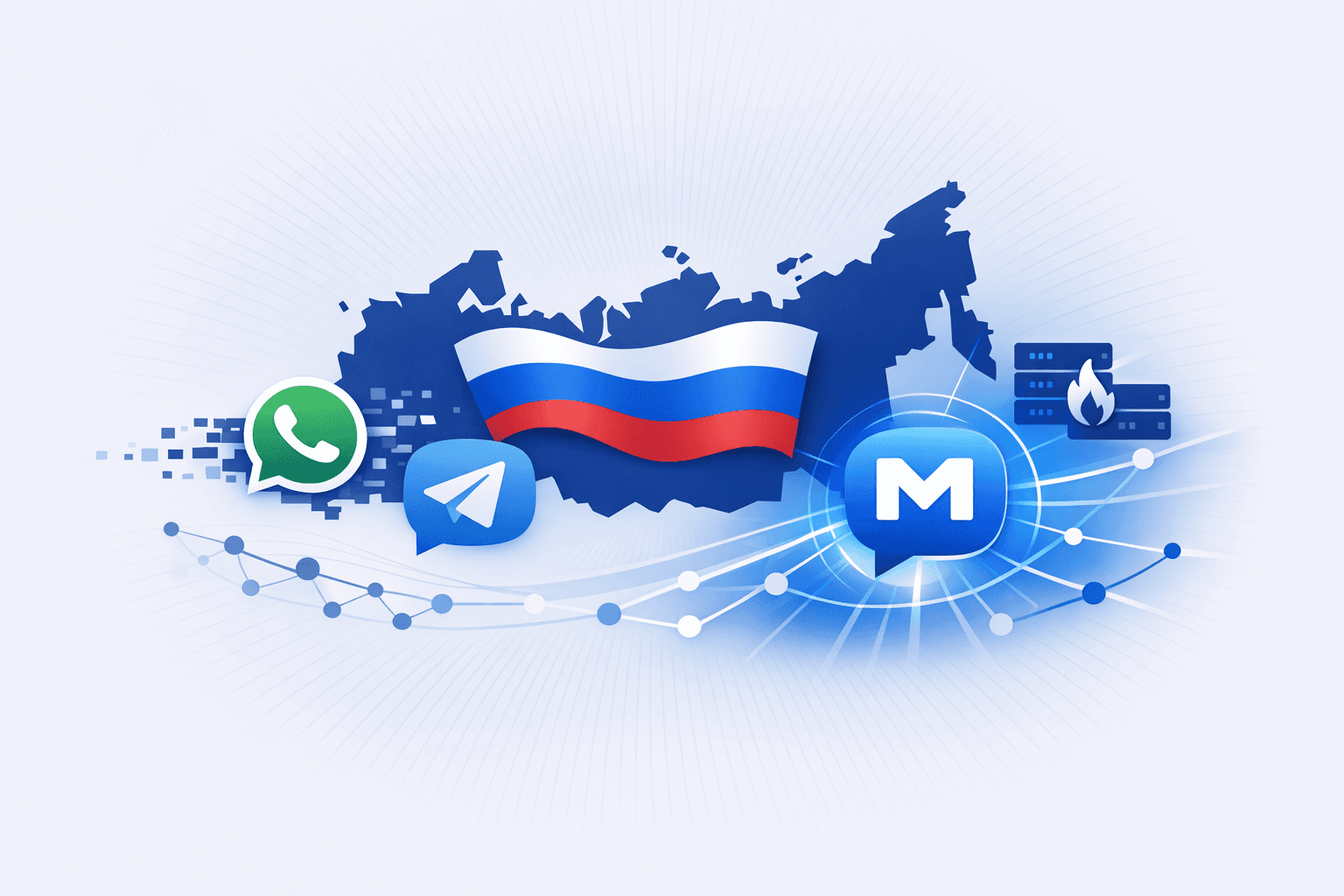
Russian authorities escalated restrictions on WhatsApp and Telegram, using network-level controls to disrupt access and steer users toward the Kremlin-promoted MAX messaging app. WhatsApp said Russia attempted to fully block the service, warning that isolating more than 100 million users from “private and secure communication” would reduce safety. Reporting indicated Roskomnadzor removed whatsapp.com and web.whatsapp.com from Russia’s National Domain Name System, effectively breaking domestic DNS resolution so the service becomes largely reachable only via VPNs or non-domestic resolvers; digital rights monitors also reported other major services being removed from the national domain registry.

Telegram also faced deliberate degradation: Roskomnadzor confirmed it “slowed down” the app, citing noncompliance with Russian law, amid widespread user-reported disruptions across multiple regions. State media reported Moscow courts opened multiple cases against Telegram in early 2026 for allegedly failing to remove content authorities label “extremist” or pornographic, with reported fines exceeding $820,000. Kremlin spokesperson Dmitry Peskov publicly tied restoration of access to compliance with Russian legislation, while Telegram founder Pavel Durov characterized the measures as authoritarian and aimed at forcing adoption of MAX, which he described as built for surveillance and censorship; Russia has a history of attempting to block Telegram, including a 2018 ban later lifted in 2020.

Why it matters

Impact assessment

Russia is deliberately disrupting WhatsApp and Telegram at the network level to steer users toward the state-backed MAX messenger. The affected population is massive: WhatsApp reportedly serves more than 100 million users in Russia, while Telegram reportedly has nearly 90 million users there, making the impact broad and civilian-facing rather than narrowly targeted.

The immediate impact is operational disruption of messaging, voice/video calling, news distribution, emergency communications, and business/government interactions that depend on these platforms. The broader risk is loss of privacy, reduced access to information, and forced migration to a domestic platform that multiple sources describe as having surveillance and encryption concerns.

Supporting facts

  • Affected entities: WhatsApp, Telegram, Roskomnadzor, Meta, VK, MAX, Dmitry Peskov, Pavel Durov.
  • WhatsApp said Russia attempted to fully block the service.
  • Roskomnadzor reportedly removed whatsapp.com and web.whatsapp.com from Russia’s National Domain Name System.
  • Telegram was intentionally “slowed down” by Roskomnadzor.
  • Scope is widespread across Russia, with reports of disruptions across multiple regions and nearly 15 regions seeing significant Telegram slowdowns.
  • Known incidents in the wild: yes, active state-imposed blocking and throttling were reported as already occurring.
  • Secondary impact populations include businesses, media consumers, regional authorities, and users relying on Telegram for emergency updates.
  • Reported legal pressure includes seven Moscow court cases against Telegram in 2026 and fines exceeding $820,000.
  • The campaign appears coercive rather than covert, intended to shift users to MAX, which is reportedly pre-installed on new devices sold in Russia.

What this changes for youSee the reporting duties and controls this puts on the clock.
Get the context
Event timeline

How this story unfolded

Events from the most recent confirmed update back to the earliest known activity.

12 events · Jan 1, 2022 – Feb 12, 2026
  1. Feb 12, 202610mo ago

    Russia removes other major services from national DNS

    Alongside WhatsApp, multiple major services including YouTube, Facebook, Instagram, Tor, BBC, Deutsche Welle, and The Moscow Times were reportedly removed from Russia's national domain registry, signaling a broader escalation in internet censorship.

  2. Feb 12, 202610mo ago

    Russia attempts a full block of WhatsApp

    WhatsApp said Russia moved beyond earlier throttling and tried to fully block the platform, with the Kremlin again citing noncompliance with Russian law and urging users to switch to MAX.

  3. Feb 12, 202610mo ago

    Russia removes WhatsApp domains from national DNS

    Roskomnadzor removed whatsapp.com and web.whatsapp.com from Russia's National Domain Name System, making the service largely accessible only through VPNs or external DNS resolvers.

  4. Feb 11, 202610mo ago

    Pavel Durov accuses Kremlin of pushing users to state messenger

    Telegram founder Pavel Durov condemned the restrictions as authoritarian and said they were intended to drive users toward a state-controlled messaging alternative designed for surveillance and censorship.

  5. Feb 11, 202610mo ago

    Russia throttles Telegram over alleged legal noncompliance

    After widespread user disruptions, Roskomnadzor confirmed it intentionally slowed Telegram, citing alleged violations of Russian law and content-removal requirements.

  6. Jan 1, 202611mo ago

    Moscow court opens seven new cases against Telegram

    Since the start of 2026, a Moscow court opened seven cases against Telegram over alleged refusal to remove content labeled extremist or pornographic, with reported fines exceeding $820,000.

  7. Oct 1, 20251y ago

    Russia attempts to block new WhatsApp registrations

    Authorities reportedly escalated pressure on WhatsApp by trying to prevent new user registrations in Russia.

  8. Oct 1, 20251y ago

    Russia requires 24-hour mobile blackout for foreign SIM entrants

    A rule took effect requiring people entering Russia with foreign SIM cards to undergo a 24-hour mobile internet blackout, expanding the country's communications controls.

  9. Sep 1, 20251y ago

    MAX messenger made mandatory on devices sold in Russia

    The government-backed MAX messaging app, developed by VK, became mandatory on devices sold in Russia, reinforcing the Kremlin's push toward a state-backed communications platform.

  10. Aug 1, 20251y ago

    Russia throttles WhatsApp voice and video calls

    Russian authorities started progressively restricting WhatsApp by throttling voice and video calling functionality, marking an early stage of the later blockade effort.

  11. May 1, 20252y ago

    Russia begins regional mobile internet cutoffs

    Russia began broader internet disruption measures, including regional mobile internet shutdowns, as part of tightening control over communications.

  12. Jan 1, 20225y ago

    Meta designated an extremist organization in Russia

    Russia designated Meta an "extremist" organization and banned it in the country, a status later cited by the Kremlin to justify restrictions on WhatsApp.

Linked entities

Related entities

Vulnerabilities, threat actors, malware, products, organizations, and breaches Mallory has linked to this story.

Open in app →

Affected products

2 linked
TelegramWhatsapp

Organizations

2 linked
TelegramVK
Do you run this?See what this changes for your reporting obligations and which controls it puts on the clock.
Get the Regulatory Context
Mallory platform

See the full picture, correlated to your attack surface.

This page covers what’s public. Mallory adds the parts that aren’t: which of your assets are affected, which threat actors are using it right now, and what to deploy next.

Exposure mappingMap indicators from this story to your assets and identify affected systems in minutes.
Threat actor evidenceEvery observed campaign, victim, and pivot linked to actors named in this story.
Associated malwareMalware, exploits, and IOCs connected to the activity described here.
Detection signaturesYARA, Sigma, and Snort rules deployed to your SIEM as soon as they’re published.
Scheduled alertsGet matching new stories delivered to your team as they break, not the next morning.
AI threadsAsk questions about this story and take action on the answers.