Congressional and civil-liberties backlash over ICE/CBP facial recognition and broader domestic surveillance authorities
Regulatory & Policy · 4 sources · Updated 5mo ago · First seen Feb 5, 2026
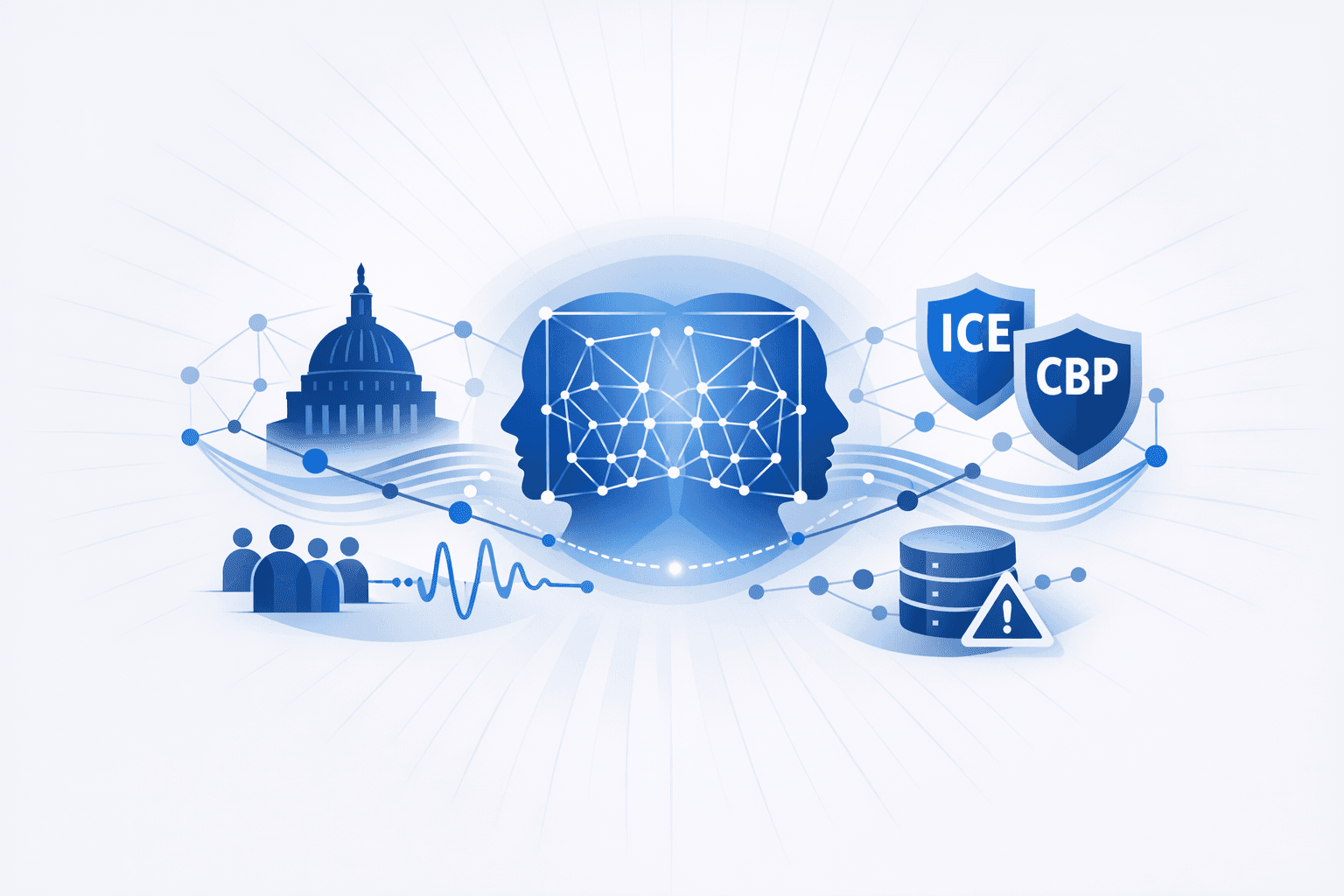
US lawmakers and civil-liberties advocates are escalating scrutiny of ICE and CBP use of facial recognition amid reports that immigration agents have used face-scanning tools on people observing or protesting enforcement activity. Proposed legislation dubbed the “ICE Out of Our Faces Act” would seek to bar ICE/CBP facial recognition use, alongside related demands to limit tracking of First Amendment activity and questions about whether ICE maintains a “domestic terrorists” database tied to immigration protests. Separately, records reviewed by WIRED indicate DHS’s Mobile Fortify facial-recognition app—rolled out in 2025 to “determine or verify” identities during operations—cannot reliably verify identity and is intended at best to generate investigative leads; the reporting also describes DHS approving the tool after weakening centralized privacy reviews and removing department-wide limits on facial recognition.
In parallel, Congress is debating the renewal of FISA Section 702, with lawmakers raising concerns that domestic surveillance authorities could be applied more broadly, including in support of immigration-related enforcement framed as a national security issue. Nextgov reports that transparency data shows intelligence agencies increased 702 searches in 2024 using identifiers linked to known or suspected Americans while pursuing foreign cyber and terrorism threats, even as the FBI reduced its own direct U.S.-person queries after new safeguards. A separate Nextgov item on an AI moratorium and sector-specific AI regulation is policy-focused and not directly tied to the ICE/CBP facial recognition deployments or Section 702 reauthorization debate described in the other reporting.
Why it matters
Impact assessment
This story is primarily a policy and civil-liberties development, not a newly disclosed cyber intrusion or software vulnerability. The directly affected populations are people encountered by ICE and CBP during field operations, including U.S. citizens, lawful permanent residents, targeted individuals, and people observing or protesting enforcement activity; the broader enterprise impact is highest for public-sector, legal, privacy, and compliance teams that manage biometric systems, surveillance tooling, or data-governance obligations.
The main risks are privacy harm, wrongful identification, legal exposure, and reputational damage rather than classic cyber effects such as ransomware or service outage. Reported use of DHS Mobile Fortify more than 100,000 times since launch, combined with allegations of scans on citizens and protesters and concerns over Section 702 query expansion involving U.S.-person identifiers, indicates potentially broad domestic exposure, but the reporting does not describe malicious exploitation in the wild.
Supporting details
- Affected entities: ICE, CBP, DHS, ODNI, FBI, FISC, Congress.
- Affected populations: stopped or detained individuals, U.S. citizens, lawful permanent residents, observers and protesters, immigration-enforcement targets.
- Business and operational impacts:
- Legal and regulatory risk from proposed restrictions on biometric collection and mandatory deletion requirements.
- Reputational risk from allegations of nonconsensual facial scanning and surveillance of First Amendment activity.
- Investigative integrity risk from apparent inability of Mobile Fortify to positively verify identity.
- Privacy and civil-liberties risk from broader domestic use of surveillance authorities and U.S.-person queries.
- Scope:
- Mobile Fortify reportedly deployed across towns and cities in the U.S. and usable hundreds of miles from the border.
- Illinois and Chicago litigation alleges field use exceeded 100,000 scans since launch.
- Section 702 concerns are systemic and national in scope, tied to intelligence-community querying practices rather than a single incident.
- Exploitation status:
- No cyber exploitation, malware campaign, or adversary intrusion is described.
- The story reports operational use of surveillance technologies by government agencies, not attacker abuse of a technical flaw.