Security Risks From Phishing URLs and Long-Lived SMS “One-Time” Links
Social Engineering & Fraud · 4 sources · Updated 5mo ago · First seen Jan 25, 2026
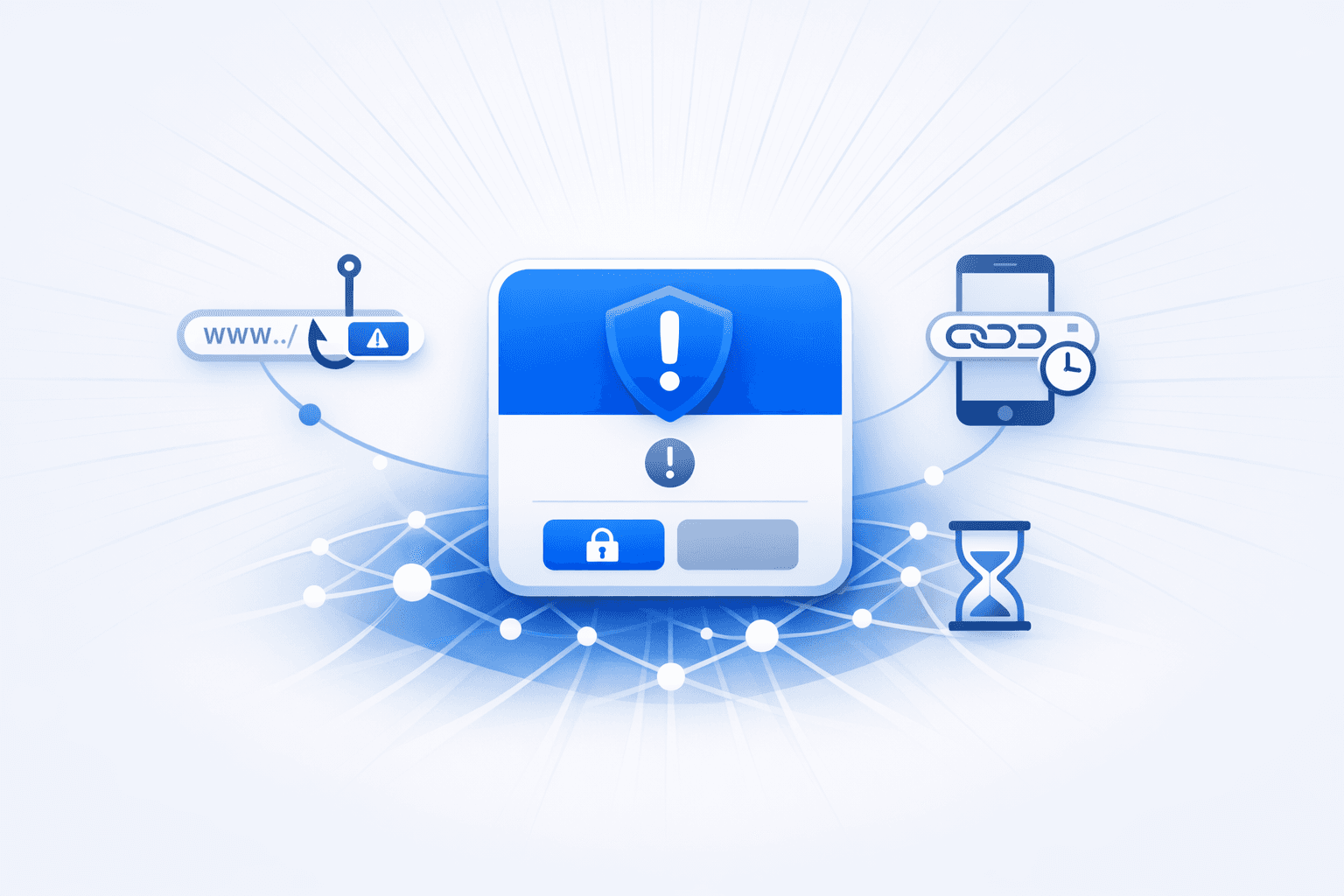
1Password introduced a new anti-phishing UX control that displays pop-up warnings when users land on suspected phishing or typosquatted domains, addressing a gap where users might manually type credentials even when the password manager refuses to autofill due to a URL mismatch. The feature is enabled by default for Individual and Family plans, while enterprise admins can enable it via Authentication Policies in the 1Password admin console.
Separate academic/industry research highlighted systemic exposure risks from SMS-delivered “one-time” links that do not expire, enabling personal data access long after delivery. The study assembled a dataset from public SMS gateways (over 33M messages, 323K unique URLs, and 10.9K+ domains) to analyze how SMS link design choices can leak data over time; the article also notes broader threat trends where attackers increasingly use malicious URLs via SMS (smishing) and large-scale domain churn/brand impersonation to drive credential theft and fraud.
Why it matters
Impact assessment
SMS-delivered sign-in and one-time links create a broad exposure risk across consumer-facing digital services because many implementations treat possession of the URL as sufficient authentication. The impact includes unauthorized access to accounts, exposure of sensitive personal data, and in some cases direct modification of user information; the issue appears widespread rather than narrowly targeted.
Summary
At least 177 services were identified with exposed SMS-link workflows, with 701 working endpoints leaking user data and some links remaining valid for months or years. There is no single named exploitation campaign tied to these specific services in the story, but the underlying delivery channel and URL-based authentication model are actively aligned with real-world smishing, phishing, and account-takeover abuse.
Affected populations and products
- Consumer users of services that use SMS sign-in links or magic links for authentication or account access
- Organizations operating customer portals, job platforms, tutoring services, and other digital services that rely on SMS-delivered bearer links
- 1Password users, especially enterprise users, are affected indirectly by phishing risk and benefit from the new warning control
- Enterprise environments using 1Password can reduce credential theft risk if admins enable the phishing URL warning via Authentication Policies
Severity and business impact
- High confidentiality impact where links expose names, phone numbers, email addresses, postal addresses, dates of birth, bank details, Social Security numbers, and credit-related fields
- High account security impact where opening a link creates an authenticated session, enabling account takeover
- Integrity impact where 15 services allowed modification of personal data through editable forms without additional verification
- Reputational and regulatory risk for service providers exposing long-lived authentication links and overfetching backend data
- Financial risk from fraud, identity theft, and downstream abuse of exposed personal and banking information
Scope and exploitation context
- Researchers analyzed more than 33 million SMS messages, 323,000 unique URLs, and 10,900+ domains, indicating systemic exposure across many providers
- 125 services reportedly used weak tokens that could allow guessing of valid login links
- Some links remained active for years, including links dating back to 2019, greatly expanding the abuse window
- The story cites broader in-the-wild threat activity involving smishing, malicious URLs, brand impersonation, and abuse of SMS infrastructure, though it does not attribute exploitation of the specific 177 services to a named actor
- 1Password's new phishing warning feature addresses user-driven credential theft on typosquatted or suspicious domains, a common precursor to enterprise compromise and lateral movement