Frogblight Android Banking Trojan Targets Turkish Users via Fake Government Websites
Malware Intelligence · 3 sources · Updated 5mo ago · First seen Dec 15, 2025
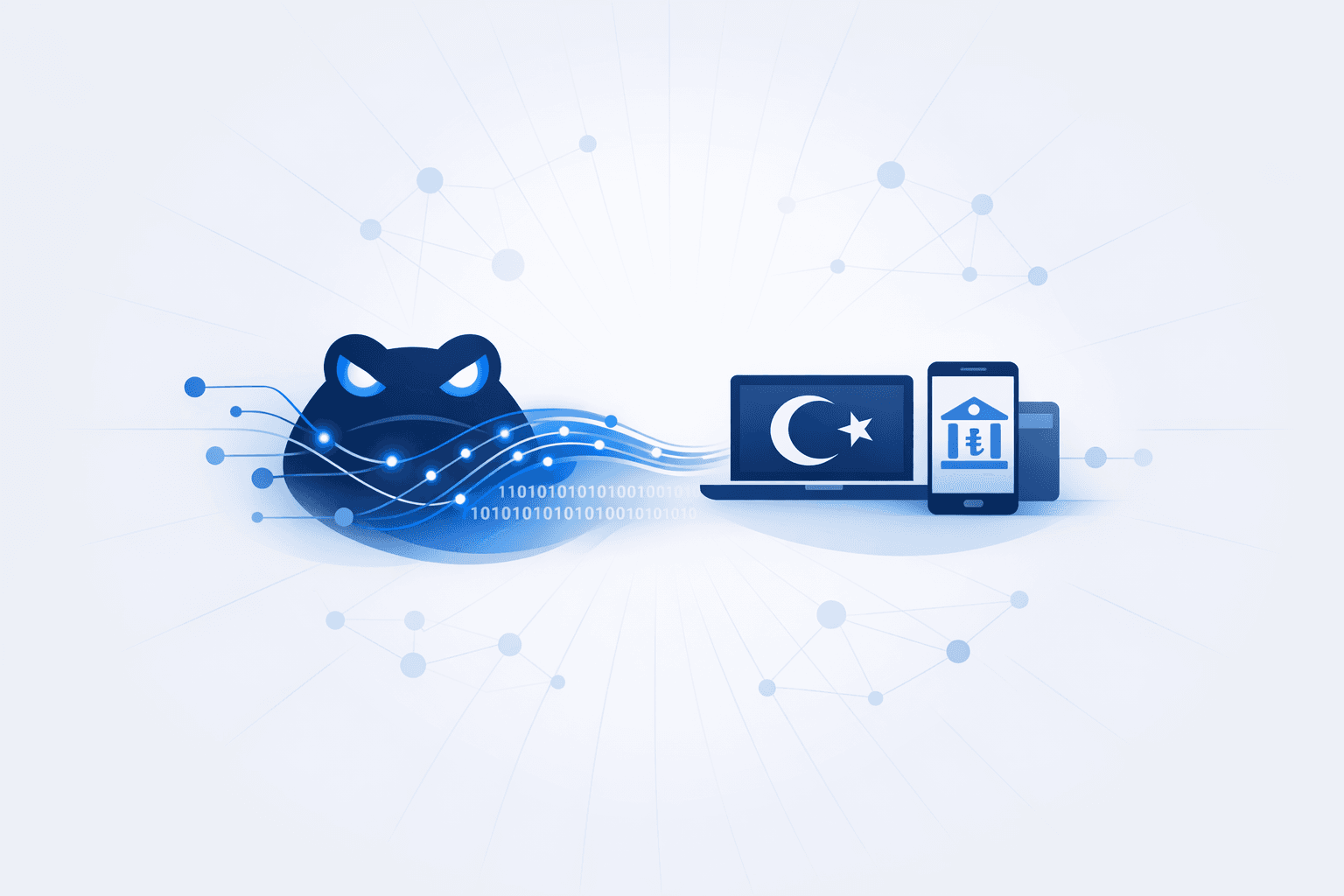
A new Android banking Trojan known as Frogblight has emerged, specifically targeting users in Turkey through sophisticated social engineering tactics. The malware initially masquerades as an official government application for accessing court case files, luring victims via phishing SMS messages that claim legal involvement and direct them to convincing fake government websites. Once installed, Frogblight requests extensive permissions, including access to SMS, storage, and device information, and displays legitimate government web pages within an embedded browser to maintain the illusion of authenticity. The malware is capable of stealing banking credentials, monitoring SMS messages, tracking installed applications, and sending arbitrary SMS messages to external contacts.
Researchers have observed that Frogblight is under active development, with new features added over time, suggesting a potential Malware-as-a-Service (MaaS) distribution model. The infection mechanism relies on JavaScript code injection within a compromised WebView, allowing the malware to silently capture user inputs. Security products, including those from Kaspersky, detect Frogblight under various heuristic signatures. The campaign highlights the increasing sophistication of Android banking threats and the use of official government branding to enhance the credibility of phishing lures targeting Turkish citizens.
Why it matters
Impact assessment
Frogblight is a targeted Android banking trojan campaign focused primarily on users in Turkey, especially individuals likely to trust Turkish e-Government and court-related digital services. The most affected populations are Android mobile users, retail banking customers, and organizations with employees using personal or corporate-managed Android devices for banking, messaging, or government-service access.
The impact is high for affected users because the malware combines credential theft, SMS interception, arbitrary SMS sending, filesystem access, and remote-control features that can enable account takeover, fraud, privacy loss, and reputational damage. The campaign appears targeted rather than globally widespread, but researchers observed active development, multiple evolving variants, and operational infrastructure consistent with ongoing exploitation in the wild.
Supporting facts
- Malware family: Frogblight
- Platform: Android
- Primary geography: Turkey
- Initial lure theme: Turkish court case / legal involvement notifications
- Additional lure themes: social support app, fake Chrome impersonation, fake government services
- Delivery method: smishing messages linking to fake government-themed websites
- Primary harms:
- Banking credential theft
- SMS theft and monitoring
- Arbitrary SMS transmission from victim devices
- Installed-app reconnaissance
- Filesystem listing and file exfiltration
- Call log and contact access in later variants
- Keystroke capture in some variants
- Scope assessment:
- Targeted campaign focused on Turkish users
- Not assessed as indiscriminate global mass exploitation
- Active development observed from August through September 2025
- Exploitation status:
- Yes, researchers observed live phishing infrastructure and victim-facing distribution
- Kaspersky telemetry indicated most victims were in Turkey