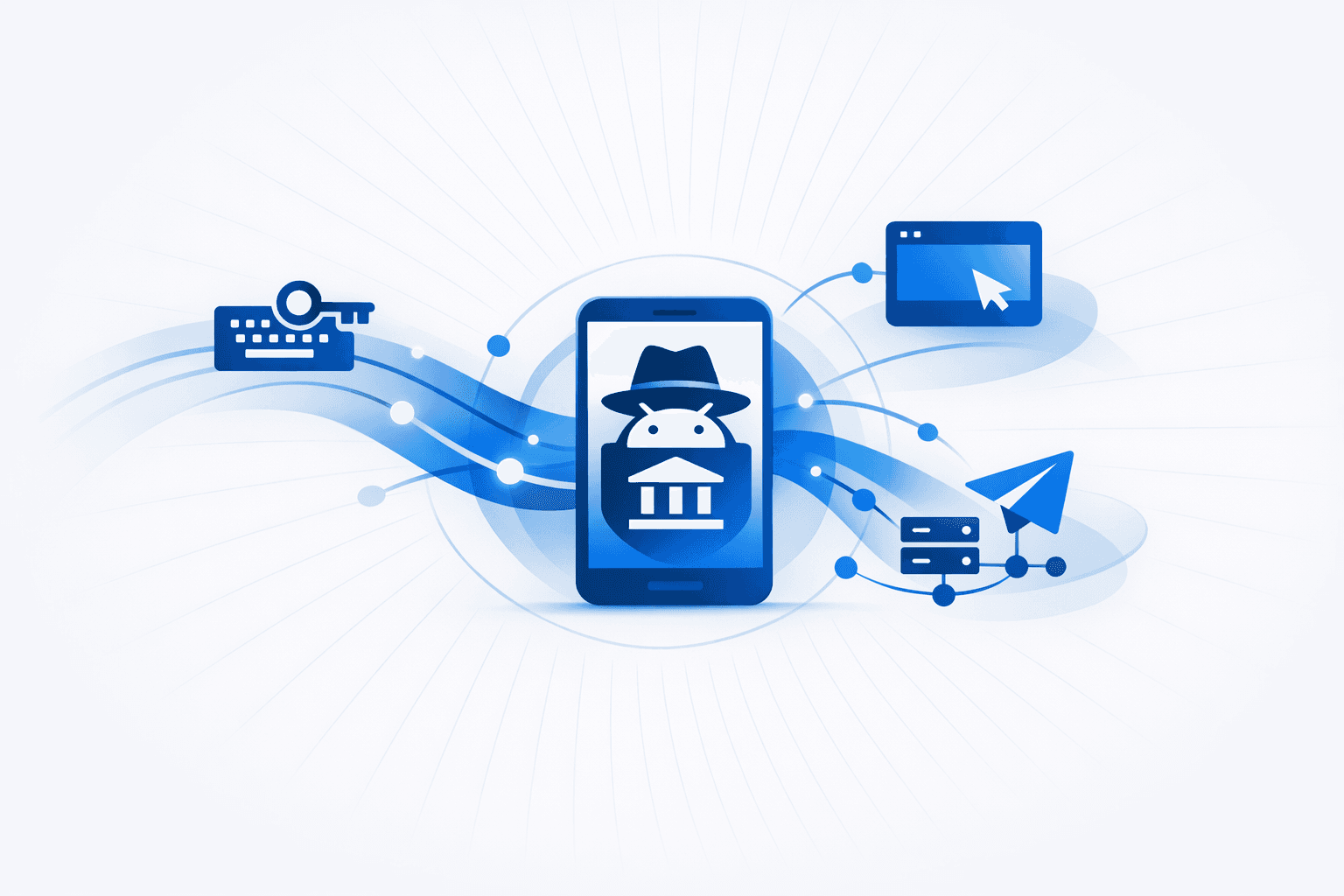
Sturnus Android Banking Trojan Enables Device Takeover and Encrypted Chat Theft
Sector Threat Intelligence · 7 sources · Updated 5mo ago · First seen Nov 20, 2025

A newly discovered Android banking trojan named Sturnus has emerged, targeting financial institutions in Europe and demonstrating advanced capabilities beyond typical mobile malware. Sturnus can capture messages from end-to-end encrypted messaging apps such as Signal, WhatsApp, and Telegram by accessing content after decryption directly from the device screen. The malware also enables full device takeover, credential theft through region-specific HTML overlays, and real-time remote control via VNC sessions. Infection typically begins with malicious APKs disguised as legitimate apps like Google Chrome or Preemix Box, and the malware abuses Android Accessibility services to monitor user activity, capture keystrokes, and manipulate the device interface.
Sturnus communicates with its command-and-control infrastructure using a combination of plaintext, RSA, and AES-encrypted channels, establishing secure connections for both data exfiltration and live monitoring. Once installed, it registers the victim device through a cryptographic exchange and can obtain Device Administrator privileges, allowing it to track password changes, lock the device, and maintain persistence. The trojan is currently under active development and is believed to be distributed via malvertising or direct messages, with researchers noting its private operation and ongoing evaluation phase. Security experts warn that Sturnus represents a significant escalation in Android banking malware sophistication, particularly due to its ability to bypass encrypted messaging protections and facilitate financial fraud.
Why it matters
Impact assessment
Sturnus is a high-impact Android banking trojan targeting mobile banking users and financial institutions in Southern and Central Europe. Its combination of credential theft, full device takeover, hidden remote interaction, and post-decryption chat capture creates direct fraud risk, account compromise, privacy loss, and potential MFA bypass.
Exposure appears targeted rather than mass-scale today, but researchers assess the malware as fully functional and in active low-volume testing. There are reported attacks in the wild, and the malware’s architecture indicates likely expansion into broader campaigns.
Affected populations and sectors
- Android users who install APKs outside trusted app stores
- Customers of financial institutions in Southern and Central Europe
- Organizations relying on mobile messaging apps for sensitive communications, including Signal, WhatsApp, and Telegram
- Enterprises with BYOD or mobile-first workforces using Android devices for banking, authentication, or secure messaging
Severity and business risk
- Financial fraud through banking credential theft and transaction execution
- Account takeover aided by remote control and approval of MFA or confirmation dialogs
- Privacy compromise through theft of contacts, message threads, and on-screen content
- Operational disruption if infected devices are remotely locked or manipulated
- Reputational and compliance risk where employee or customer communications are exposed
Scope and observed activity
- Current activity is described as low volume and privately operated
- Targeting is region-specific, using overlays tailored to banks in Europe
- Researchers observed active attacks, mainly in Southern and Central Europe
- Malware is assessed to be in evaluation or pre-deployment phase but already operational