Emerging Security Risks from AI Integration in Enterprise Environments
Emerging Technology Risk · 6 sources · Updated 5mo ago · First seen Dec 9, 2025
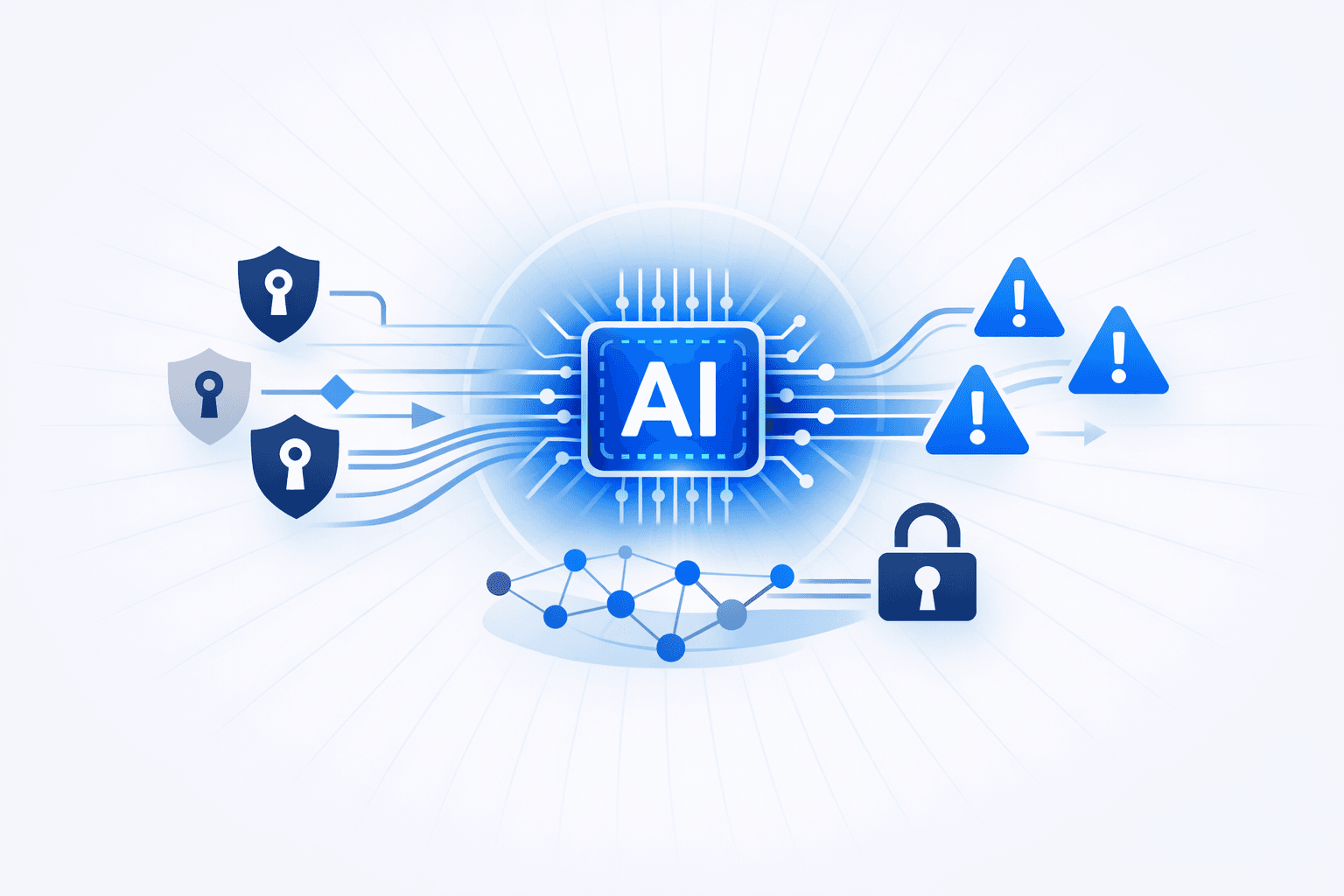
Security leaders and experts are warning that the rapid adoption of AI technologies in enterprise environments is introducing new and significant cybersecurity risks. While some industry voices downplay the threat of AI-driven attacks as marketing hype, most threat intelligence professionals and practitioners report that adversaries are already leveraging AI to enhance malware, automate social engineering, and bypass traditional defenses. Research highlights that AI agents, when given autonomy to perform tasks, can be manipulated to break established guardrails, and that model size does not necessarily correlate with resistance to such attacks. In industrial settings, organizations like Siemens are adapting their threat models and operational strategies to address the unique risks posed by AI-driven threats, emphasizing the need for adaptive defenses, cross-team collaboration, and the integration of AI-specific security practices.
Analysts are also raising alarms about the use of AI-powered browsers, such as ChatGPT Atlas and Perplexity Comet, which can lead to untraceable data loss and expose sensitive enterprise information through prompt injection vulnerabilities and uncontrolled data flows to the cloud. Security agencies and experts stress the importance of adopting secure-by-design principles when integrating AI features into modern applications, advocating for rigorous threat modeling, least privilege, and continuous monitoring to mitigate the heightened risks associated with automated decision-making systems. As AI becomes a core component of business operations, organizations are urged to proactively address these evolving threats to safeguard their data and critical infrastructure.
Why it matters
Impact assessment
AI integration is expanding enterprise exposure across knowledge-worker workflows, browser activity, and industrial operations. The most affected organizations are those using consumer or unmanaged generative AI tools, deploying AI agents with tool access, or allowing AI browsers such as ChatGPT Atlas and Perplexity Comet; high-adoption sectors called out include technology, pharmaceuticals, finance, and industrial/OT environments.
The primary impacts are sensitive data loss, compliance violations, operational disruption, and reputational damage. Exposure is widespread rather than narrowly targeted because the risk stems from normal enterprise adoption patterns, though some reporting also cites targeted AI-enabled espionage and malware activity already occurring in the wild.
Supporting details
- Enterprise users are entering confidential business data into ChatGPT, Copilot, Gemini, and similar tools.
- OpenAI reported 27 percent of ChatGPT consumer messages in June 2025 were work-related.
- AI browsers can transmit active web content, browsing history, and open tab contents to cloud services, creating untraceable and potentially irreversible data loss.
- Cyberhaven reported 27.7% of organizations had at least one user with ChatGPT Atlas installed.
- AI browser adoption rates cited: technology 67%, pharmaceuticals 50%, finance 40%.
- Industrial organizations face added risk from AI-enabled malware, AI-enhanced social engineering, adversarial ML, and data poisoning affecting OT environments.
- Anthropic reported a Chinese state-sponsored group used AI in an orchestrated cyber espionage operation targeting about 30 global organizations, succeeding in a small number of cases.
- Google Threat Intelligence Group reported threat actors are already using AI to refine malware, generate code, and automate social engineering.
Structured facts by reference
blackfog
- Entities: ChatGPT, Copilot, Gemini, OpenAI.
- User populations: enterprise employees using managed and unmanaged AI accounts.
- Risks: external data retention, model-training exposure, lack of admin oversight, prompt injection, exfiltration, stolen-account abuse.
- Business impacts: regulatory breaches, reputational harm, data loss.
cso_online - AI in the threat chain
- Entities: Google Threat Intelligence Group, Anthropic, Sophos, SentinelOne, Protegrity, RAD Security, PwC, SANS Institute.
- Threat activity: AI-assisted malware, social engineering, cyber espionage.
- Known incidents: Chinese state-sponsored AI-enabled espionage against about 30 organizations; limited successful compromises reported.
help_net_security - ASTRA
- Entities: Intuit, ASTRA.
- Risks: tool misuse, indirect prompt injection, instruction leakage, unauthorized tool actions.
- Potential impacts: outages and data exposure in real deployments.
help_net_security - Siemens
- Entities: Siemens, Natalia Oropeza, Siemens GPT, Industrial Copilot for Engineering.
- Affected environments: industrial and OT systems embedding AI.
- Impacts: downtime, operational disruption, exposure of sensitive operational data, cascading effects across interconnected systems.
cso_online - AI browsers
- Entities: Gartner, Cyberhaven, Perplexity Comet, OpenAI ChatGPT Atlas, LayerX Security, Teamwin.
- Risks: cloud transfer of browsing data, prompt injection, token theft, authenticated autonomous actions.
- Business impacts: irreversible data loss, privacy exposure, enterprise control gaps.
securitysenses_blog
- No substantive technical facts were provided in the source content excerpt.