Mallory
← Back to News
actively-exploited-vulnerabilitygovernment-vulnerability-catalogproof-of-concept-releasestate-sponsored-espionage

ShadowPad Malware Deployed via Exploited WSUS CVE-2025-59287 Vulnerability

Active Exploitation · 4 sources · Updated 5mo ago · First seen Nov 24, 2025

ShadowPad Malware Deployed via Exploited WSUS CVE-2025-59287 Vulnerability

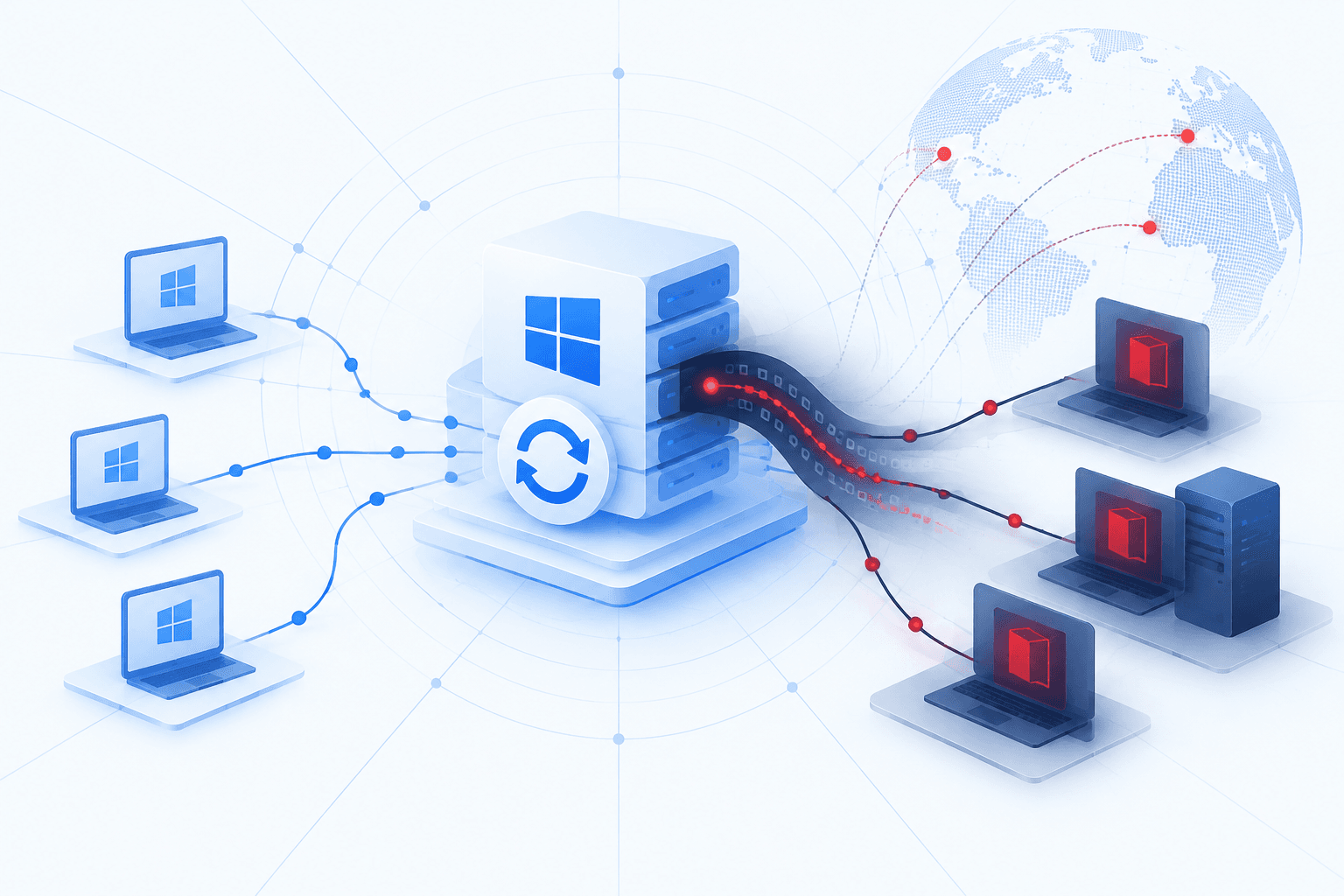
Threat actors have exploited a critical deserialization vulnerability in Microsoft Windows Server Update Services (WSUS), identified as CVE-2025-59287, to gain remote code execution with system privileges and deploy the ShadowPad backdoor. The attackers targeted publicly exposed WSUS-enabled Windows Servers, using the PowerCat utility to obtain a system shell and then leveraging legitimate Windows tools such as curl.exe and certutil.exe to download and install ShadowPad from an external server. ShadowPad, a modular backdoor associated with Chinese state-sponsored groups, is loaded via DLL side-loading techniques, specifically using a legitimate binary to execute a malicious DLL payload in memory.

The vulnerability, which was patched by Microsoft in October, allows remote, unauthenticated attackers to trigger unsafe deserialization of AuthorizationCookie objects, leading to full system compromise. Security researchers from AhnLab and others have documented the attack chain, noting that the flaw has been added to CISA's Known Exploited Vulnerabilities catalog and that a public proof-of-concept exploit is available. The incident highlights the ongoing risk posed by unpatched WSUS servers and the sophisticated methods used by threat actors to maintain persistence and evade detection once ShadowPad is installed.

Why it matters

Impact assessment

CVE-2025-59287 creates a high-severity exposure for organizations running Microsoft WSUS on Windows Server, especially internet-exposed deployments in manufacturing, telecom, and energy environments. Successful exploitation gives remote, unauthenticated attackers SYSTEM-level execution on update infrastructure, enabling espionage, credential theft, lateral movement, and potential ransomware staging.

Active exploitation in the wild is established, with reporting tying the activity to China-linked operators using ShadowPad for long-term access. Scope appears broad rather than narrowly targeted: references cite publicly exposed WSUS servers globally, CISA KEV inclusion, public PoC availability, and estimates of more than 10,000 exposed/affected servers with 2,500+ ShadowPad deployments.

Affected entities

  • Microsoft Windows Server Update Services deployments on Windows Server 2012, 2012 R2, 2016, 2019, 2022 including 23H2, and 2025
  • Organizations exposing WSUS over ports 8530/8531
  • Sectors specifically cited: manufacturing, telecom, energy
  • User populations at risk: enterprises relying on on-prem WSUS for patch distribution and administrative update workflows

Severity and business consequences

  • Remote code execution as SYSTEM on a central management server
  • High risk of intellectual property theft, credential compromise, and downstream compromise of managed Windows estates
  • Potential operational disruption if attackers pivot from WSUS into broader enterprise infrastructure
  • Reputational and regulatory impact if update infrastructure is abused for persistence or data exfiltration

Evidence of exploitation

  • CISA added CVE-2025-59287 to the Known Exploited Vulnerabilities catalog
  • Multiple references state exploitation is ongoing in the wild
  • Public proof-of-concept release accelerated weaponization
  • Reported attacker use of ShadowPad, PowerCat, and LOLBins indicates post-exploitation maturity
This is being exploited nowSee which actors are running it and whether you're in range.
Check your exposure
Event timeline

How this story unfolded

Events from the most recent confirmed update back to the earliest known activity.

6 events · Oct 1, 2025 – Nov 25, 2025
  1. Nov 25, 20251y ago

    Researchers attribute campaign to China-linked APT groups

    Security reporting linked the ShadowPad deployment campaign to Chinese state-aligned threat actors, with references to groups such as APT41, APT10, and PLA-affiliated clusters. The activity was described as targeting sectors including manufacturing, telecom, and energy.

  2. Nov 25, 20251y ago

    CISA adds CVE-2025-59287 to the KEV catalog

    Following evidence of active exploitation, CISA added CVE-2025-59287 to its Known Exploited Vulnerabilities catalog and pushed for urgent remediation. Subsequent reporting also described mandated or strongly urged patching and access restrictions for affected organizations.

  3. Nov 24, 20251y ago

    AhnLab documents active ShadowPad intrusions via WSUS

    AhnLab Security Intelligence Center reported observing the WSUS exploitation chain in the wild, detailing the use of legitimate Windows binaries and the delivery of ShadowPad. Its findings provided technical confirmation of ongoing attacks against publicly exposed WSUS instances.

  4. Nov 24, 20251y ago

    Threat actors exploit WSUS flaw to deploy ShadowPad

    Attackers actively exploited CVE-2025-59287 to gain SYSTEM-level access on WSUS servers, using PowerCat for shell access and certutil and curl to download ShadowPad. The malware was deployed via DLL sideloading and used persistence and anti-detection techniques, with some intrusions also involving reconnaissance and tools such as Velociraptor.

  5. Oct 1, 20251y ago

    Public PoC exploit for CVE-2025-59287 triggers rapid weaponization

    After proof-of-concept exploit code for CVE-2025-59287 was publicly released, attackers quickly began weaponizing the flaw against exposed WSUS servers. Reports describe this publication as the catalyst for active exploitation.

  6. Oct 1, 20251y ago

    Microsoft patches critical WSUS RCE flaw CVE-2025-59287

    Microsoft released an out-of-band patch for CVE-2025-59287, a critical unsafe deserialization flaw in the WSUS GetCookie() endpoint that can allow unauthenticated remote code execution as SYSTEM. Multiple reports place the patch release in October 2025.

Linked entities

Related entities

Vulnerabilities, threat actors, malware, products, organizations, breaches, and observables Mallory has linked to this story. Indicator values are masked here and available in full in the app.

Open in app →

Malware

1 linked

Observables

6 linked

Indicator values are masked on this page. See the values in Mallory Domains, IPs, hashes, and URLs are exportable to your SIEM.

Do you run this?Correlate live exploitation activity against the software you actually run, and see where you're exposed.
See Who's Exploiting This
Mallory platform

See the full picture, correlated to your attack surface.

This page covers what’s public. Mallory adds the parts that aren’t: which of your assets are affected, which threat actors are using it right now, and what to deploy next.

Exposure mappingMap indicators from this story to your assets and identify affected systems in minutes.
Threat actor evidenceEvery observed campaign, victim, and pivot linked to actors named in this story.
Associated malwareMalware, exploits, and IOCs connected to the activity described here.
Detection signaturesYARA, Sigma, and Snort rules deployed to your SIEM as soon as they’re published.
Scheduled alertsGet matching new stories delivered to your team as they break, not the next morning.
AI threadsAsk questions about this story and take action on the answers.