OAuth Phishing Hijacks Chrome Extensions to Steal ChatGPT and Facebook Session Data
Supply Chain Risk · 2 sources · Updated 8h ago · First seen Dec 30, 2024
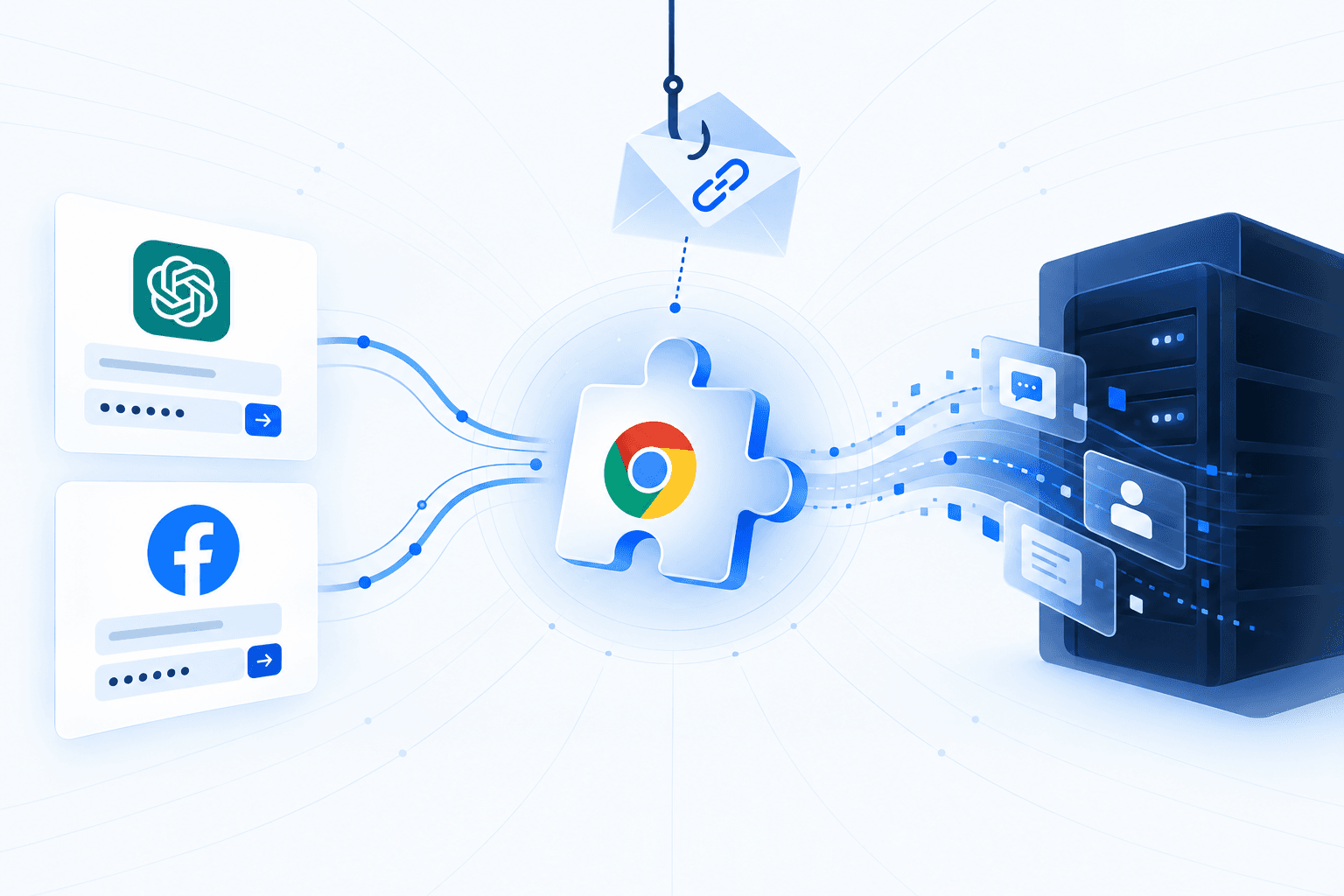
An unidentified threat actor compromised legitimate Chrome extensions by phishing developers into authorizing a malicious Google OAuth application with permission to publish updates. Sekoia identified 16 compromised extensions in the December 2024 campaign, including Cyberhaven and GraphQL Network Inspector, potentially exposing hundreds of thousands of users. Cyberhaven said an employee authorized an application named “Privacy Policy Extension” through Google’s legitimate consent flow, enabling the attacker to publish malicious extension version 24.10.4. The employee had Google Advanced Protection and MFA enabled, but received no MFA prompt; Cyberhaven said the employee’s Google credentials were not compromised.
The injected JavaScript retrieved attacker-controlled configurations and collected credentials and session data targeting ChatGPT and Facebook Business; Cyberhaven’s preliminary investigation identified Facebook Ads accounts as the primary target. Sekoia found that a configuration error likely prevented GraphQL Network Inspector version 2.22.6 from correctly exfiltrating harvested information. It linked the infrastructure to malicious-extension campaigns dating to at least December 2023 and assessed that the actor shifted toward hijacking established extensions in late November 2024. Organizations should remove or update affected extensions, investigate configuration-fetching and exfiltration activity, and revoke potentially exposed credentials and sessions.
Why it matters
Attackers hijacked legitimate Chrome extension publishing access and distributed malicious updates, potentially exposing hundreds of thousands of users to credential, API-key, and session-data theft. Sekoia identified 16 compromised extensions in the December 2024 campaign; Cyberhaven confirmed a malicious release, while successful exfiltration across all affected users is not established and a configuration defect likely impaired GraphQL Network Inspector's exfiltration. Stolen ChatGPT and Facebook Business access could enable account takeover, data exposure, and advertising fraud or malware distribution; Cyberhaven's preliminary investigation identified Facebook Ads accounts as the primary target. Sekoia Cyberhaven
- Industry-specific impact: Information Technology is directly affected: software publisher Cyberhaven confirmed compromise of its extension publishing access and distribution of malicious version 24.10.4. This is an observed software supply-chain compromise, not an inference from vendor headquarters or generic product adoption; downstream impact is not established as exclusive to any industry. Cyberhaven
- Geography-specific impact is not established. The supplied evidence identifies neither affected user locations nor country-specific targeting; infrastructure hosting locations do not establish victim geography. Sekoia
- Observed activity versus potential exposure: malicious publishing and extension deployment occurred in the wild. Sekoia reported activity through December 30, 2024; these historical findings do not establish that the campaign remains active in November 2026. Sekoia