Mallory
← Back to News
phishing-campaign-intelligenceinitial-access-methoddefense-evasion-method

Phishing Abuses Microsoft OAuth Redirects to Hide Malicious Destinations

Social Engineering & Fraud · 2 sources · Updated 3d ago · First seen Nov 25, 2026
Phishing Abuses Microsoft OAuth Redirects to Hide Malicious Destinations

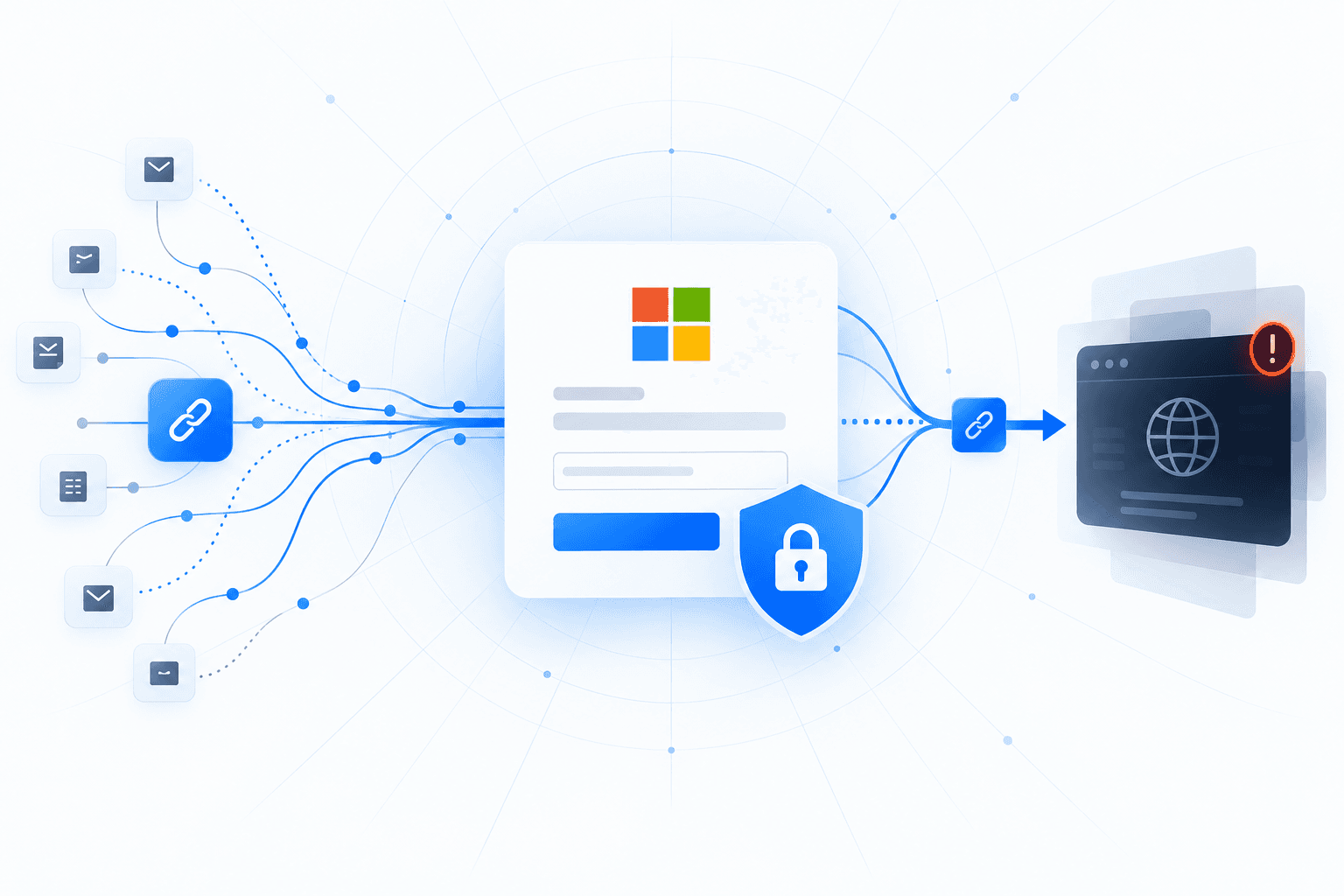
Attackers are abusing Microsoft OAuth application redirects to route phishing victims through trusted Microsoft login domains while concealing the final destination. LevelBlue SpiderLabs identified phishing emails using this technique in January 2026: attackers register applications in tenants they control and craft authorization links that redirect users to attacker-selected websites. The visible URL can omit an explicit redirect parameter, preventing recipients from identifying the destination by inspecting the link alone. The technique exploits trust in Microsoft infrastructure to make credential-theft lures appear legitimate and evade email filtering.

Ent documented a subsequent attempt against an unnamed organization using an updated employee handbook lure. Several messages bypassed subject-line blocking, and one recipient opened an email and clicked its link within three seconds. The links used login.microsoft.com, extra path slashes, and an encoded decoy URI parameter, apparently to obscure the application's registered destination and evade filtering. Outlook opened the destination in an embedded browser outside the fully instrumented browser path. The recipient closed the page within a minute without entering information or proceeding further; Ent reported no compromise or need for remediation. Defenders should inspect complete redirect chains rather than trust the initial domain and ensure monitoring covers email-launched embedded browsers.

Why it matters

Attackers are abusing Microsoft OAuth authorization redirects to conceal phishing destinations behind legitimate Microsoft login URLs, creating credential-theft risk without exposing the final domain in the email link. In the documented attempt against an unnamed organization, email and network controls allowed a recipient to reach the destination, but the recipient stopped without submitting information; Ent reported no compromise or remediation requirement. LevelBlue observed related phishing emails in January 2026, establishing real-world use of the technique but not its overall prevalence. Ent · LevelBlue

  • Industry-specific impact is not established: the affected organization’s sector is not identified, and Microsoft service abuse alone does not establish industry-specific targeting. Ent
  • Geography-specific impact is not established: the supplied reports identify no affected country, region, or locality. Ent · LevelBlue
  • Operational exposure: subject-line blocking missed several messages, and Outlook opened the destination in an embedded browser outside the organization’s fully instrumented browser path. This reduced visibility into a user interaction that began within three seconds of email receipt. Ent

Is your org in this campaign?Get the infrastructure and lures behind it.
Hunt this campaign
Event timeline

How this story unfolded

Events from the most recent confirmed update back to the earliest known activity.

4 events · Jan 2026
  1. Reported Nov 17, 202612d ago

    Ent investigation reveals OAuth redirect obfuscation and finds no compromise

    Ent's subsequent investigation documented links using login.microsoft.com, repeated path slashes, and an encoded decoy uri parameter while Microsoft redirected users to the destination registered to the attacker's OAuth application. Ent assessed the hostname and path variations as likely filtering-evasion measures and reported no compromise or need for remediation.

    The OAuth Consent that Wasn’t
  2. Reported Nov 17, 202612d ago

    User follows OAuth phishing link but exits without submitting information

    A user opened a phishing email and clicked its link within three seconds of receipt, reaching an unfamiliar website through an Outlook-launched embedded browser outside the organization's fully instrumented browser path. The user interacted with the page but entered no information, did not advance the flow, and closed the window within a minute.

    The OAuth Consent that Wasn’t
  3. Reported Nov 17, 202612d ago

    Organization blocks employee-handbook phishing subjects after advance warning

    An unnamed organization received advance warning of a phishing campaign using an updated employee handbook lure and implemented subject-line blocking. Several campaign messages nevertheless reached users.

    The OAuth Consent that Wasn’t
  4. Jan 2026

    SpiderLabs identifies phishing abusing Microsoft OAuth application redirects

    LevelBlue SpiderLabs identified phishing emails using Microsoft Application Registration redirect URIs to exploit trusted Microsoft infrastructure and bypass spam filters. The links concealed the final destination while redirecting users to phishing websites.

    Phishing with OAuth Redirect
Do you run this?Get the infrastructure, lures, and IOCs behind this campaign, ready to push into your email and identity stack.
Hunt This Campaign
Mallory platform

See the full picture, correlated to your attack surface.

This page covers what’s public. Mallory adds the parts that aren’t: which of your assets are affected, which threat actors are using it right now, and what to deploy next.

Exposure mappingMap indicators from this story to your assets and identify affected systems in minutes.
Threat actor evidenceEvery observed campaign, victim, and pivot linked to actors named in this story.
Associated malwareMalware, exploits, and IOCs connected to the activity described here.
Detection signaturesYARA, Sigma, and Snort rules deployed to your SIEM as soon as they’re published.
Scheduled alertsGet matching new stories delivered to your team as they break, not the next morning.
AI threadsAsk questions about this story and take action on the answers.