Credential-Theft Operation Exposes US Bank, Federal Accounts and Password-Manager Vaults
Malware Intelligence · 7 sources · Updated 6d ago · First seen Nov 18, 2026
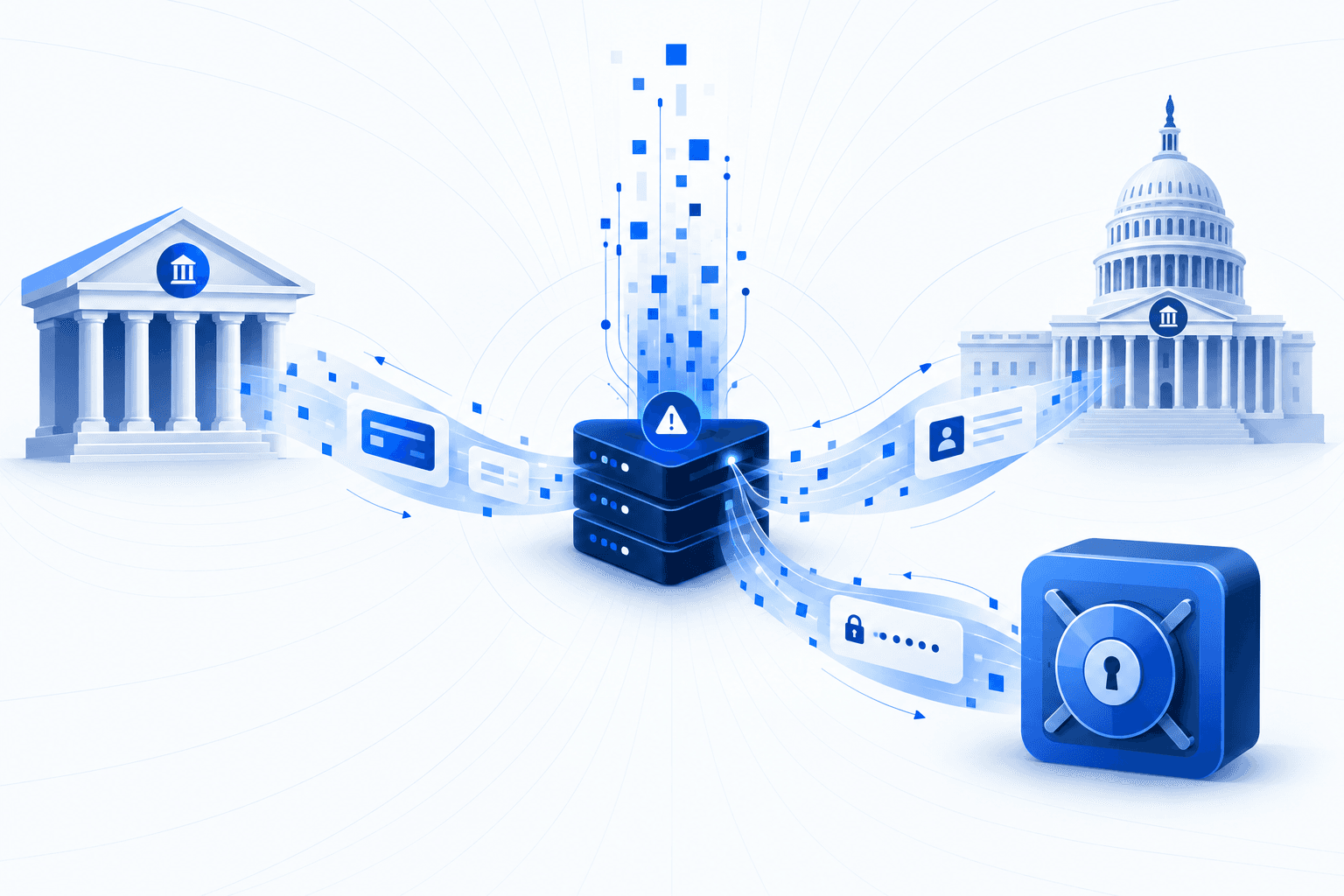
Researchers uncovered a Russian-speaking credential-theft operation after finding an exposed directory on a Netherlands-hosted VPS containing stolen data and operational records. Hunt.io reported 603 distinct implants across 469 victim hostnames during October–November 2026, using HavoX, Phantom53 and a Kraken bridge. At least 57 victims had US banking or government credentials exposed, including at least 46 with federal identity or benefits accounts. The stolen accounts included IRS, Social Security, ID.me and Login.gov credentials; the findings do not indicate breaches of the banks, government agencies or identity providers themselves. Russian-language artifacts suggest a Russian-speaking operator, but do not establish a named group or state affiliation.
The operation targeted browser credentials, password-manager vaults, Microsoft 365 sessions, cryptocurrency credentials and AI developer tokens. Researchers reported offline decryption of a LastPass vault containing 2,880 logins, successful 1Password password cracking and theft of KeePass databases. The attackers also used tools to bypass Chrome’s application-bound encryption and replay stolen Microsoft 365 session cookies to obtain tokens, circumventing multifactor authentication. Tokens were reportedly extracted from 35 AI developer platforms, including Claude, Codex and Gemini. Defenders investigating affected endpoints should revoke active sessions and exposed tokens, rotate compromised credentials, and assess stolen vault contents rather than relying on password resets or MFA alone.
Why it matters
Hunt.io uncovered an observed credential-theft operation with 603 distinct implant IDs across 469 victim hostnames during October 12–November 8, 2026; these are not necessarily 603 unique computers. Stolen browser credentials, password-manager contents, developer secrets and live sessions create substantial account-takeover, financial-fraud and downstream organizational-access risks, with successful Microsoft 365 access demonstrated across two tenants. The banks, government agencies and identity providers associated with stolen accounts were not themselves reported breached (primary report).
- Industry-specific impact: Financials and Government & Public Sector are specifically affected through customer and citizen credential exposure, not institutional compromise. At least 57 victims had US banking or government logins exposed, including Chase credentials in 31 victim datasets and at least 46 victims with federal identity or benefits accounts associated with services such as ID.me, Login.gov, IRS and Social Security; counts overlap and are lower bounds (primary report). AI-tool credential theft establishes developer-user exposure, but does not independently establish an affected Information Technology industry population.
- Geography-specific impact: The United States is specifically affected: stolen data included US banking customers’ and federal-service users’ credentials. Netherlands server hosting and Russian-language artifacts do not establish affected populations in those countries (primary report).
- Scope and severity: One LastPass vault exposed 2,880 logins, while cryptocurrency collection included 6,570 records across 67 victim hosts. These figures describe observed collection, not confirmed financial losses; neither sale of the stolen data nor resulting fraud was established.