Malicious GitHub Repositories Hijack AI Coding Agents to Steal Developer Credentials
Emerging Technology Risk · 6 sources · Updated 4d ago · First seen Nov 17, 2026
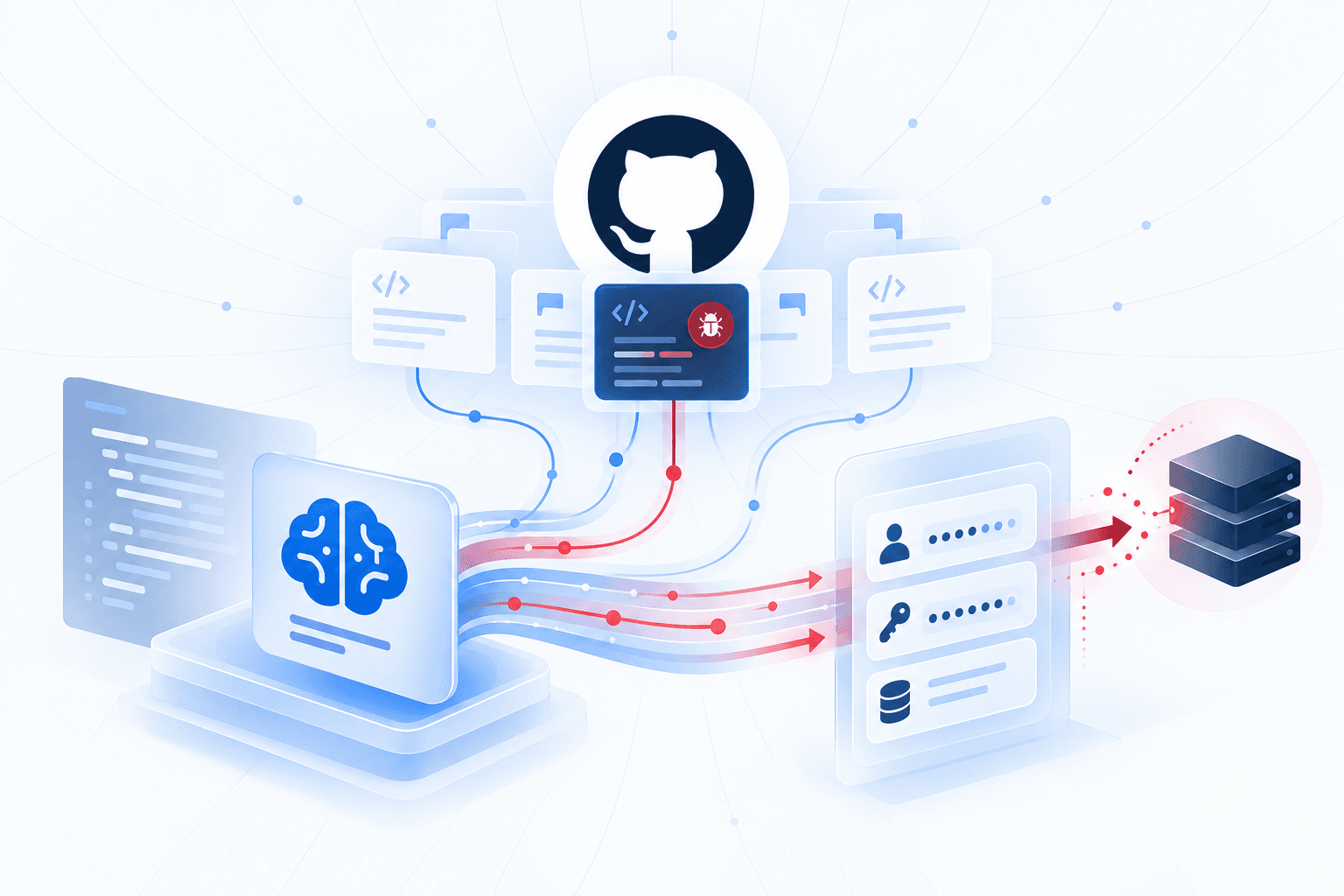
Bitdefender Labs identified 22 malicious GitHub links in a campaign targeting developers who use AI coding assistants. Attackers embed malicious project instructions, session-start hooks, Model Context Protocol (MCP) configurations, and editor tasks in repositories to launch a concealed JavaScript payload through a loader named setup.js. The campaign combines indirect prompt injection with execution hooks that do not require an AI assistant to follow malicious instructions. The payload runs with the developer’s permissions and can steal credentials and tokens, validate account access, and prepare collected data for exfiltration.
The malware also attempts to propagate by modifying local AI-agent configurations and using stolen GitHub and GitLab credentials to implant malicious files in additional repositories. Accessible package-publishing credentials can enable it to republish infected packages, extending the risk beyond the initially compromised workstation. Developers should inspect repository instructions, hooks, MCP settings, editor tasks, and referenced setup scripts before trusting unfamiliar projects. If malicious files have executed, responders should rotate all secrets accessible to the affected environment and investigate agent configurations, repositories, and package-publishing activity for further compromise.
Why it matters
Developers using AI coding assistants are targeted through malicious GitHub repositories that can execute credential-stealing code with the developer’s permissions. Compromise could expose cloud accounts, CI/CD systems, source repositories, package registries, and personal credential stores, with downstream software-supply-chain consequences. Bitdefender identified 22 malicious GitHub links, establishing an observed campaign rather than a theoretical attack, but the supplied reporting names no confirmed victims and does not establish successful theft or the extent of propagation.
- Industry-specific impact is not established. The evidence identifies a developer population and development tooling, not confirmed affected organizations or a specifically targeted industry; use of GitHub or AI assistants alone does not establish Information Technology sector impact.
- Geography-specific impact is not established. No affected operations, populations, or geographic targeting are identified; repository names do not establish victim locations.
- Scope: Initial exposure is repository-specific, but stolen credentials and modified local agent configurations could extend compromise to additional projects and package consumers. These propagation capabilities are not evidence that every listed downstream service was compromised. Primary research