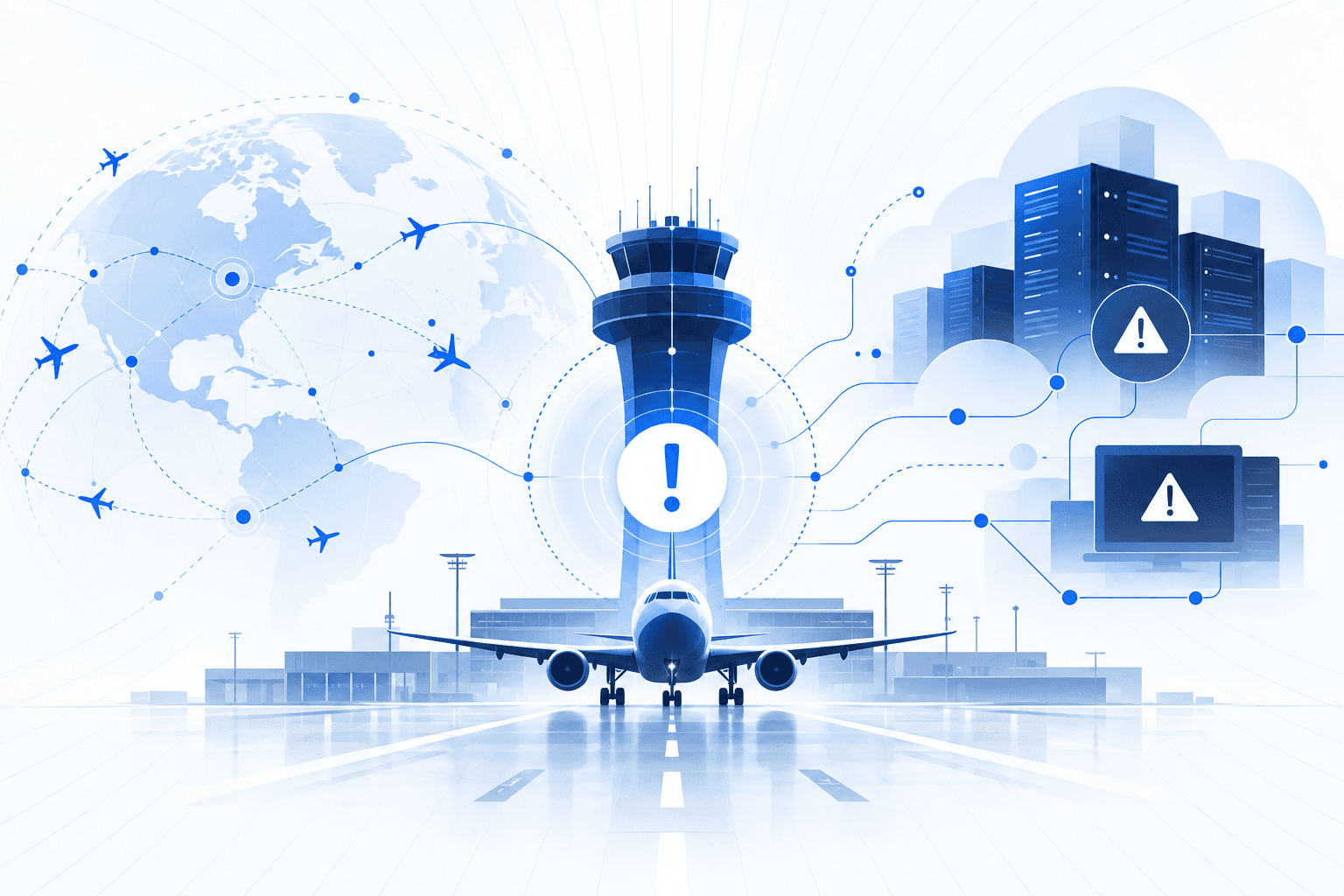
FAA Ground Stop Linked to Router Upgrade Traffic Overload, Not Cyberattack
Sector Threat Intelligence · 10 sources · Updated 11d ago · First seen Nov 15, 2026
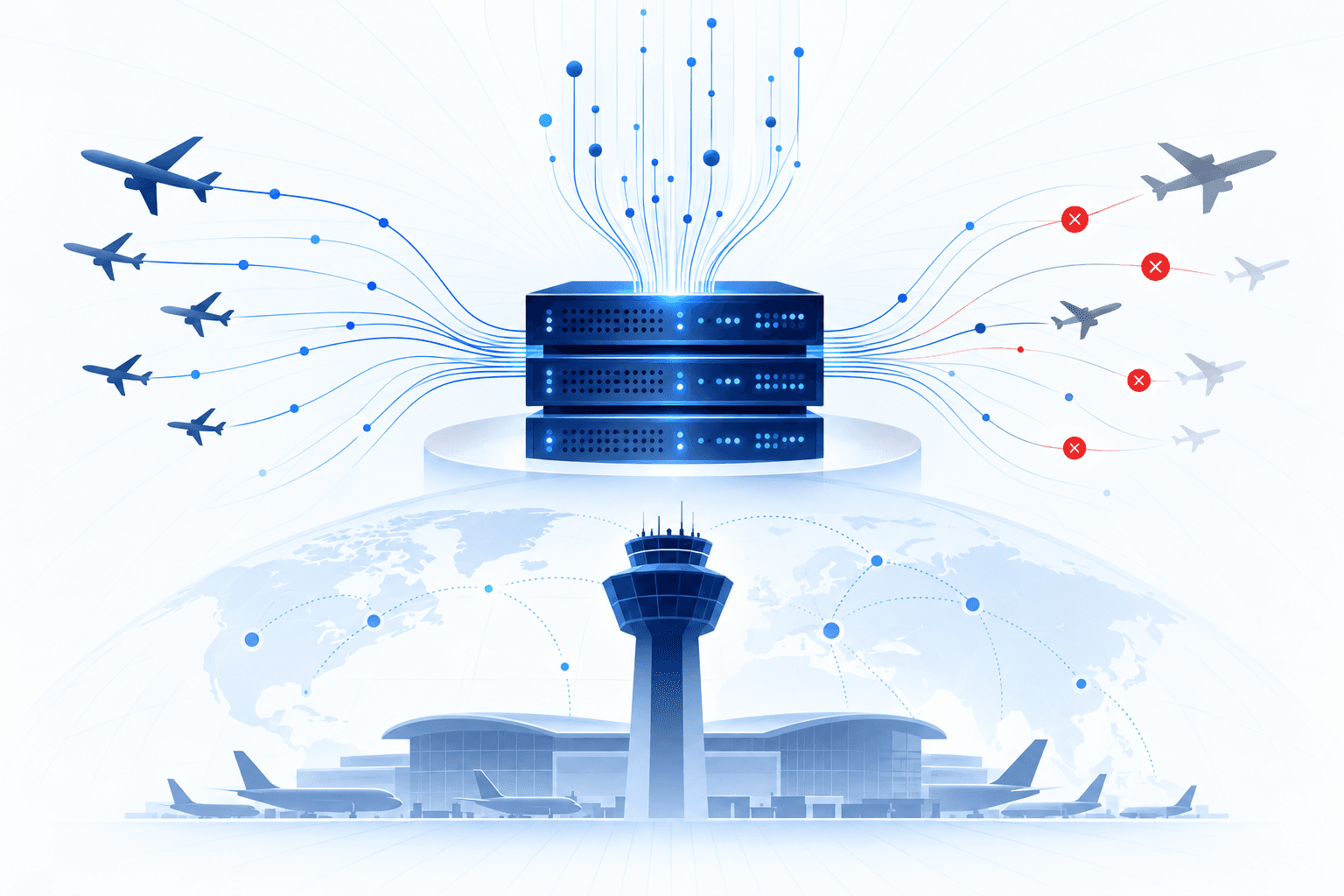
The Federal Aviation Administration’s initial findings linked a nationwide ground stop on November 13 to excessive network traffic from two facilities during a router upgrade, rather than a cyberattack or artificial intelligence. Legacy equipment on the L3Harris-operated FAA Telecommunications Infrastructure network became overwhelmed, disrupting communications and radar feeds at 17 of 22 air route traffic control centers. Service recovered after L3Harris disconnected sites in El Dorado, Arkansas, and Amarillo, Texas; both routers were removed for testing. Some radio frequencies and radar feeds remained operational, and every airborne flight landed safely.
A Wall Street Journal report quoted in a NANOG discussion said FAA officials disabled a feature associated with excessive data broadcasting across the agency’s Juniper routers. Investigators were still determining whether contractor error or defective equipment caused the disruption, and officials ruled out the SMART AI-assisted planning platform. Network engineers suggested Layer 2 loops and spanning-tree issues as possible mechanisms, but none was established as the root cause. The discussion also cited National Weather Service telecommunications problems without establishing a shared cause. For critical-infrastructure operators, the incident highlights the importance of containing broadcast traffic, isolating legacy network segments and validating router upgrades before broad deployment.
Why it matters
A November 13, 2026 telecommunications failure caused a nationwide U.S. aviation ground stop from 3:54 p.m. to 8:15 p.m. ET, disrupting airline operations and reportedly degrading communications and radar feeds at 17 of 22 FAA en route centers. Officials linked the incident to excessive traffic during router migration work, reported no evidence of a cyberattack, and said every airborne flight landed safely; the precise equipment or configuration fault remains unresolved. Separately, Akamai observed opportunistic automated attacks against airline transactional services during increased passenger demand, but reported that monitored sites remained available.
- Industry-specific impact: Industrials—airlines experienced halted departures and increased flight-change demand; Government & Public Sector—the FAA's operational air traffic control network was disrupted. These are observed operational impacts, not inferred exposure from product use. FAA incident reporting
- Geography-specific impact: United States—the FAA halted departures nationwide, with flooding sources identified at facilities in El Dorado, Arkansas, and Amarillo, Texas. Akamai also measured demand across major North American airlines, but the supplied evidence does not establish additional affected countries. Incident reporting, airline traffic analysis
- Business consequences: Flight cancellations, rebooking workload and customer-service pressure were substantial; one analysis cited approximately 9,159 Friday cancellations, while noting variation among trackers. Financial losses and data compromise were not quantified or established. Operational analysis