Mallory
← Back to News
government-diplomatic-threatremote-access-implantcredential-access-methodpersistence-method

CL-UNK-1211 Targets Government Linux Servers With SysGoRAT Backdoor

Sector Threat Intelligence · 9 sources · Updated 25d ago · First seen Nov 2, 2026
CL-UNK-1211 Targets Government Linux Servers With SysGoRAT Backdoor

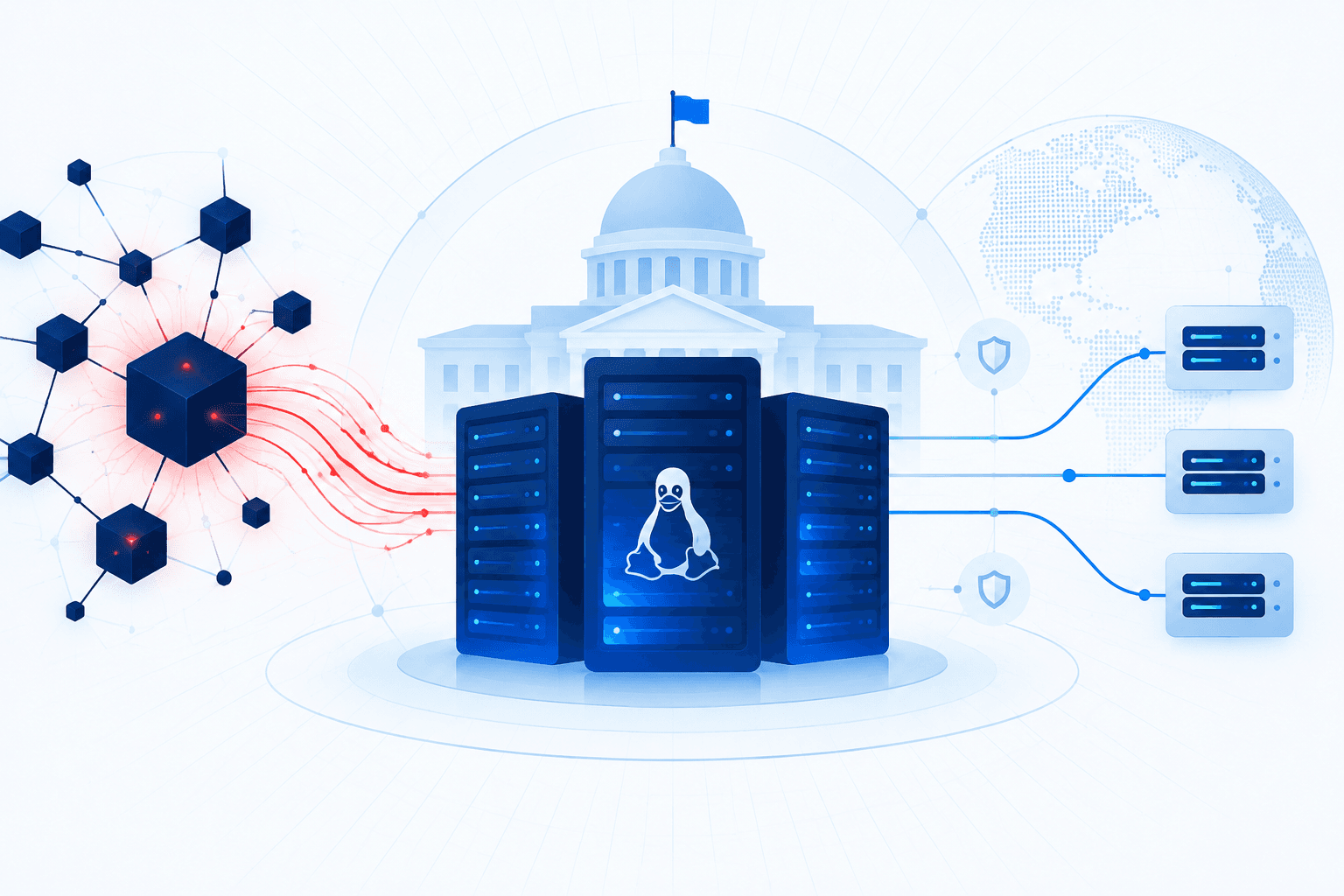
Palo Alto Networks Unit 42 identified an espionage campaign tracked as CL-UNK-1211 targeting government and state-affiliated Linux infrastructure between October 2025 and April 2026. The attackers deployed PHP web shells, harvested credentials, and installed SysGoRAT, a custom Go-based backdoor, to support reconnaissance, persistent access, and intelligence collection. They also attempted to disable endpoint protections and conceal their activity. Operators searched government mailboxes for social-media-related messages and tried to archive selected emails, but syntax errors prevented the observed archiving script from executing successfully.

Conversational reasoning notes embedded in malicious scripts suggest possible use of large language models or automated AI agents, but do not establish autonomous AI operation. Additional reporting attributes memory-backed execution, kernel-worker process masquerading, DNS-over-HTTPS communications, and systemd-generator persistence to SysGoRAT; the supplied evidence does not independently establish all of those capabilities. Defenders should prioritize patching exposed Linux applications, investigating unexpected PHP files and credential access, and monitoring endpoint-protection tampering, suspicious memory-backed execution, systemd generators, and unusual outbound DNS-over-HTTPS traffic.

Why it matters

CL-UNK-1211 compromised government and state-affiliated Linux infrastructure between October 2025 and April 2026, using web shells, credential theft, and SysGoRAT to sustain access for intelligence collection. Observed intrusions create substantial risks of privileged-account compromise, sensitive-data exposure, and further network access; however, the observed email-archiving script failed, so successful mailbox exfiltration is not established. The reporting describes targeted activity, not evidence of indiscriminate exploitation or a quantified victim population.

  • Industry-specific impact: Government & Public Sector is specifically affected: Unit 42's findings describe compromised government infrastructure, searches of government mailboxes, and attempts to extract sensitive databases and emails. State affiliation alone does not establish additional affected sectors. Reference
  • Geography-specific impact is not established at country level. Secondary reporting describes targeting across North America, Europe, and East Asia, but supplies no named victim countries or corroborating location details; these regional claims do not support country codes. Reference
  • Scope and attribution: Exploitation and post-compromise activity were observed in the wild. No named threat actor or sponsoring country is established; separate reporting about other actors abusing AI frameworks should not be attributed to CL-UNK-1211.

Who's targeting your sector?See the actors and campaigns active against you right now.
See sector threats
Event timeline

How this story unfolded

Events from the most recent confirmed update back to the earliest known activity.

8 events · Oct 2025 – Oct 2026
  1. Reported Nov 2, 202626d ago

    Unit 42 identifies signs of possible AI-assisted script development

    Unit 42 identified conversational, step-by-step reasoning notes embedded in multiple malicious scripts. Researchers assessed that these suggested code copied from AI-generated output or deployment by an automated AI agent, but did not conclusively establish AI involvement.

    Government Linux Servers Targeted With SysGoRAT and Suspected AI-Generated Scripts
  2. Reported Nov 2, 202626d ago

    Email archiving attempt fails because of script syntax errors

    The attackers attempted to generate zip_mails.sh to compress selected government emails into ZIP archives for exfiltration. Syntax errors prevented the observed archiving script from executing successfully.

    Government Linux Servers Targeted With SysGoRAT and Suspected AI-Generated Scripts
  3. Reported Nov 2, 202626d ago

    Attackers search government mailboxes for social-media messages

    The attackers enumerated mail directories and used search_social.php to search email headers for social-media-related keywords. The script displayed matching message paths, senders, recipients, and subjects.

    Government Linux Servers Targeted With SysGoRAT and Suspected AI-Generated Scripts
  4. Reported Nov 2, 202626d ago

    Attackers attempt to disable defenses and disguise their activity

    CL-UNK-1211 attempted to disable endpoint protections, wipe system logs, and plant deceptive red-team markers to resemble a legitimate security assessment. The attackers also used in-memory reverse shells to reduce disk artifacts.

    Government Linux Servers Targeted With SysGoRAT and Suspected AI-Generated Scripts
  5. Reported Nov 2, 202626d ago

    CL-UNK-1211 plants credential-stealing code

    The attackers replaced .bashrc with a malicious version containing a password-stealing command and injected credential-harvesting code into PHP login pages. They also searched configuration files and command histories for cleartext email, SMTP, and database passwords.

    Government Linux Servers Targeted With SysGoRAT and Suspected AI-Generated Scripts
  6. Reported Nov 2, 202626d ago

    Attackers deploy PHP web shells and SysGoRAT

    CL-UNK-1211 deployed open-source and custom PHP web shells alongside the Go-based SysGoRAT backdoor to maintain access. SysGoRAT used a hard-coded WebSocket command-and-control endpoint and supported remote commands, file exfiltration, and proxy connections.

    Government Linux Servers Targeted With SysGoRAT and Suspected AI-Generated Scripts
  7. Oct 2026

    Secondary account dates Unit 42's CL-UNK-1211 research to late October

    A secondary account attributes research into CL-UNK-1211 and SysGoRAT to Unit 42 in late October 2026. Its additional claims about autonomous LLM interaction, process hollowing, and systemd-generator persistence are not demonstrated by the supplied snippets.

    Palo Alto Unit 42 Dissects CL-UNK-1211: Inside t | Shellcode
  8. Oct 2025

    CL-UNK-1211 targets government and state-affiliated Linux infrastructure

    Unit 42 observed CL-UNK-1211 targeting government and state-affiliated Linux infrastructure between October 2025 and April 2026. The campaign involved reconnaissance, persistent access, and intelligence gathering.

    Government Linux Servers Targeted With SysGoRAT and Suspected AI-Generated Scripts
Linked entities

Related entities

Vulnerabilities, threat actors, malware, products, organizations, breaches, and observables Mallory has linked to this story. Indicator values are masked here and available in full in the app.

Open in app →

Threat actors

1 linked

Malware

1 linked

Affected products

2 linked
Apache HTTP ServerNginx

Observables

2 linked

Indicator values are masked on this page. See the values in Mallory Domains, IPs, hashes, and URLs are exportable to your SIEM.

Do you run this?See the adversaries and campaigns active against your sector right now, ranked by what they're exploiting.
See Your Sector's Threats
Source coverage

Sources

9 references tracked. Mallory keeps watching after this page renders.

Mallory platform

See the full picture, correlated to your attack surface.

This page covers what’s public. Mallory adds the parts that aren’t: which of your assets are affected, which threat actors are using it right now, and what to deploy next.

Exposure mappingMap indicators from this story to your assets and identify affected systems in minutes.
Threat actor evidenceEvery observed campaign, victim, and pivot linked to actors named in this story.
Associated malwareMalware, exploits, and IOCs connected to the activity described here.
Detection signaturesYARA, Sigma, and Snort rules deployed to your SIEM as soon as they’re published.
Scheduled alertsGet matching new stories delivered to your team as they break, not the next morning.
AI threadsAsk questions about this story and take action on the answers.