Coruna and DarkSword iPhone Exploit Campaigns Span 608 Domains
Active Exploitation · 5 sources · Updated 26d ago · First seen Oct 29, 2026

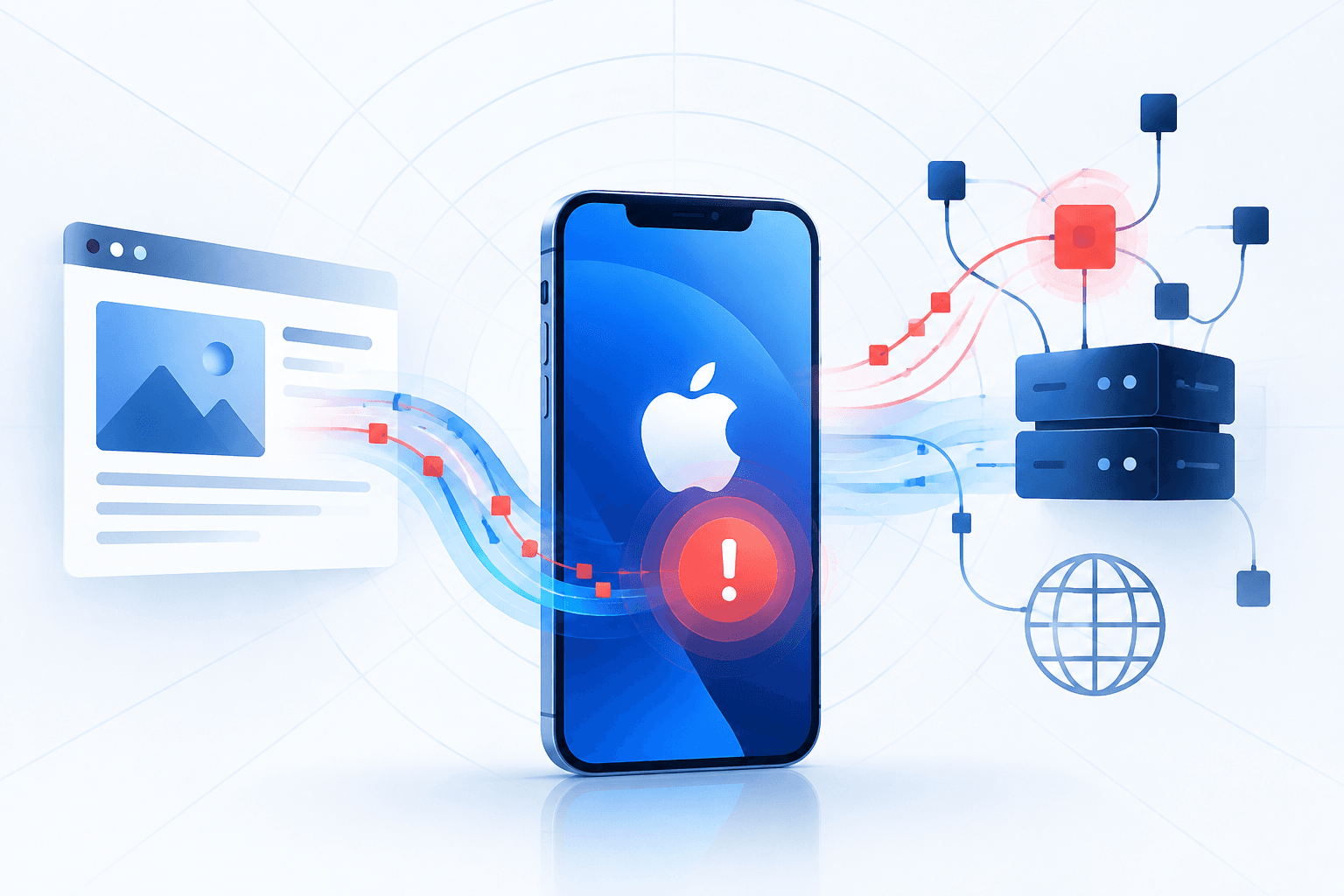
Zimperium’s zLabs identified 608 domains delivering Coruna-family exploit code, including a DarkSword-derived chain targeting newer iOS versions. Attackers use deceptive websites, hidden iframes, compromised legitimate sites, and a backdoored npm package to expose iPhones to browser exploits, with delivery scripts selecting chains based on the device’s iOS version. Compromise requires no app installation or permission prompt, although victims must encounter the malicious web content. Attribution remains unresolved; shared code identifies the frameworks, but Chinese-language comments do not establish an operator or country.
In testing on iOS 18.6.2, the DarkSword-derived chain downloaded seven additional modules, pivoted through system processes, and exfiltrated an Apple Notes database and an inventory of 214 installed applications. Recovered Coruna modules support kernel-memory access, code-signing manipulation, process-memory access, encrypted communications, and forensic-artifact deletion. All mapped vulnerabilities have already been patched, making current iOS updates the primary mitigation. Organizations should prioritize updates across managed iPhones, consider Lockdown Mode for high-risk users, and strengthen controls over third-party website scripts and dependencies.
Why it matters
Unpatched iPhone users face device compromise and sensitive-data theft after encountering malicious web content, without installing an app or accepting a permission prompt. zLabs identified 608 delivery domains and confirmed Apple Notes database and installed-application inventory exfiltration in laboratory testing; active delivery infrastructure is documented, but the supplied reporting does not establish real-world victim counts or confirmed victim losses. All mapped vulnerabilities are already patched, making exposure dependent on device patch status and the applicable exploit chain.
- Industry-specific impact is not established. The campaigns target iPhone users through varied lures and compromised websites; cryptocurrency, casino, and streaming themes do not establish targeting or compromise of those industries.
- Geography-specific impact: Brazil, Nigeria, and Indonesia are supported targeting geographies because the dating-lure templates were localized for users in those countries. This establishes targeting, not confirmed compromises there, and does not limit exposure to those countries. Source: zLabs.
- Business exposure includes corporate and BYOD iPhones containing work notes, application data, and potentially authentication material. Recovered Telegram collection logic demonstrates capability; the confirmed test exfiltration was NoteStore.sqlite and an inventory of 214 applications.