React2Shell Exploitation Deploys Linux Backdoors, Cryptominers and DDoS Botnets
Active Exploitation · 4 sources · Updated 26d ago · First seen Mar 1, 2026
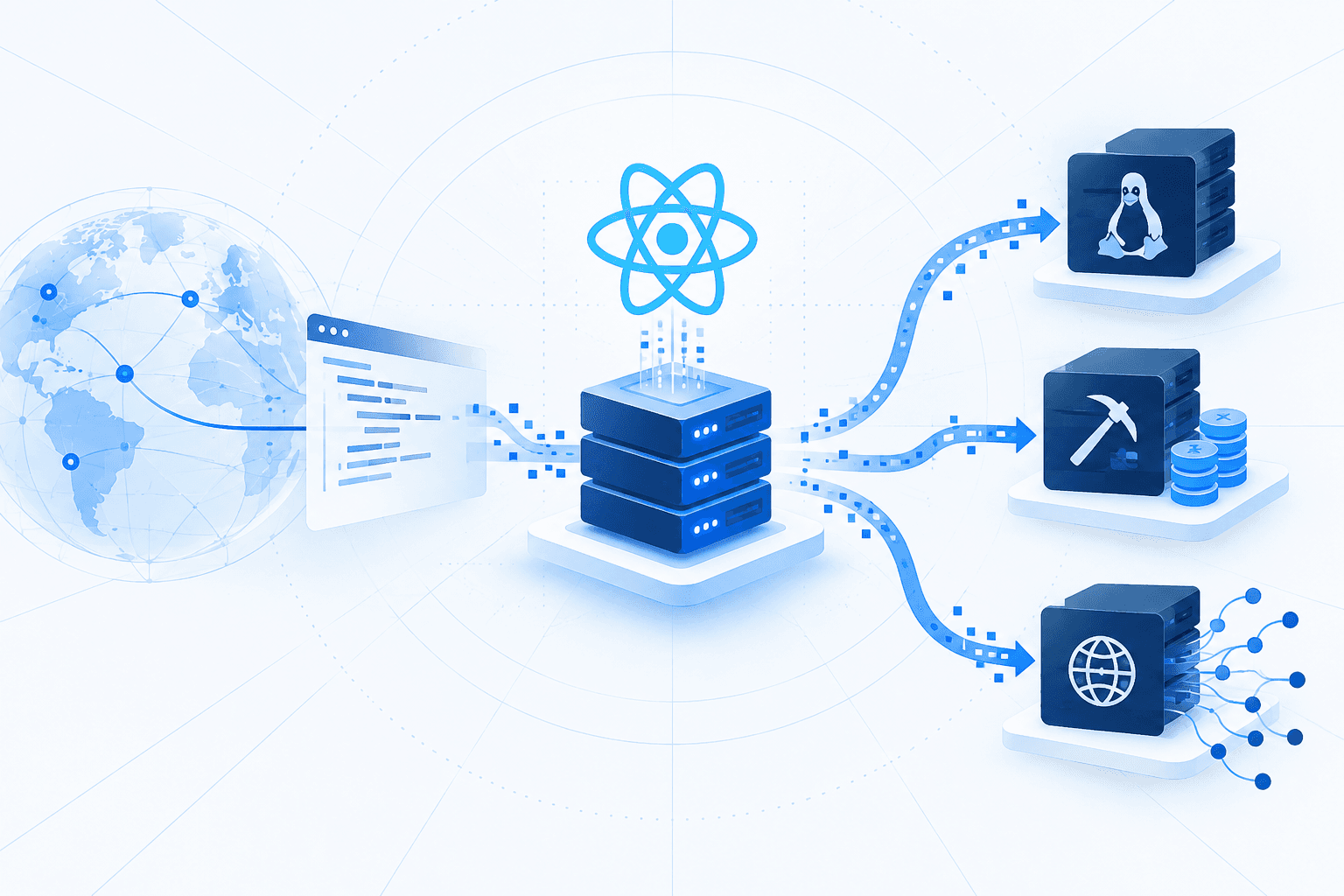
Attackers are exploiting React2Shell (CVE-2025-55182), an unauthenticated remote code execution vulnerability in React Server Components, to compromise React and downstream Next.js applications. Applications can be vulnerable even without explicitly using React Server Functions. ELLIO and Huntress documented automated exploitation beginning in December 2025, delivering XMRig miners, Mirai and Kaiji botnet variants, proxies, and persistent Linux implants. ELLIO’s dominant observed campaign, “nuts,” deployed both Mirai and XMRig and killed competing miners, specifically targeting the rival “rondo” campaign. Huntress identified the PeerBlight backdoor, which combines hardcoded command-and-control infrastructure, a domain-generation fallback, and signed configuration updates distributed through BitTorrent DHT. Other payloads included CowTunnel reverse tunnels, the ZinFoq implant with reverse-shell and SOCKS5 capabilities, and Sliver deployment chains.
A March 2026 ELLIO investigation documented a campaign exploiting React2Shell alongside Struts2 OGNL injection, XWiki Solr RCE, and UPnP endpoints. An exposed distribution directory hosted 31 samples, including a custom Go application-layer DDoS bot, two Mirai variants, and a command-and-control server. The Go bot supported HTTP/1.1 and HTTP/2 floods, rotated browser headers, and fabricated Cloudflare challenge tokens; however, the research did not demonstrate successful bypass of cryptographic token validation, and its TLS traffic retained a recognizable Go fingerprint. Organizations should urgently apply vendor fixes and investigate potentially exposed systems for compromise, including backdoors, miners, and unauthorized tunnels. CERT-FR advises treating vulnerable servers that remained exposed after public proofs of concept appeared on December 5, 2025, as compromised, and warns that web application firewall rules cannot substitute for patching.
Why it matters
React2Shell enables unauthenticated takeover of vulnerable React Server Components and downstream Next.js applications; observed exploitation installed persistent backdoors, cryptominers, unauthorized tunnels, and DDoS bots. Consequences include compute theft, service degradation, remote access, and potential data theft or network pivoting; automated exploitation affected multiple organizations, with supplied reporting documenting activity from December 2025 through March 2026 but not establishing current activity as of November 2026.
- Industry-specific impact: Yes. Industrials and Communication Services are supported because Huntress explicitly observed exploitation targeting organizations in construction and entertainment, respectively. These are observed sector exposures, not evidence that targeting was exclusive to those industries. Huntress
- Geography-specific impact is not established. The references do not identify confirmed affected operations, populations, or geographic targeting; infrastructure locations and CERT-FR's publication do not establish affected countries.
- Scope and confidence: Applications supporting React Server Components can be vulnerable without explicitly using Server Functions; not all React applications are affected. ELLIO's estimate of 222 alleged C3Pool victims and named organizations inferred from worker hostnames are not independently confirmed victim counts or identities. CERT-FR, ELLIO