Infected USB Drives Exposed Air Force Mission Systems and Seeded Pentagon Malware Breach
Sector Threat Intelligence · 2 sources · Updated 1mo ago · First seen Oct 15, 2026
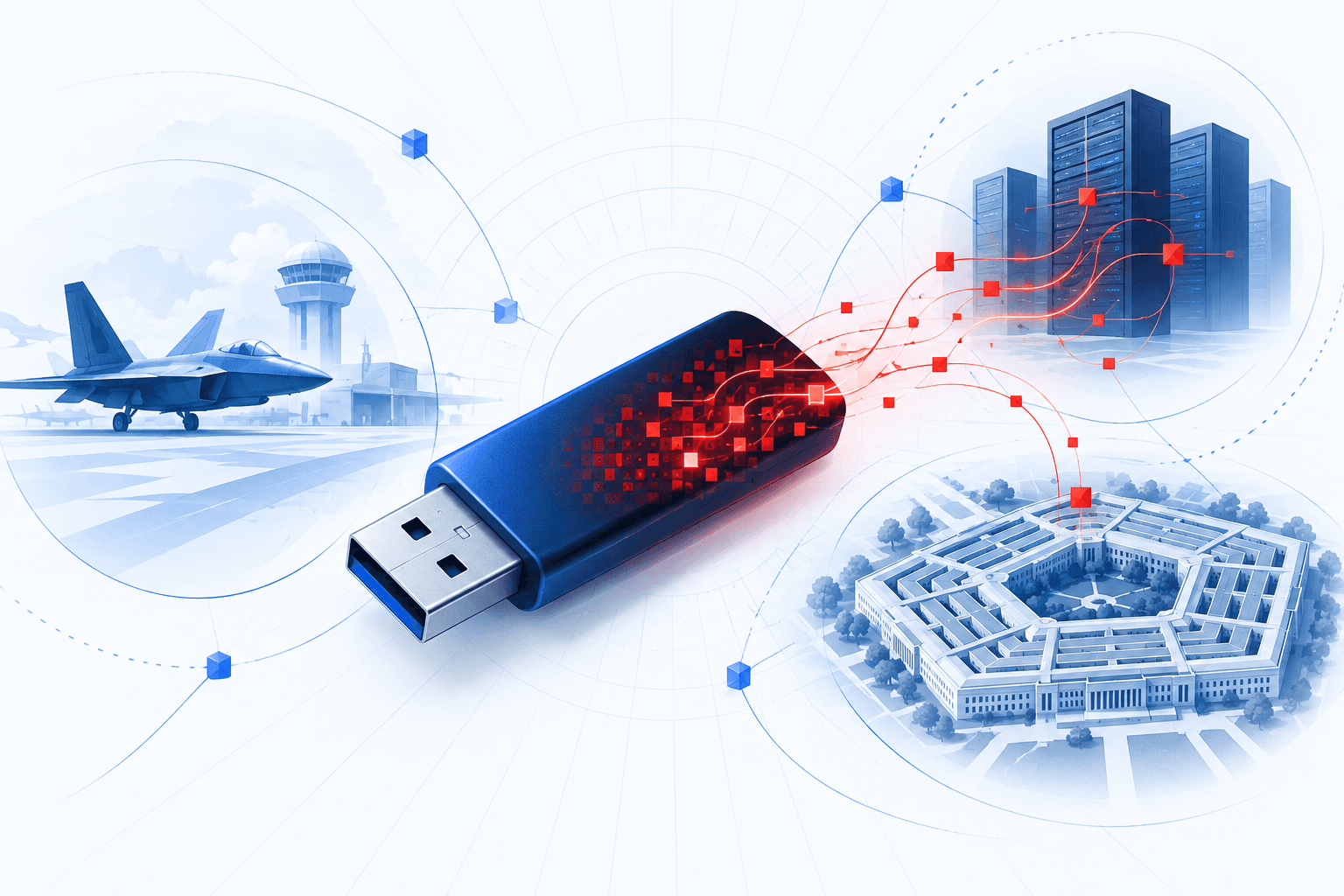
U.S. Air Force personnel used locally purchased and personal USB drives to move mission-planning data between unclassified systems, classified systems and aircraft, creating a pathway for malware infection. Former Air Force IT security employee Justin Henkel described personnel buying drives in Afghanistan and said U.S. adversaries supplied infected devices to local vendors in the Middle East. The accounts highlight how operational data-transfer practices exposed sensitive military environments to untrusted removable media.
In 2008, an infected USB drive connected to a laptop with access to U.S. Central Command introduced the Agent.BTZ worm into Department of Defense systems. The malware could collect information and communicate with remote servers; eradication took 14 months. Reporting links the malware to Russian groups but does not establish definitive attribution. The Pentagon banned USB drives following the incident, then restored their use under certain circumstances in 2010. The breach underscores the need to restrict removable media and enforce controlled transfers between security domains.
Why it matters
The reporting revisits a historical removable-media breach affecting U.S. Department of Defense systems and unsafe Air Force mission-data transfers across unclassified systems, classified systems, and aircraft. The 2008 Agent.BTZ infection required 14 months to eradicate, demonstrating the potential for prolonged remediation and sensitive-data exposure; the references do not establish specific data losses, aircraft compromise, or a current campaign.
- Affected organizations: U.S. Air Force, U.S. Central Command, and the broader Department of Defense.
- Business and operational stakes: confidentiality of classified information, integrity of mission-planning data, and availability of systems supporting military operations.
- Exposure pattern: personal and locally sourced USB drives crossed security boundaries, bypassing the isolation expected between classified and unclassified environments.
- Confirmed historical exploitation: an infected USB drive introduced Agent.BTZ into DoD systems in 2008. The reporting does not quantify the number of compromised endpoints.