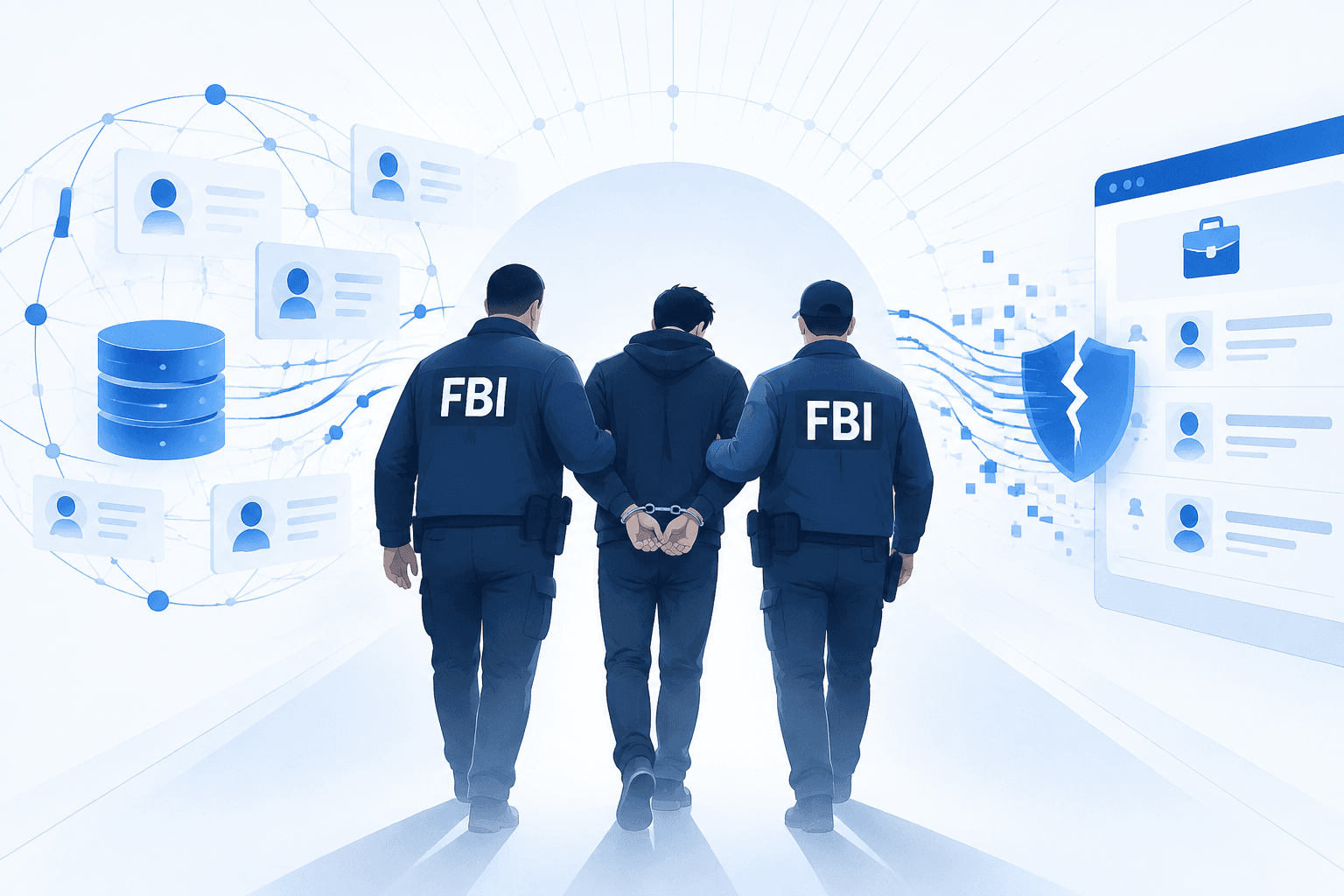
Canadian Ransomware Negotiator Arrested on Extortion Charges Amid ShinyHunters Probe
Active Exploitation · 15 sources · Updated 1mo ago · First seen Oct 11, 2026

Edward Dubrovsky, a 54-year-old Canadian cybersecurity executive and ransomware-response negotiator, was reportedly arrested in the Philadelphia area on federal charges involving extortion-related conspiracy and interference with commerce. Reports said he was visiting for a conference. His underlying case in the Eastern District of Texas remains sealed, leaving the specific alleged conduct unclear. Dubrovsky was ordered detained pending a hearing in Texas, with a subsequent order directing the U.S. Marshals Service to transport him there. The New York Times and Brian Krebs reportedly identified him as a suspected ShinyHunters co-conspirator whose arrest FBI Director Kash Patel announced, but authorities have not publicly confirmed that identification or a connection between Dubrovsky’s charges and the hacking investigation.
The ShinyHunters investigation involves an intrusion affecting FBIjobs.gov on a third-party-managed platform. According to SecurityWeek, the FBI attributed the intrusion to a contractor’s failure to patch vulnerable Oracle PeopleSoft software. ShinyHunters claimed it obtained information on nearly all FBI agents and job applicants; the supplied reporting does not establish that claim’s accuracy or the breach’s full scope. The arrest announcement follows two other recent arrests of alleged ShinyHunters members, and the group’s Tor-based website appeared inaccessible when SecurityWeek published its report. The incident highlights third-party patching exposure, while the sealed proceedings leave the alleged role of the ransomware negotiator unresolved.
Why it matters
Edward Dubrovsky’s reported arrest highlights a trust risk for organizations that give ransomware negotiators access to sensitive incident information and payment decisions; the sealed case does not establish his alleged conduct or officially confirm a ShinyHunters connection. Separately, the FBIjobs.gov intrusion demonstrates operational exposure from contractor-managed, unpatched enterprise software, with potential identity theft, personnel targeting, and national-security consequences from exposed recruitment and employee information. The intrusion is reported, but ShinyHunters’ claims about nearly universal FBI personnel coverage and the volume stolen remain unverified.
- Affected populations: FBI applicants and personnel; organizations operating contractor-managed Oracle PeopleSoft deployments; enterprises using SaaS platforms and external incident-response providers.
- Business consequences: Confidentiality loss, extortion costs, investigation expenses, reputational damage, and potential misuse of incident-response intelligence. The supplied reporting does not establish encryption or operational outages in the FBI incident.
- Scope: Reporting attributes more than 140 compromised organizations and over $70 million in extortion payments to FBI statements about ShinyHunters. These are campaign-level figures, not losses attributed to Dubrovsky or the FBI breach.
- Vendor implications: Review individual personnel, affiliations, access, and conflicts of interest. The arrest does not establish wrongdoing by Cypfer, CyberSteward, or other affiliated organizations.