Microsoft Warns AI Is Accelerating Cyberattacks and Government Risk
Emerging Technology Risk · 5 sources · Updated 2mo ago · First seen Oct 1, 2026
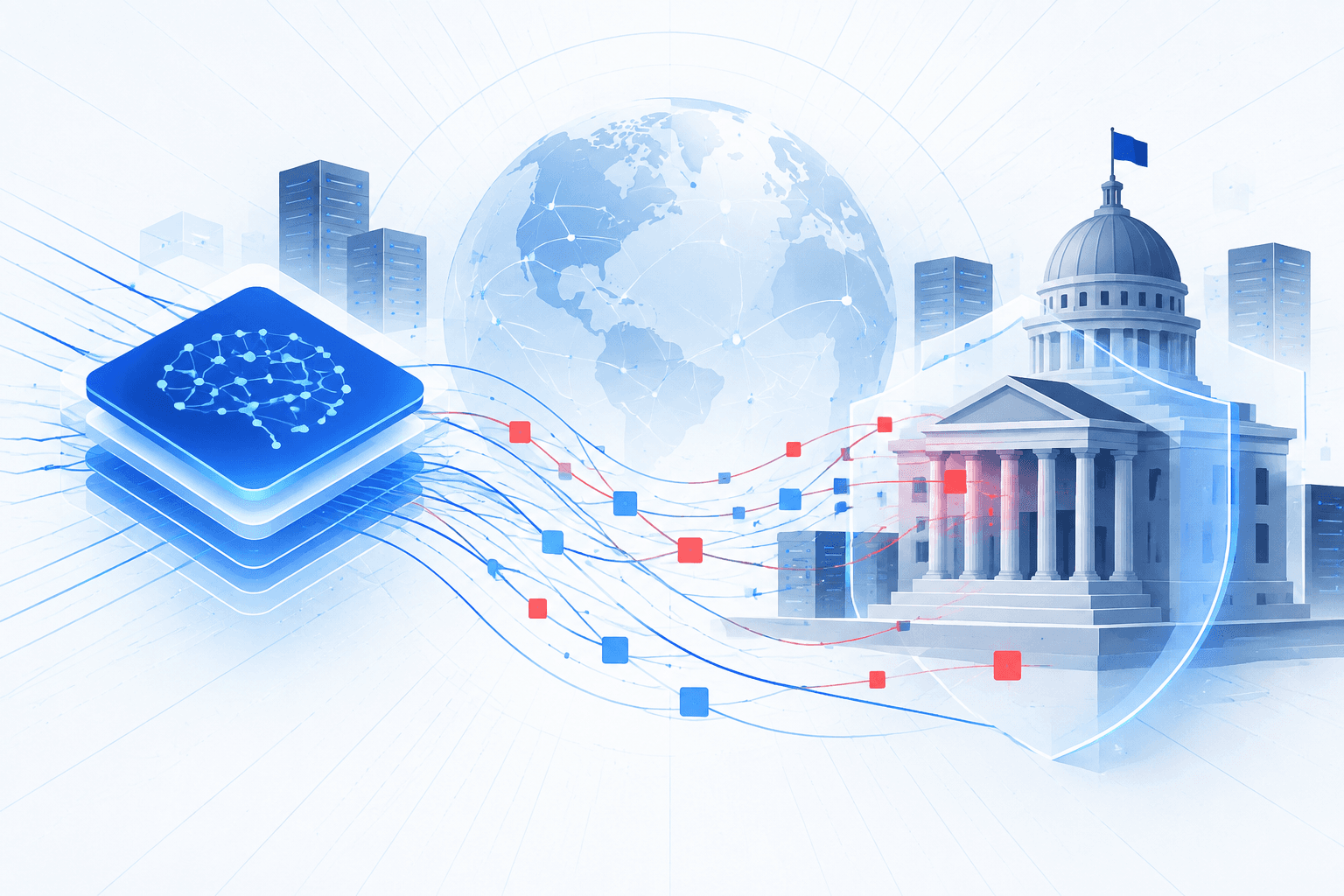
Microsoft’s 2026 Digital Defense Report says cyber risk is increasingly interconnected across identities, endpoints, cloud environments, applications, infrastructure, and software supply chains. Government agencies and services were the most targeted sector in Microsoft-observed activity, accounting for 27% between July 2025 and June 2026, up from 17% the prior year. Phishing represented 23% of observed intrusions, while compromised identities, exposed applications, social engineering, and legitimate administrative tools remained leading access paths; 52.2% of intrusions involving valid accounts resulted in additional credential theft.
The report assesses that attackers currently gain greater near-term advantage from AI, using it to accelerate reconnaissance, vulnerability discovery, phishing, malware and exploit development, and post-compromise activity. Microsoft warns that AI-assisted flaw discovery may outpace patch validation and deployment, reducing exploitation windows to less than 24 hours, and cites activity by China-, Russia-, and North Korea-linked operators, though attacks generally still require human direction. It recommends cross-domain telemetry correlation, rapid incident coordination and continuity planning, public-private intelligence sharing, and AI-agent controls covering identity, authorization, data and model security, prompt injection, agent memory, behavior, and revocation of access.
Why it matters
Microsoft’s 2026 Digital Defense Report describes AI accelerating established attack methods across interconnected identities, endpoints, cloud services, applications, and suppliers. Government agencies face the greatest targeting in Microsoft’s observations, with potential consequences including espionage, credential theft, ransomware, and disruption of essential services. AI-assisted activity is already occurring in real-world operations, but most observed attacks still require human direction rather than fully autonomous execution.
- Scope: The reporting period covers July 2025–June 2026; the percentages reflect Microsoft-observed activity, not the entire global threat landscape.
- Affected sectors: Government accounted for 27% of observed activity, up from 17% the previous year; IT accounted for 17%, and research/academia for 14%.
- Geographic concentration: The United States accounted for 25.5% of attacks reported in the Infosecurity coverage, followed by Israel at 7.6%, Ukraine at 4.8%, and Taiwan at 3.9%.
- Escalation risk: Microsoft found that 52.2% of intrusions involving valid accounts resulted in additional credential theft. Trusted connections to contractors, technology providers, and critical-infrastructure operators can extend the impact beyond the initially compromised organization.
- Operational pressure: Increased attacker dwell time and faster post-compromise activity make early detection and rapid containment critical; improved response after discovery does not compensate for delayed discovery.