NIST Updates OT Security Guide as CISA Warns of ICS Integrator Risk
Vulnerability Disclosure · 4 sources · Updated 2mo ago · First seen Sep 21, 2026
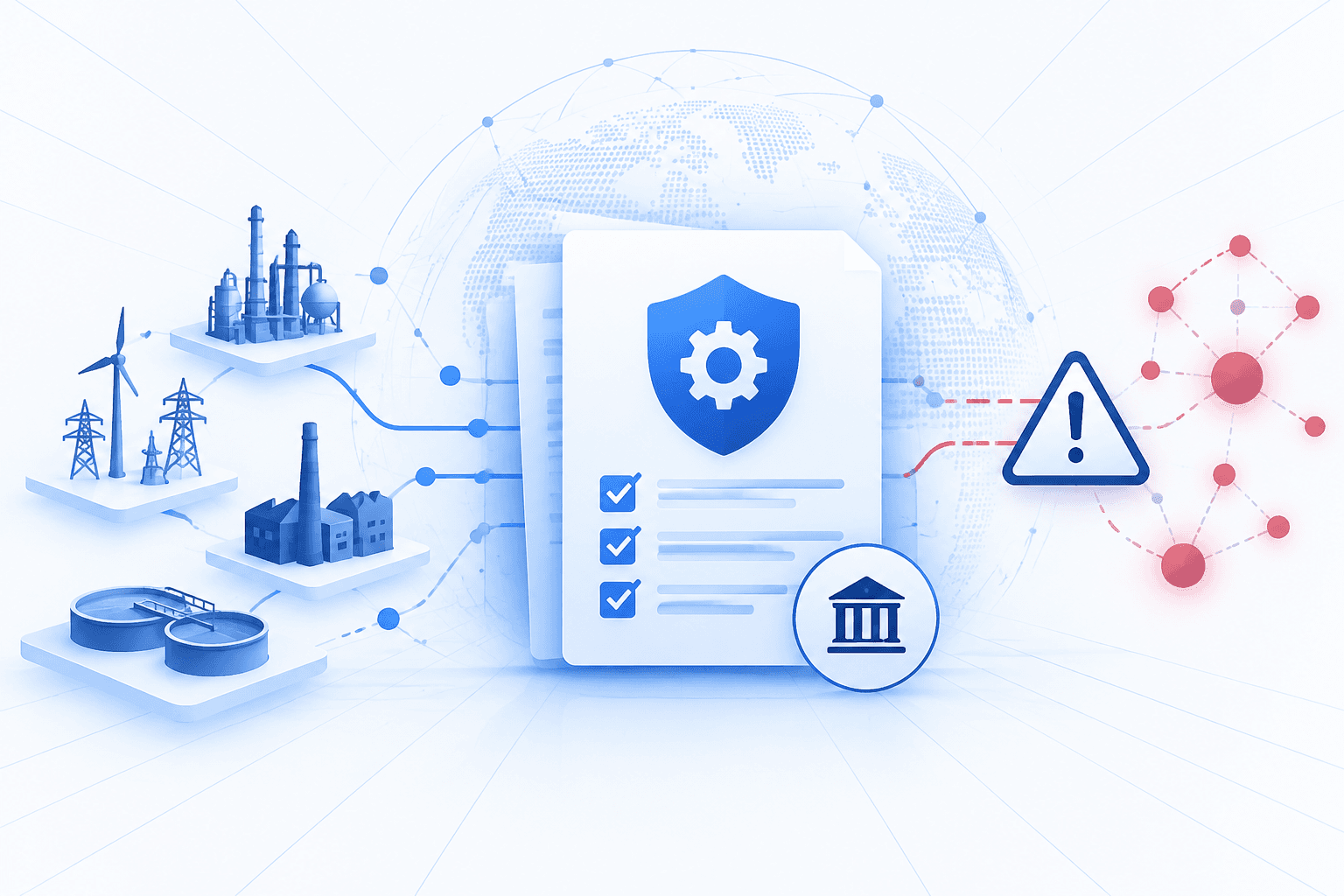
NIST released an initial public draft of Special Publication 800-82 Revision 4, Guide to Operational Technology Security. Reorganized around the NIST Cybersecurity Framework 2.0, the draft addresses OT environments including industrial control systems, building automation, transportation, and physical access control. It expands guidance on aligning OT and enterprise risk management, the Risk Management Framework, asset management, network monitoring, detection, security controls, security architecture, and zero-trust practices while accounting for operational performance, reliability, and safety requirements.
Separately, CISA and the FBI warned critical-infrastructure operators that third-party ICS integrators can create significant exposure because of their broad access to industrial processes and customer environments. The agencies cited a March–April 2025 intrusion at a U.S. industrial-automation solutions company, where foreign malicious actors accessed its network and staged sensitive SCADA and customer data that could enable downstream disruptive attacks. NIST is accepting public comments on the draft through November 30, 2026.
Why it matters
Impact assessment
Third-party ICS integrators represent a high-consequence supply-chain and remote-access risk for critical-infrastructure operators, especially power, transportation, water and wastewater, building automation, and other OT-dependent sectors. Compromise of a single integrator can expose multiple customer environments and enable reconnaissance or subsequent disruption of physical processes; the cited intrusion involved data staging, not a confirmed downstream customer compromise.
- Affected organizations: Critical-infrastructure owners and operators using integrators for ICS design, SCADA programming, PLC/HMI configuration, engineering support, remote troubleshooting, or operational control.
- Highest-risk exposure: Integrators holding customer network diagrams, control logic, device configurations, credentials, project files, or persistent remote access to OT environments.
- Potential consequences: Process disruption, unsafe equipment states, loss of operational visibility/control, extended recovery periods, regulatory consequences, and reputational damage.
- Scope: Potentially broad and multi-customer. An integrator supporting numerous regional operators can become a concentration point for supply-chain exposure.
- Known activity: Foreign malicious actors accessed an unnamed U.S. industrial-automation solutions provider from March through April 2025 and staged approximately 800 customer and ICS-related files for presumed exfiltration. The reporting does not confirm exploitation of the provider's customers or identify water utilities as victims.
- Strategic context: NIST SP 800-82 Revision 4 expands OT security guidance across ICS, building automation, transportation, physical access control, water/wastewater, industrial IoT, and cloud-converged environments.