Fake Browser Updates Deliver GHOSTPULSE and Infostealers Through Compromised Websites
Malware Intelligence · 10 sources · Updated 3mo ago · First seen Aug 2, 2023

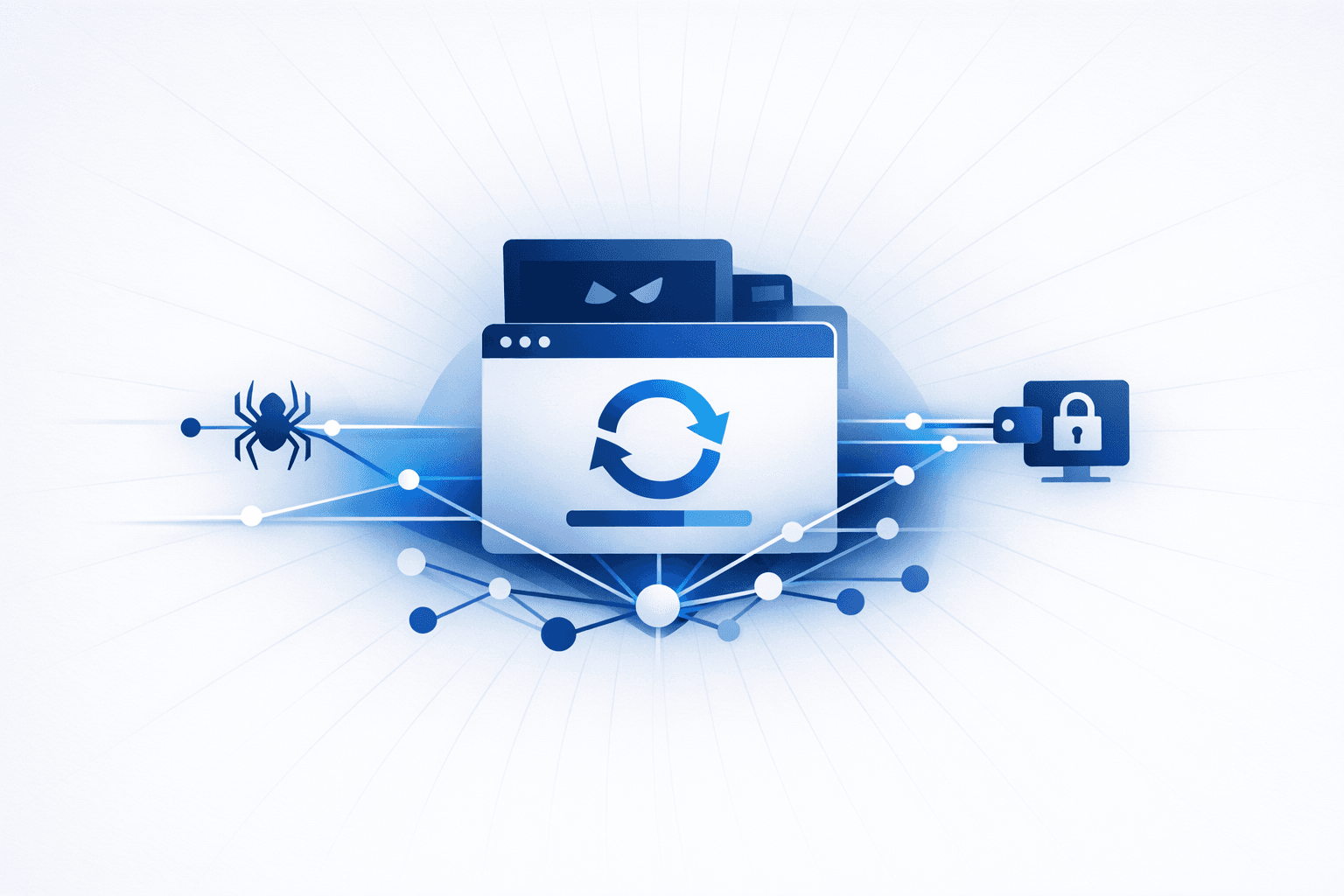
Threat actors are compromising legitimate websites and injecting fake browser-update prompts that redirect visitors through traffic-filtering infrastructure to malware downloads. The campaigns, including SocGholish, ClearFake, RogueRaticate/FakeSG and others, tailor lures to victims’ browsers and commonly deliver remote-access tools, loaders, and credential stealers such as NetSupport RAT, Lumma, StealC, Redline, Raccoon v2, and SectopRAT. Users may reach affected sites through routine browsing, search results, social-media links, or previously legitimate links in email and newsletters.
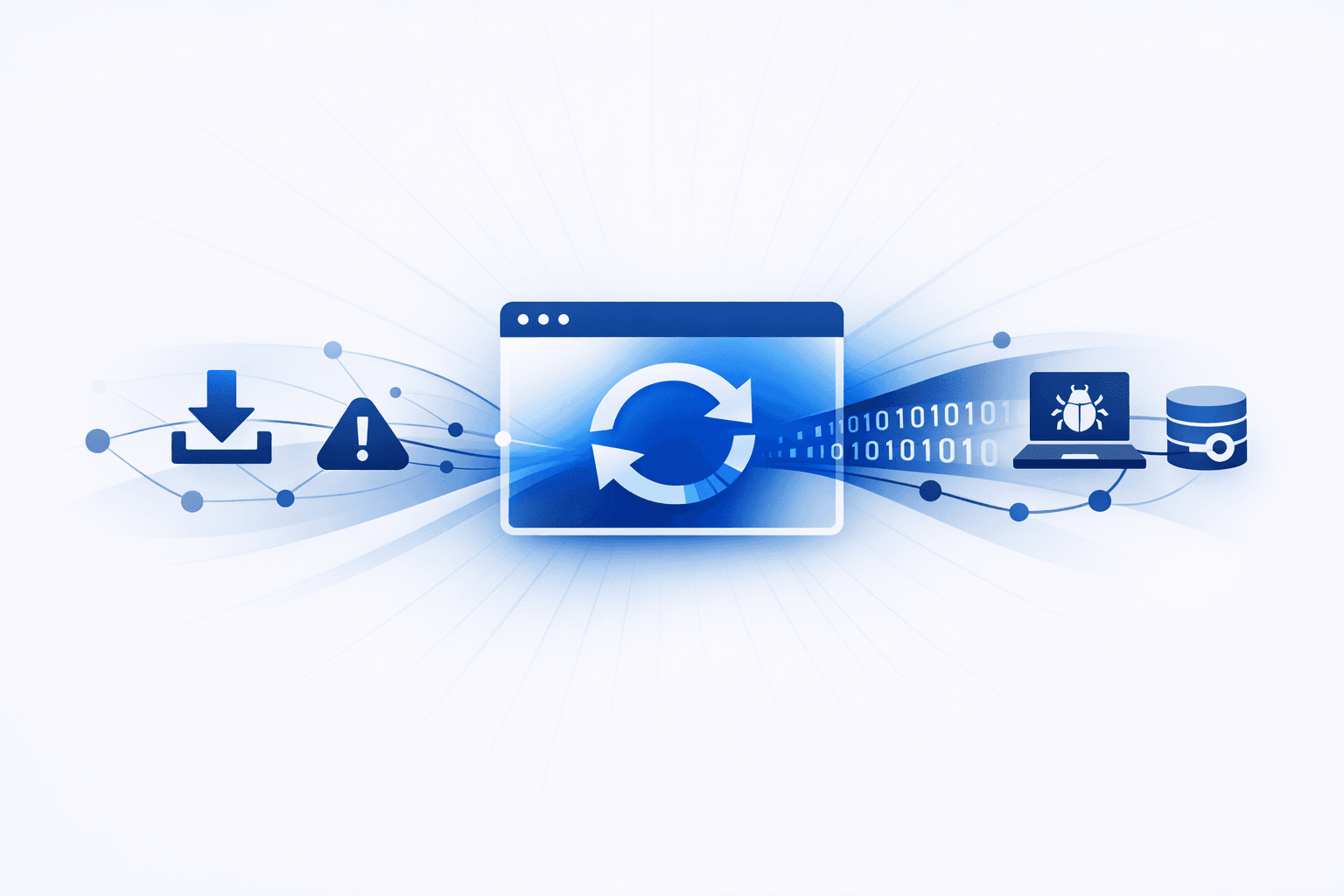
ClearFake activity has used the IDAT loader—also tracked as GHOSTPULSE, HIJACKLOADER, or IDATLOADER—to stage payloads through fake Chrome updates, MSI installers, DLL side-loading, process injection, Process Doppelgänging, and evasion of user-mode security hooks. GHOSTPULSE initially concealed encrypted payloads in PNG IDAT chunks and later shifted to embedding data in PNG pixel values; recent delivery also includes fake CAPTCHA pages that trick users into running clipboard-injected PowerShell commands. Organizations should block or restrict unapproved browser and application installers, monitor PowerShell, DLL side-loading, suspicious MSIX installs, and browser-initiated downloads, and train users to reject update or CAPTCHA prompts presented by websites.
Why it matters
Impact assessment
Fake browser-update and CAPTCHA lures expose Windows users through routine visits to legitimate websites that have been compromised. The campaigns can deliver remote-access tools and information stealers, creating material risk of browser-session theft, credential compromise, cryptocurrency theft, endpoint takeover, and follow-on intrusion.
- Affected population: Windows users browsing compromised websites through direct navigation, search results, social-media links, or legitimate email/newsletter links.
- Affected business functions: organizations with unmanaged software installation, permissive PowerShell execution, inadequate browser-download controls, and users handling privileged accounts, SaaS sessions, financial systems, or cryptocurrency wallets.
- Scope: widespread opportunistic exposure at the web-browsing layer; traffic-distribution systems filter and tailor content, which can selectively target victims and impede investigation.
- Observed payloads: GHOSTPULSE/IDATLOADER, SocGholish, NetSupport RAT, Lumma Stealer, StealC, Redline, Raccoon v2, SectopRAT, Rhadamanthys, Vidar, Amadey, BLISTER, AsyncRAT, and MYTHIC.
- Known in-the-wild activity: ClearFake, SocGholish/TA569, RogueRaticate/FakeSG, and ZPHP/SmartApeSG have been observed delivering malware through these lures. Cisco Talos documented ZigCryptoStealer as a payload in a ClearFake/Amatera chain on 2026-09-08.
- ZigCryptoStealer specifically replaces copied cryptocurrency recipient addresses. A successful transaction can cause irreversible financial loss; address substitution alone does not establish theft of seed phrases, private keys, or passwords.
Supporting facts
- Fake updates imitate Chrome, Firefox, Edge, Brave, Grammarly, and WebEx installers.
- GHOSTPULSE delivery has used signed malicious MSIX packages, MSI installers, EXEs, and fake CAPTCHA pages.
- GHOSTPULSE and related loaders use injection and security-tool evasion, increasing the likelihood that a simple file deletion or a blocked domain will not fully remediate an infected host.
- The reported ZigCryptoStealer chain can use a vulnerable driver to terminate security processes and blockchain data for command-and-control resolution.