Mallory
← Back to News
botnet-infrastructurecommand-and-control-methodthreat-infrastructure-tracking

Botnet Takedowns Shrink DDoS Fleets as Attack Intensity Reaches 2.3 Tbit/s

Malware Intelligence · 4 sources · Updated 3mo ago · First seen Sep 4, 2026

Botnet Takedowns Shrink DDoS Fleets as Attack Intensity Reaches 2.3 Tbit/s

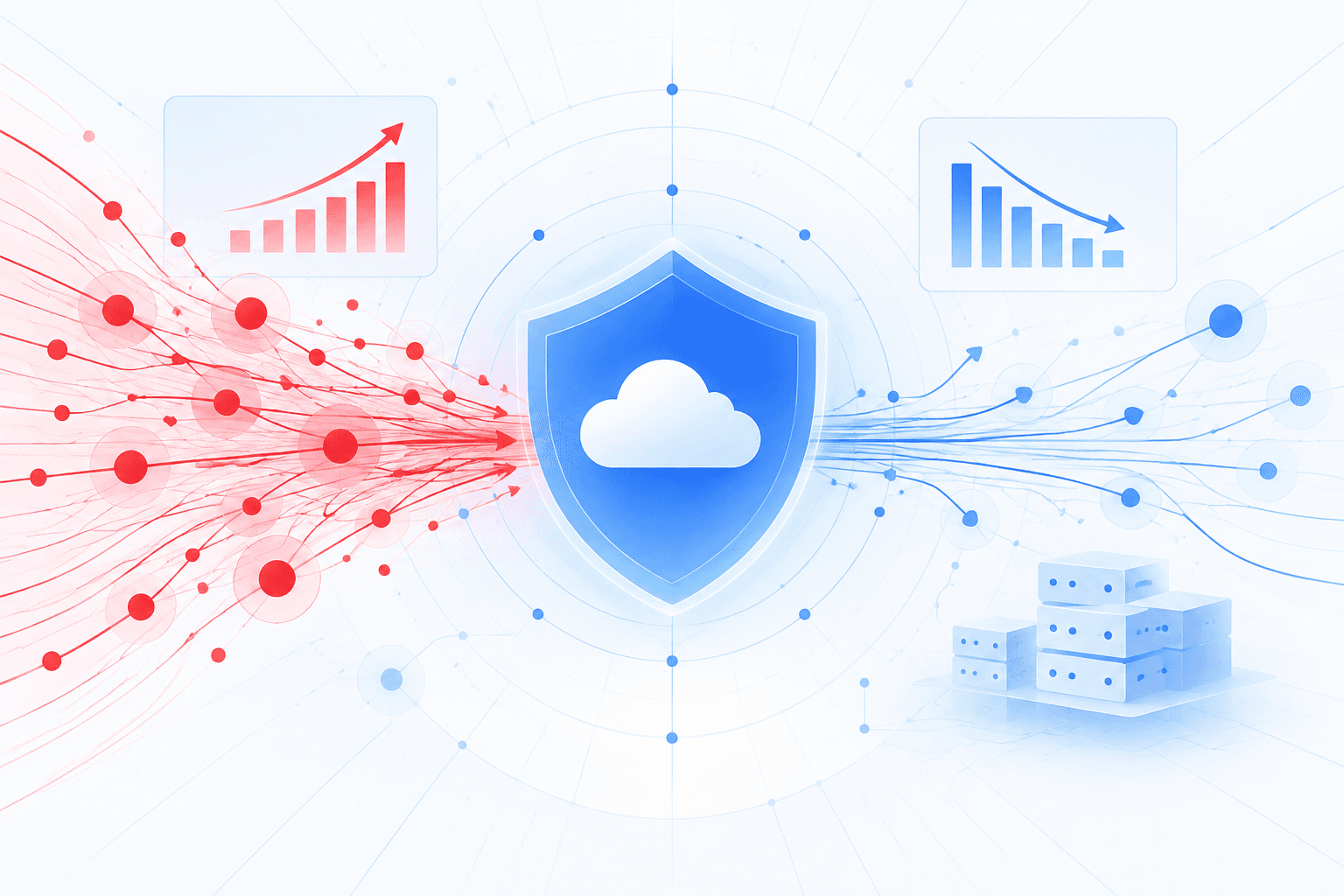
A March multinational operation involving the United States, Canada, and Germany disrupted infrastructure supporting the Aisiru and Kimwolf botnets, contributing to a fall in the largest observed botnet from 13.5 million devices in Q1 2026 to 2.09 million in Q2. Link11 also reported a 42% decline in DDoS attacks in Europe during the first half of 2026, partly attributing the reduction to law-enforcement actions including Operation Eastwood and the shutdown of four IoT botnets.

Attackers are compensating with more powerful and resilient campaigns: Link11 recorded peaks of 2.3 Tbit/s and 322 million packets per second, with 705 TB of cumulative malicious traffic, driven by super-botnets and hijacked cloud servers. Operators are increasingly dispersing traffic sources and adopting decentralized command infrastructure; the Aeternum and Void botnets use Polygon and Ethereum smart contracts for C2 distribution. DDoS surges are also being used to conceal SQL-injection and XSS probing, requiring defenses that combine continuous traffic inspection, behavioral detection, adaptive filtering, and application-layer monitoring.

Why it matters

Impact assessment

European organizations and any internet-facing service reliant on limited upstream capacity, cloud-hosted applications, or public web portals face increasing DDoS disruption despite a lower observed attack count. Peak attacks reached 2.3 Tbit/s and 322 million packets per second, while DDoS events are also serving as cover for application-layer probing that can lead to data exposure or compromise.

  • Link11 observed a 42% decline in DDoS attack volume against European organizations in H1 2026, but cumulative malicious traffic increased 61% to 705 TB.
  • The threat is broad rather than industry-specific: public-facing services, especially organizations with repeat targeting, are exposed. Fifty-six percent of DDoS victims were hit again within 30 days.
  • Operational effects include service unavailability, upstream bandwidth saturation, infrastructure cost escalation, and degraded customer access. Concurrent SQL-injection and XSS probing creates risk of application compromise, data loss, and reputational harm.
  • Known exploitation activity was observed: attackers used a DDoS spike against two domains to conceal SQL-injection and cross-site scripting probes.
  • Law-enforcement disruption reduced the largest observed botnet from 13.5 million devices in Q1 2026 to 2.09 million in Q2 2026, but this is disruption rather than eradication; DDoS-for-hire demand, compromised cloud servers, and decentralized C2 support rapid recovery and replacement.

Extracted entities

  • Botnets: Aisuru, Kimwolf, Aeternum, Void
  • Threat group: NoName057(16)
  • Operations: Operation Eastwood; March 2026 United States, Canada, and Germany operation
  • Reporting organization: Link11
  • Targeting geography: European organizations

Hunt this familyPull IOCs and campaign context straight into your stack.
Get the IOCs
Event timeline

How this story unfolded

Events from the most recent confirmed update back to the earliest known activity.

12 events · 2023 – Mar 2026
  1. Reported Sep 4, 20263mo ago

    Aeternum and Void adopt blockchain-based command distribution

    Aeternum was identified as using Polygon smart contracts and Void as using Ethereum smart contracts for command-and-control instructions or infrastructure pointers. This decentralized approach reduces reliance on C2 servers that authorities can seize or take offline.

    Botnet Takedowns Are Working - But DDoS Operators Are Already Adapting | Cryptika Cybersecurity
  2. Mar 2026

    Multinational operation disrupts IoT botnet command infrastructure

    Authorities in the United States, Canada, and Germany conducted a coordinated operation that disrupted command-and-control infrastructure for major IoT botnets. The sources identify Aisiru/Kimwolf infrastructure among the targets and report that four disrupted botnets collectively controlled more than three million devices.

    Botnet Takedowns Are Working - But DDoS Operators Are Already Adapting | Cryptika Cybersecurity
  3. 2026

    Application-layer DDoS sources become more geographically dispersed

    In the second quarter of 2026, the top three countries accounted for 32% of application-layer DDoS sources and the top 20 accounted for 70%, down from 47% and about 76% respectively a year earlier. This reduced the effectiveness of country-based filtering as a standalone control.

    Botnet Takedowns Are Working - But DDoS Operators Are Already Adapting | Cryptika Cybersecurity
  4. 2026

    Largest observed botnet falls to 2.09 million devices

    The largest observed botnet declined to 2.09 million devices in the second quarter of 2026. The decline was assessed as likely influenced by the March multinational disruption, alongside possible remediation and device replacement activity.

    Botnet Takedowns Are Working - But DDoS Operators Are Already Adapting | Cryptika Cybersecurity
  5. 2026

    Link11 reports increased repeat DDoS victimization

    During the first half of 2026, Link11 found that 56% of organizations hit by a DDoS attack experienced a second attack within 30 days, up from 46% a year earlier.

    ‘Attackers are steering their botnets with greater precision and control’: DDoS attack numbers might be dwindling, but they’re intensifying | IT Pro
  6. 2026

    Attackers use DDoS spike to conceal SQL injection and XSS probes

    Link11 documented attackers using a DDoS traffic spike against two domains as cover for SQL-injection and cross-site-scripting probing. The attackers reused the same IP addresses for the volumetric traffic and the application-layer probes.

    Fewer attacks, more force: Link11's European Cyber Report finds new DDoS records for the first half of 2026 | SecuritySenses
  7. 2026

    DDoS attack intensity reaches new first-half 2026 peaks

    During the first half of 2026, Link11 recorded a 2.3 Tbit/s peak DDoS attack, 322 million packets per second, and 705 TB of cumulative attack traffic. It attributed the increased force in part to super-botnets and hijacked cloud servers, despite a 42% decline in attack counts.

    Fewer attacks, more force: Link11's European Cyber Report finds new DDoS records for the first half of 2026 | SecuritySenses
  8. 2026

    Largest observed botnet reaches record 13.5 million devices

    The largest observed botnet reached 13.5 million devices during the first quarter of 2026, following rapid growth from prior years.

    Botnet Takedowns Are Working - But DDoS Operators Are Already Adapting | Cryptika Cybersecurity
  9. Jul 2025

    Operation Eastwood disrupts NoName057(16) infrastructure

    Operation Eastwood disrupted infrastructure used by the pro-Russian NoName057(16) group.

    Fewer attacks, more force: Link11's European Cyber Report finds new DDoS records for the first half of 2026 | SecuritySenses
  10. 2025

    Largest observed botnet rises to 5.76 million devices

    The largest observed botnet grew to 5.76 million compromised devices in 2025.

    Botnet Takedowns Are Working - But DDoS Operators Are Already Adapting | Cryptika Cybersecurity
  11. 2024

    Largest observed botnet grows to 228,000 devices

    The largest observed botnet size increased to 228,000 devices in 2024.

    Botnet Takedowns Are Working - But DDoS Operators Are Already Adapting | Cryptika Cybersecurity
  12. 2023

    Largest observed botnet reaches 136,000 devices

    The largest observed botnet size was 136,000 compromised devices in 2023.

    Botnet Takedowns Are Working - But DDoS Operators Are Already Adapting | Cryptika Cybersecurity
Linked entities

Related entities

Vulnerabilities, threat actors, malware, products, organizations, and breaches Mallory has linked to this story.

Open in app →

Malware

3 linked
Do you run this?Pull the IOCs, campaigns, and victimology behind this family, ready to push into your SIEM and EDR.
Hunt This Malware
Mallory platform

See the full picture, correlated to your attack surface.

This page covers what’s public. Mallory adds the parts that aren’t: which of your assets are affected, which threat actors are using it right now, and what to deploy next.

Exposure mappingMap indicators from this story to your assets and identify affected systems in minutes.
Threat actor evidenceEvery observed campaign, victim, and pivot linked to actors named in this story.
Associated malwareMalware, exploits, and IOCs connected to the activity described here.
Detection signaturesYARA, Sigma, and Snort rules deployed to your SIEM as soon as they’re published.
Scheduled alertsGet matching new stories delivered to your team as they break, not the next morning.
AI threadsAsk questions about this story and take action on the answers.