California Requires Device Operating Systems to Collect User Age Signals
Regulatory & Policy · 6 sources · Updated 3mo ago · First seen Sep 3, 2026

California’s Digital Age Assurance Act (DAAA) will require covered operating-system providers to collect a user’s age during device setup and transmit a non-identifying age-bracket signal to application developers. The mandate begins January 1, 2027 for devices newly configured in California, with devices configured before that date coming into scope on July 1, 2027.
California legislators have passed AB 1856, pending the governor’s decision, to exempt qualifying open-source operating-system providers. The measure has prompted privacy and implementation concerns, including from the Electronic Frontier Foundation and open-source projects; Colorado has enacted related age-attestation requirements with open-source exemptions, while Illinois and New York are considering comparable legislation.
Why it matters
Impact assessment
California device OS providers, app stores, and application developers serving users on newly configured California devices are affected beginning January 1, 2027; pre-existing California device configurations enter scope July 1, 2027. The requirement creates a broad privacy, compliance, and implementation exposure because age data must be collected at setup and age-bracket signals must be consumed by applications at download and launch.
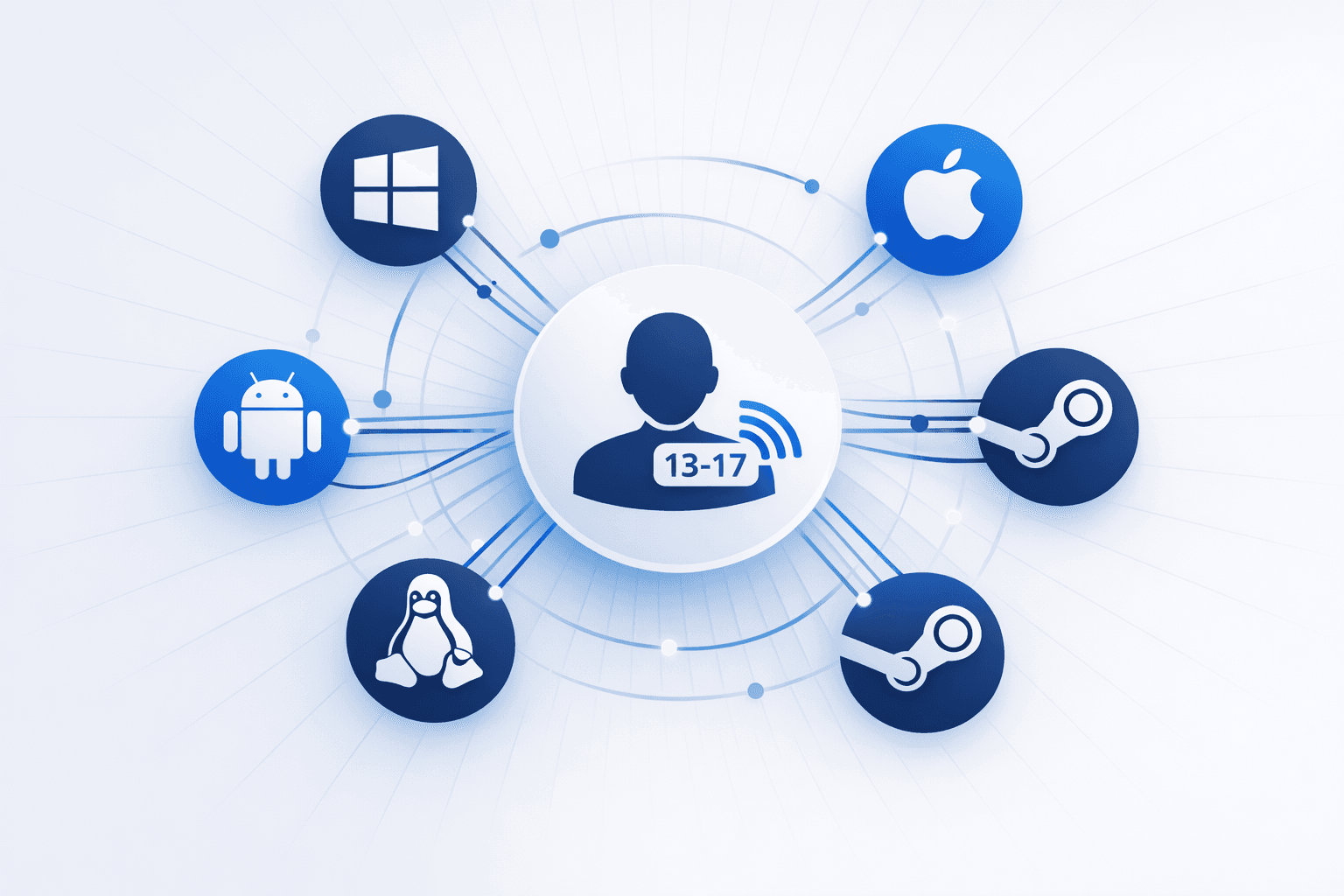
- Affected platforms cited: Windows, macOS, iOS, and Android; the statutory scope may also extend to mobile devices and computers such as smart watches.
- User populations affected: California residents using covered devices, including minors and users of shared household devices.
- Required age brackets: under 13, 13–15, 16–17, and 18 or older.
- Business impact: application providers may face compliance and liability risk if an age-bracket signal constitutes actual knowledge of a user's age under other California laws, including the California Age-Appropriate Design Code.
- Security and privacy impact: centralizing or processing birth-date/age data expands the sensitive-data attack surface and raises breach, misuse, retention, and unauthorized-disclosure risk.
- Operational impact: OS, app-store, identity, consent, content-policy, customer-support, and telemetry workflows may require redesign. Shared-device use can create incorrect age attribution and improper access decisions.
- Scope: potentially widespread across consumer-device ecosystems rather than a targeted population. Related laws or proposals in Colorado, Illinois, and New York increase the likelihood of a multi-jurisdiction implementation burden.
- No cyber exploitation, compromise, CVE, or in-the-wild malicious activity is reported.
Entities and legislation
- California Digital Age Assurance Act (DAAA), described in the sources as California A.B. 1043; signed in October 2025.
- California A.B. 1856: proposed open-source OS-provider exemption; passed the legislature in late August 2026 and awaits the governor's decision.
- Colorado S.B. 26-051: related age-assurance law with open-source exemptions.
- Organizations/projects named: Electronic Frontier Foundation, GrapheneOS, Fedora, System76.