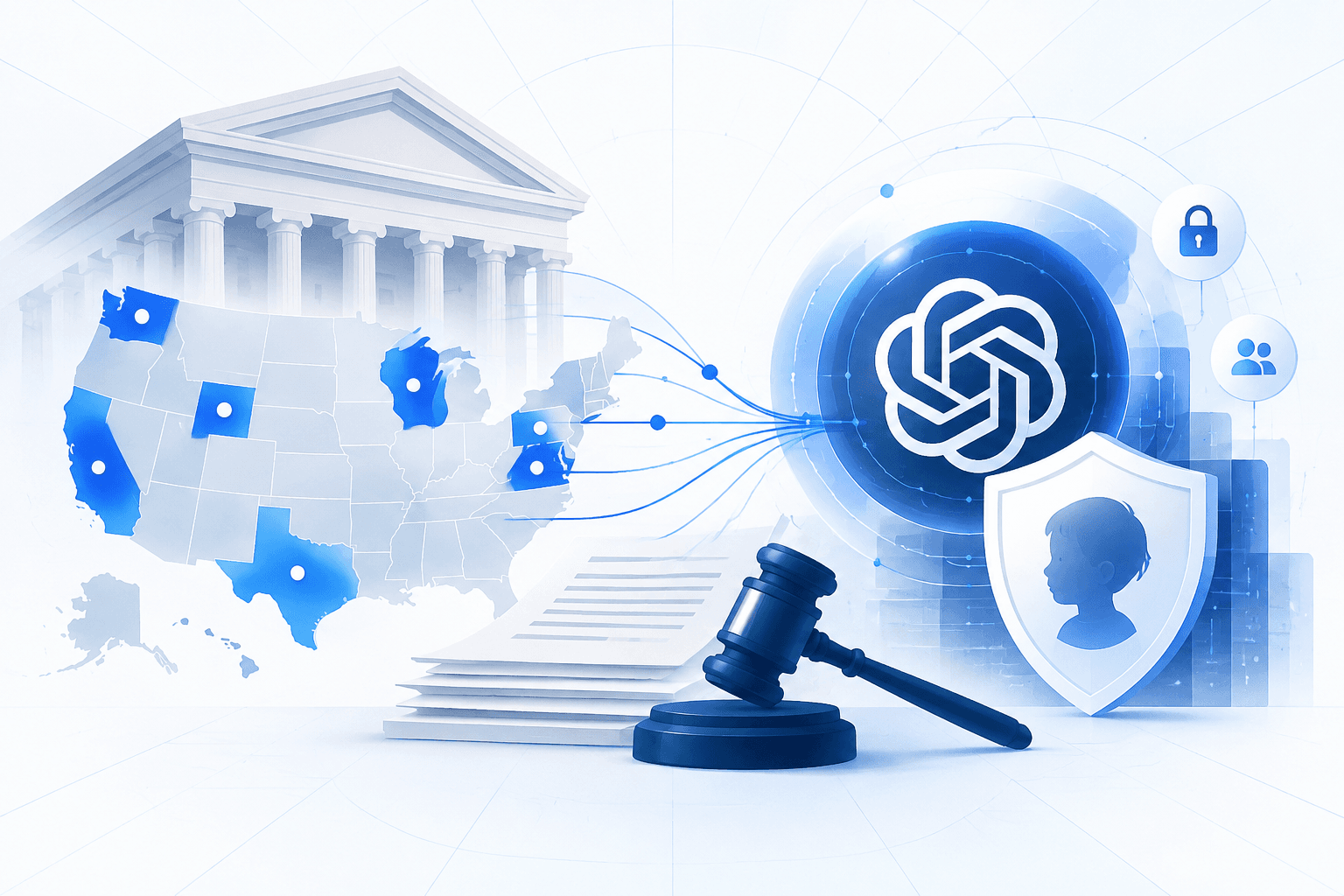
OpenAI Ordered to Preserve ChatGPT Logs Despite GDPR and CCPA Privacy Risks
Regulatory & Policy · 3 sources · Updated 3mo ago · First seen Sep 2, 2026

A U.S. court overseeing The New York Times copyright litigation ordered OpenAI to preserve ChatGPT output logs, including conversations users delete, as potential evidence. The preservation requirement creates a significant retention obligation for AI-service data that would ordinarily be subject to user deletion and minimization practices.
The order raises compliance concerns under the EU General Data Protection Regulation (GDPR) and the California Consumer Privacy Act (CCPA), which establish rights to deletion and impose limits on retaining personal data. Organizations using or building generative-AI services should review litigation-hold processes, data-retention disclosures, cross-border data handling, and procedures for responding to privacy-rights requests when records must be retained for legal claims.
Why it matters
Impact assessment
The court-ordered preservation of ChatGPT output logs creates a legal, privacy, and trust risk for OpenAI users whose conversations—including deleted conversations—may be retained as litigation evidence. The primary impact is compliance and reputational exposure rather than a cybersecurity compromise; no breach, unauthorized access, or malicious exploitation is reported.
Affected populations and scope
- Affected population: ChatGPT users whose output logs fall within the scope of the preservation order, including users who deleted conversations.
- Affected organizations: AI-service providers and enterprises deploying generative-AI systems that must reconcile legal holds with deletion, minimization, retention, and cross-border data-handling obligations.
- Regulatory context: GDPR data-subject rights and storage-limitation obligations; California Consumer Privacy Act (CCPA) deletion-related rights and retention-disclosure requirements.
- Scope: Potentially broad for the service provider subject to the order, but not evidence of a wider industry-wide technical exposure.
Business implications
- Retaining deleted prompts or outputs can increase the volume of discoverable personal, confidential, regulated, or proprietary data.
- Organizations may face conflicting obligations when a valid litigation hold requires retention while an individual requests deletion.
- Incomplete privacy notices, retention schedules, and data-subject request procedures can create regulatory and contractual exposure.
- No exploitation in the wild, data theft, or operational disruption is reported.