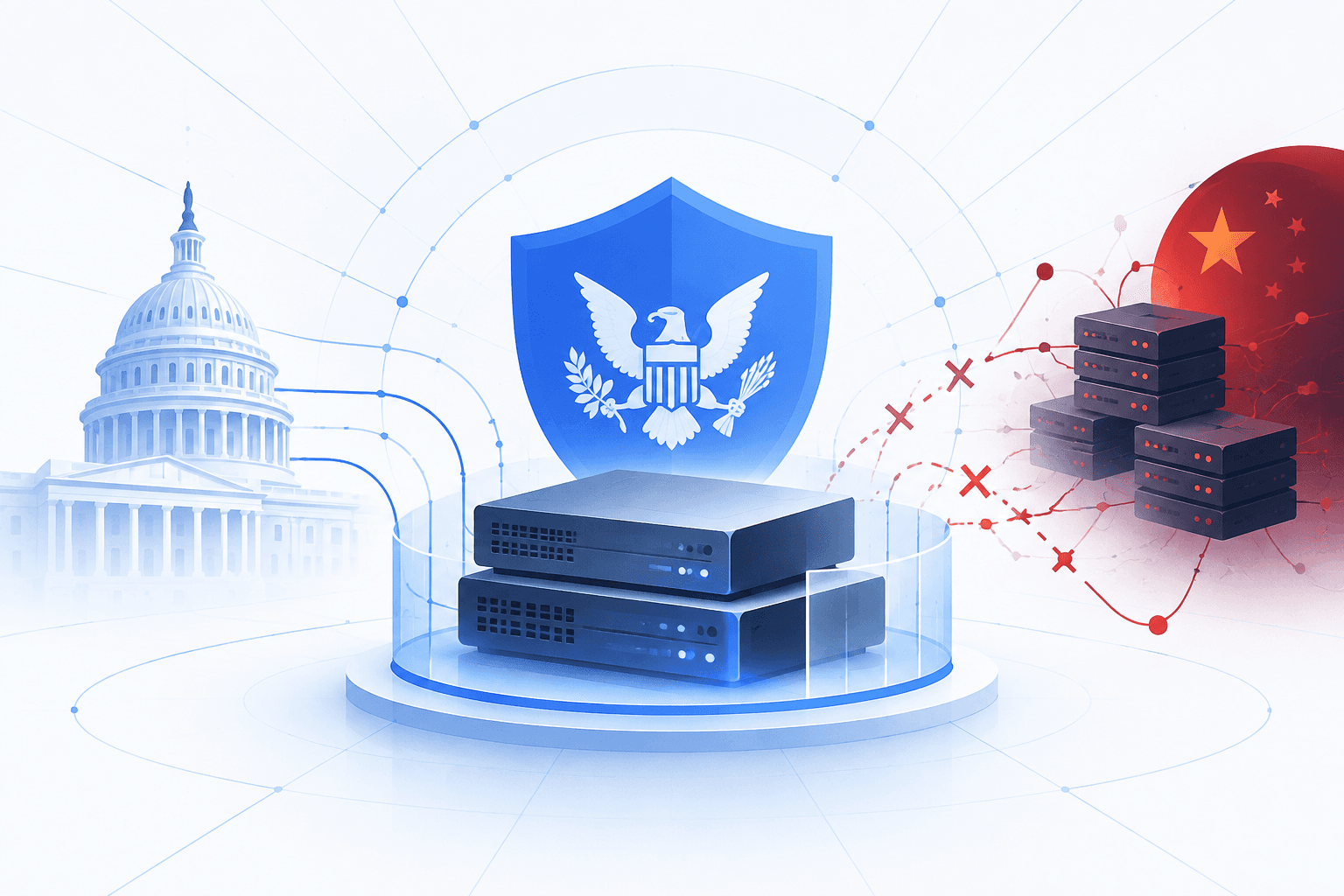
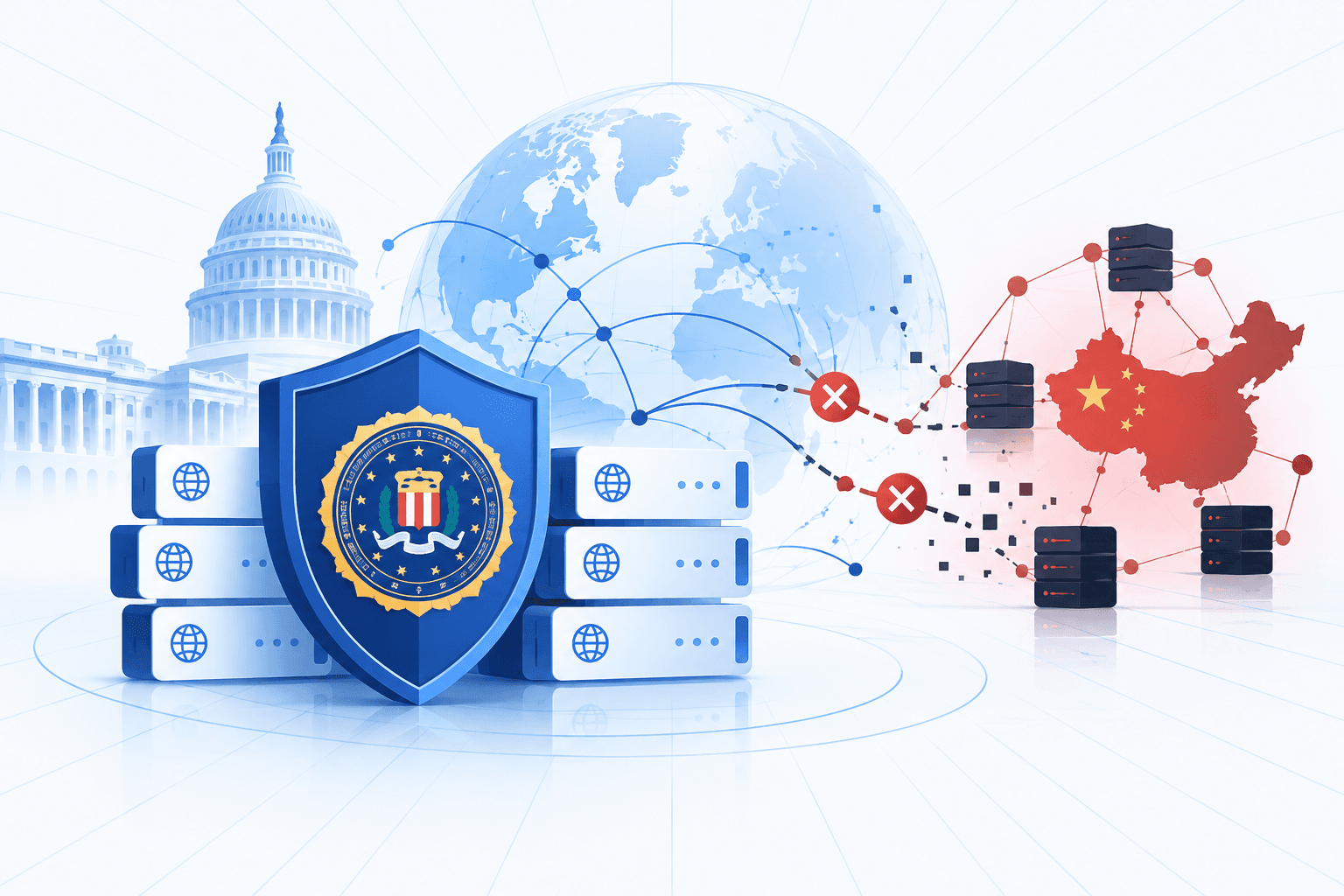
FBI Disrupts QTFY Proxy Network Used to Breach U.S. Federal Agencies
Threat Actor Intelligence · 36 sources · Updated 3mo ago · First seen Aug 26, 2026
The FBI and Department of Justice seized domains supporting the China-linked QTFY espionage group's QScan and QTRouter platforms after the infrastructure was linked to intrusions at NASA, the Federal Reserve, the Departments of Justice and Energy, and the U.S. Senate. Officials said the platforms supported follow-on attacks against sensitive networks and U.S. critical infrastructure, though they did not disclose the extent of access or data compromise at each victim.
QTFY's technical infrastructure included the QScan reconnaissance and IoT-compromise tool, QTRouter hardware, QTProxy route management, and the Fast Labyrinth encrypted relay network. The operators combined compromised IoT devices, leased VPS systems, and premium nodes from the Chinese commercial proxy service fastlink.ws to rotate malicious traffic through consumer-proxy infrastructure and conceal its origin. Defenders should prioritize edge-device hardening and apply CISA and NCSC guidance on China-linked threats, as static IP or domain blocking alone is unlikely to stop the dynamically changing relay network.
Why it matters
Impact assessment
QTFY presents a high-severity espionage and pre-positioning risk to internet-facing enterprise and operational environments. The group’s documented use of mass scanning, rapid exploitation, compromised IoT relays, and proxy infrastructure creates broad exposure across critical infrastructure and sensitive sectors; the U.S. seizure disrupted known infrastructure but does not remove the threat actor’s ability to rebuild or use alternate relays.
- Affected sectors: government, defense industrial base, telecommunications, energy, water, healthcare, financial services, higher education, research, aerospace, and enterprise software.
- Affected technology: internet-facing VPNs, gateways, file-transfer products, remote-support tools, web applications, CMS platforms, routers, cameras, and other IoT/edge devices.
- Confirmed reported impact includes data exfiltration from more than 300 organizations worldwide in the May 2024 Check Point campaign, including U.S. defense contractors, financial institutions, and universities.
- Reported 2024 intrusions affected three U.S. Department of Energy laboratories, the National Institutes of Health, the Health Resources and Services Administration, and a U.S. security-device manufacturer.
- DOJ later corrected earlier public wording: NASA, the Federal Reserve, DOJ, DOE, HHS, NIH, and the U.S. Senate should be treated as named targets unless a specific intrusion is independently confirmed. Not every attempted QTFY access attempt succeeded.
- Operational impact can include theft of credentials, configuration data, and sensitive information; covert persistence; access paths into critical environments; and potential disruption through QTBotnet’s command execution and DDoS capabilities.
- Exposure is widespread rather than narrowly targeted. QScan processed more than two million scanning and exploitation tasks in one day during 2024 and scanned systems in more than 130 countries.
Supporting entities
- Threat group: QTFY, also known as QT, QT AND, and QTCYBER.
- Attributed operator: Nanjing Xinjiuwei Network Technology Co. (XJW).
- Alleged state customers: PRC Ministry of State Security and People’s Liberation Army.
- U.S. agencies issuing technical guidance: FBI, NSA, and Cyber National Mission Force via JCSA-20260826-01.