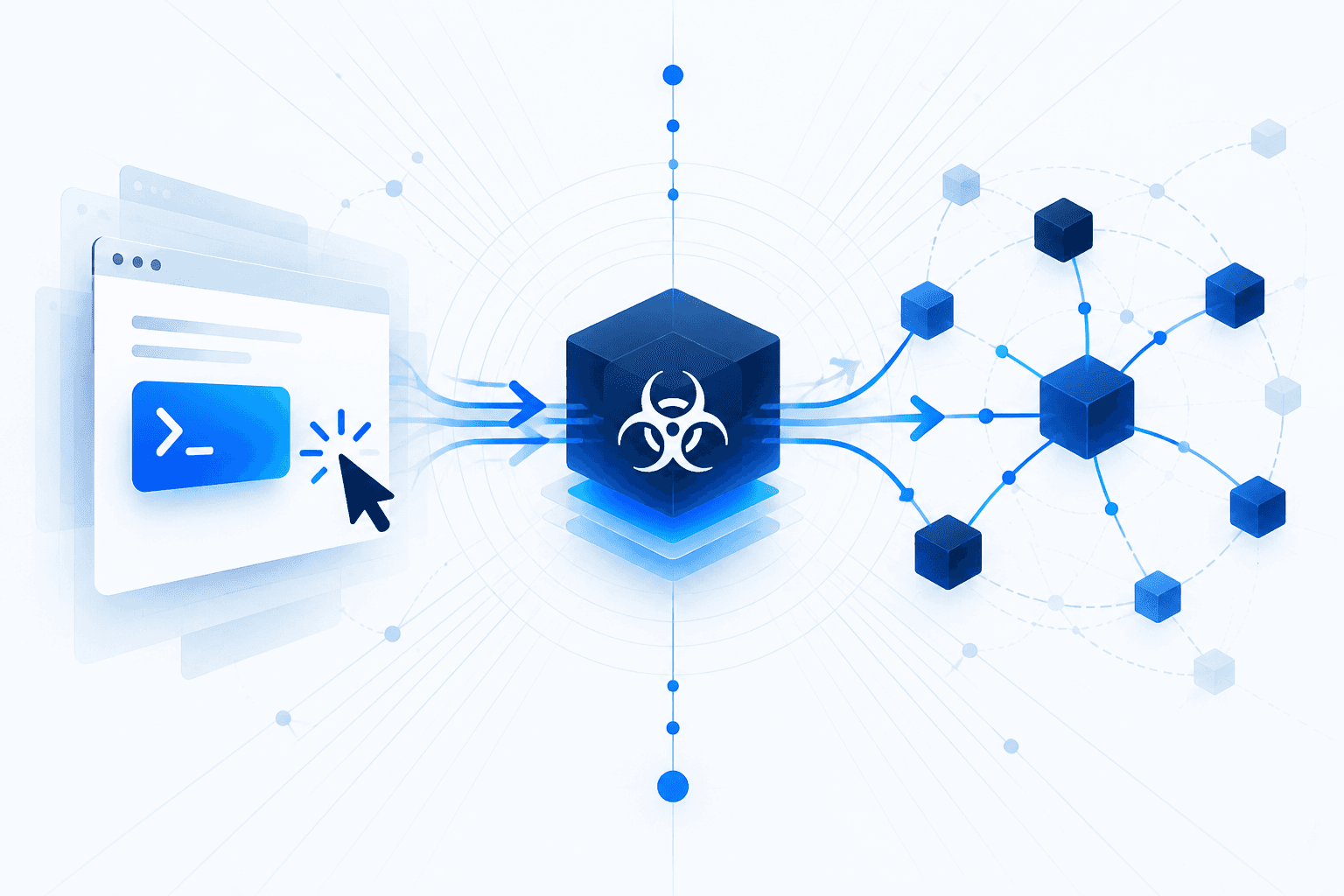
PavinLoader Linked to ClickFix, Fake Downloads, and RenPy Malware Campaigns
Malware Intelligence · 4 sources · Updated 3mo ago · First seen Aug 24, 2026

Researchers linked PavinLoader, a multi-stage .NET malware loader, to several intrusion chains that used ClickFix lures, fake software downloads, and malicious RenPy packages to infect victims. Across the campaigns, operators relied on trojanized and heavily obfuscated .NET DLLs, along with abuse of MSBuild through .csproj and .bat files, to execute later stages while complicating analysis and detection.
The loader retrieved command-and-control details using EtherHiding, including Binance Smart Chain RPC calls to pull infrastructure data from blockchain-hosted content, and then fetched additional payloads. In observed cases, PavinLoader delivered Amatera Stealer and at times HijackLoader, while also using anti-analysis and anti-forensics measures such as AMSI/ETW-related evasion strings, virtualization checks, locale filtering, and infrastructure-provider checks; shared artifacts and builder-like scripts led researchers to assess that it may be operated as a Loader-as-a-Service, though no commercial panel or offering was confirmed.
Why it matters
Impact assessment
PavinLoader is affecting Windows users exposed to social-engineering lures, especially users downloading fake software, interacting with ClickFix-style fake verification pages, or installing malicious RenPy game packages. The impact is high for enterprises and consumers because the loader supports credential theft and follow-on malware delivery, with observed payloads including Amatera Stealer and HijackLoader.
The exposure appears broad rather than tightly targeted because operators reused the same loader across multiple lure types and delivery clusters. There are confirmed in-the-wild infections described by researchers, but the initial access relies on user execution rather than exploitation of a software vulnerability.
Supporting details
- Affected platforms: Windows systems.
- Affected user populations: users tricked into running commands from fake CAPTCHA/verification pages, downloading trojanized software, or installing malicious RenPy packages.
- Likely affected sectors: any sector with Windows endpoints and users likely to install software or interact with web-based lures; consumer and enterprise environments are both exposed.
- Business impact:
- Theft of passwords, browser data, cryptocurrency-wallet information, and files.
- Potential secondary compromise from additional payloads such as HijackLoader.
- Operational disruption from malware staging, persistence of follow-on payloads, and incident response workload.
- Reputational and financial impact if stolen credentials or wallet data are abused.
- Scope:
- Multiple campaign clusters and lure formats reused the same loader.
- Researchers assessed possible Loader-as-a-Service characteristics, increasing the chance of wider reuse.
- Exploitation status:
- Active malicious campaigns were observed in the wild.
- No CVE-based exploitation was reported; infection depends on social engineering and user execution.