States Sue AI Firms Over Harmful Claims, Child Safety, and Consumer Protection
Emerging Technology Risk · 2 sources · Updated 3mo ago · First seen Aug 19, 2026

Pennsylvania sued Character.AI over allegedly fake medical claims generated by its chatbot, escalating state scrutiny of consumer harms tied to generative AI systems. The action signals a willingness by state officials to treat misleading or unsafe AI outputs as a public-protection issue, particularly where users could rely on fabricated health information.
Florida separately sued OpenAI and Sam Altman, alleging that ChatGPT's practices involving minors and product safety violate state law through deceptive trade practices, negligence, fraud, and public nuisance. OpenAI moved the case to federal court, arguing that a claim tied to COPPA creates federal jurisdiction and that federal court is the proper venue for state attorneys general enforcing that law, while Florida is seeking to return the case to state court and obtain injunctive relief, civil penalties, and restrictions on under-13 data collection.
Why it matters
Impact assessment
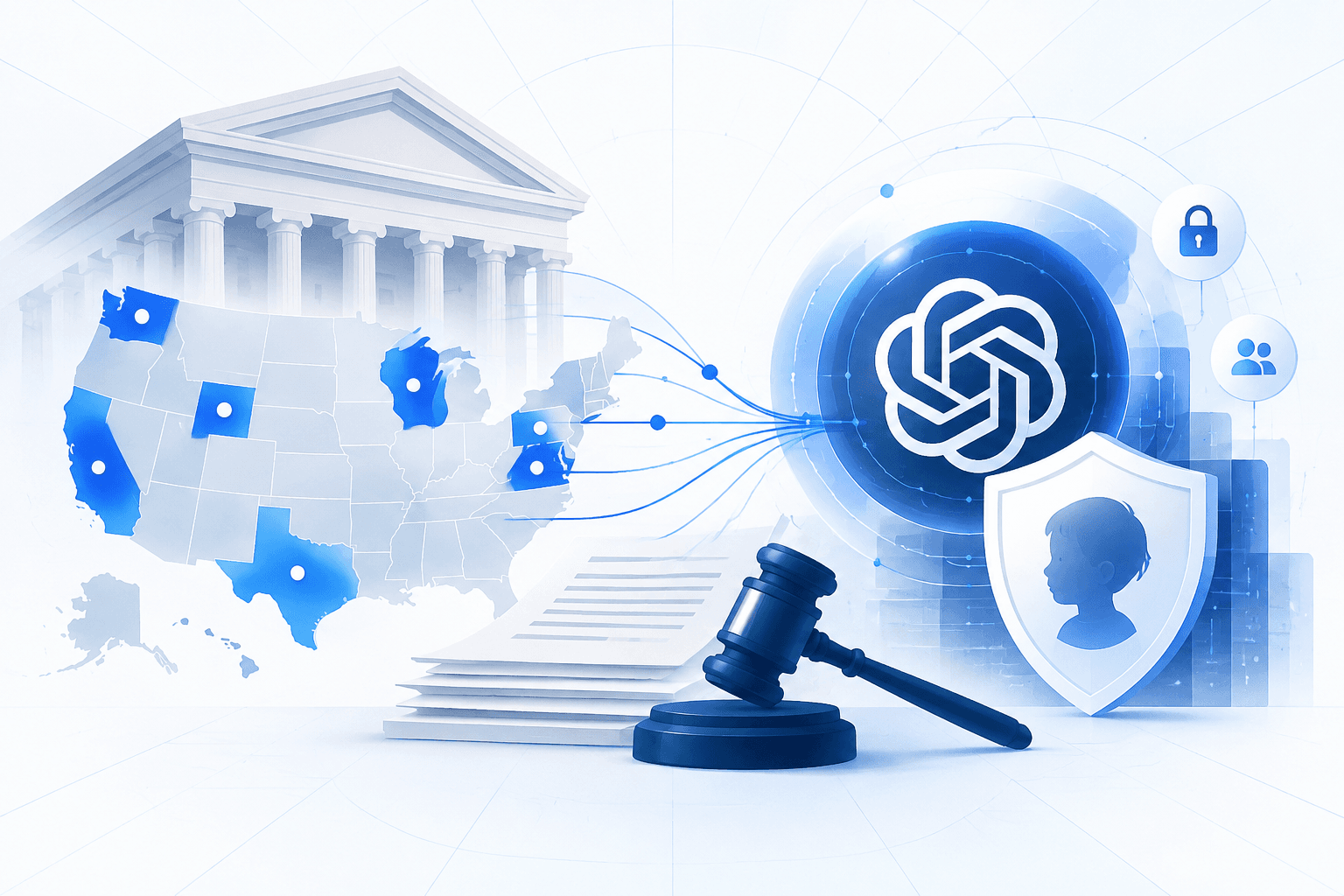
State attorneys general are escalating legal and regulatory pressure on consumer-facing generative AI providers, especially platforms used by minors or relied on for health-related information. The immediate impact falls on AI vendors such as OpenAI and Character.AI, but downstream exposure also affects enterprises embedding third-party chatbots, education platforms, healthcare-adjacent services, and any organization collecting or processing minors' data through AI features.
The primary risk is legal, regulatory, and reputational rather than a traditional cyber intrusion. Potential consequences include injunctions, restrictions on under-13 data collection, civil penalties, product redesign mandates, and findings that unsafe AI deployment constitutes deceptive trade practices or public nuisance; the Florida complaint seeks penalties of up to $10,000 per willful violation.
The scope is broad because the allegations target default product behavior, age-gating, memory retention, and safety testing practices in widely used AI systems rather than a narrow, targeted incident. The story does not describe exploitation in the wild, malware activity, or a breach campaign, but it does indicate growing multi-state scrutiny, including a coalition of 42 state attorneys general subpoenaing OpenAI.
Structured facts
- Entities: OpenAI, Sam Altman, Character.AI, Pennsylvania, Florida, FTC
- Legal/regulatory themes: COPPA, Florida Deceptive and Unfair Trade Practices Act, negligence, gross negligence, strict liability for design defect, failure to warn, fraudulent misrepresentation, public nuisance
- User populations at issue: children under 13, general consumers, users relying on chatbot-generated medical information
- Claimed harms: fake medical claims, unsafe outputs, deceptive trade practices, under-13 data collection without parental notice/consent
- Scope indicators: ChatGPT free tier, ChatGPT memory feature, GPT-4o safety evaluation, Character.AI chatbot outputs
- Known incidents of exploitation in the wild: none reported in the story