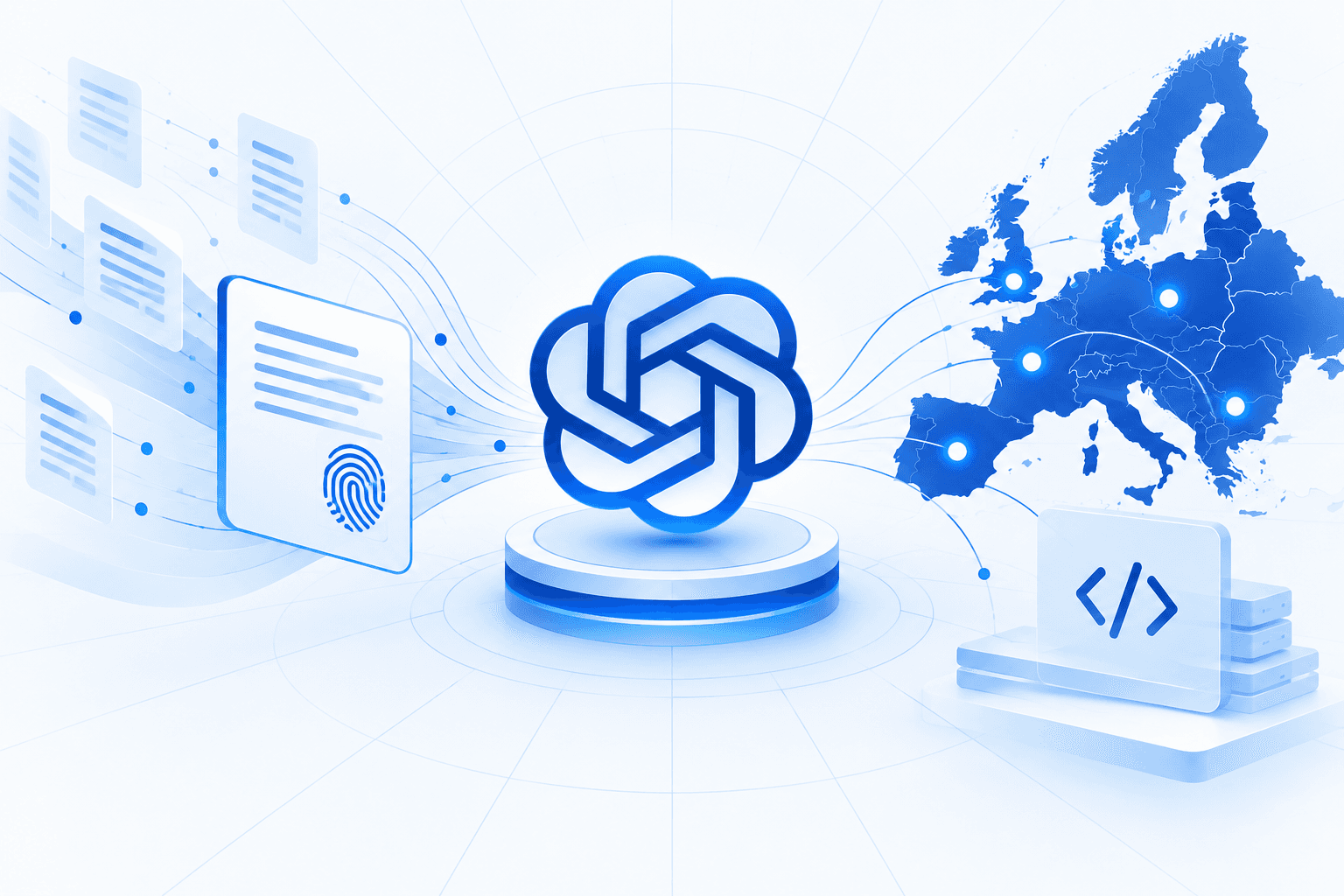
Major AI Providers Deploy Output Watermarking to Meet EU Transparency Rules
Regulatory & Policy · 3 sources · Updated 3mo ago · First seen Aug 18, 2026
Major frontier AI providers including Anthropic, Google, OpenAI, and Meta have begun deploying watermarking and provenance controls on synthetic content to comply with EU AI Act Article 50, which requires general-purpose and generative AI systems to mark AI-generated outputs in a machine-detectable form. Anthropic said it is watermarking Claude text using a version of Google DeepMind's SynthID, a technique that subtly adjusts token-selection probabilities so longer passages can later be identified as AI-generated; Google has already used SynthID in Gemini outputs, while other vendors are also adopting metadata-based provenance approaches such as C2PA.
The rollout has exposed immediate technical and operational limits. Open-source tools have appeared that can strip metadata or reduce watermark detectability, and statistical text watermarking can degrade after paraphrasing, translation, or in short outputs. The reporting also highlights false-positive risks in low-entropy material such as code and configuration files, along with a broader compliance gap between tightly managed hosted AI services and self-hosted open-weight models, where downstream operators can change decoding behavior and bypass watermarking controls.
Why it matters
Impact assessment
EU-facing AI providers, enterprises consuming hosted generative AI services, and organizations that ingest or rely on AI-generated content are affected by the rollout of output watermarking and provenance controls. The immediate business impact is primarily compliance, trust, and workflow disruption rather than a classic confidentiality or availability event, but false positives on code and configuration content could create operational friction in development, review, and content-validation pipelines.
The scope is broad across major AI ecosystems including Anthropic Claude, Google Gemini, OpenAI, and Meta, but exposure is uneven because hosted services can enforce controls while self-hosted open-weight deployments can bypass them. There are no reported destructive cyber incidents or in-the-wild compromises tied to this story, but open-source countermeasures to strip metadata and weaken watermark detectability appeared immediately, creating a practical integrity and provenance enforcement gap.
Supporting facts
- Affected entities named: Anthropic, Google, OpenAI, Meta.
- Regulatory driver: EU AI Act Article 50 requires machine-detectable marking of synthetic outputs.
- Affected user populations: AI providers, enterprise users of generative AI, downstream operators of open-weight models, and teams validating synthetic media provenance.
- Impact types: compliance risk, provenance integrity risk, content validation errors, reputational risk from mislabeling, and process disruption in ingestion and auditing workflows.
- Scope: widespread across major frontier AI providers, with weaker enforcement in self-managed and open-weight model environments.
- Known field activity: open-source tools emerged to remove C2PA, EXIF, and XMP metadata and to reduce statistical watermark detectability.
- No CVEs, ransomware, data theft, or service outage incidents are described in the references.