Sticky Werewolf Phishing Campaign Delivers Ozone RAT to Russian and Belarusian Targets
Social Engineering & Fraud · 2 sources · Updated 4mo ago · First seen Jan 13, 2025
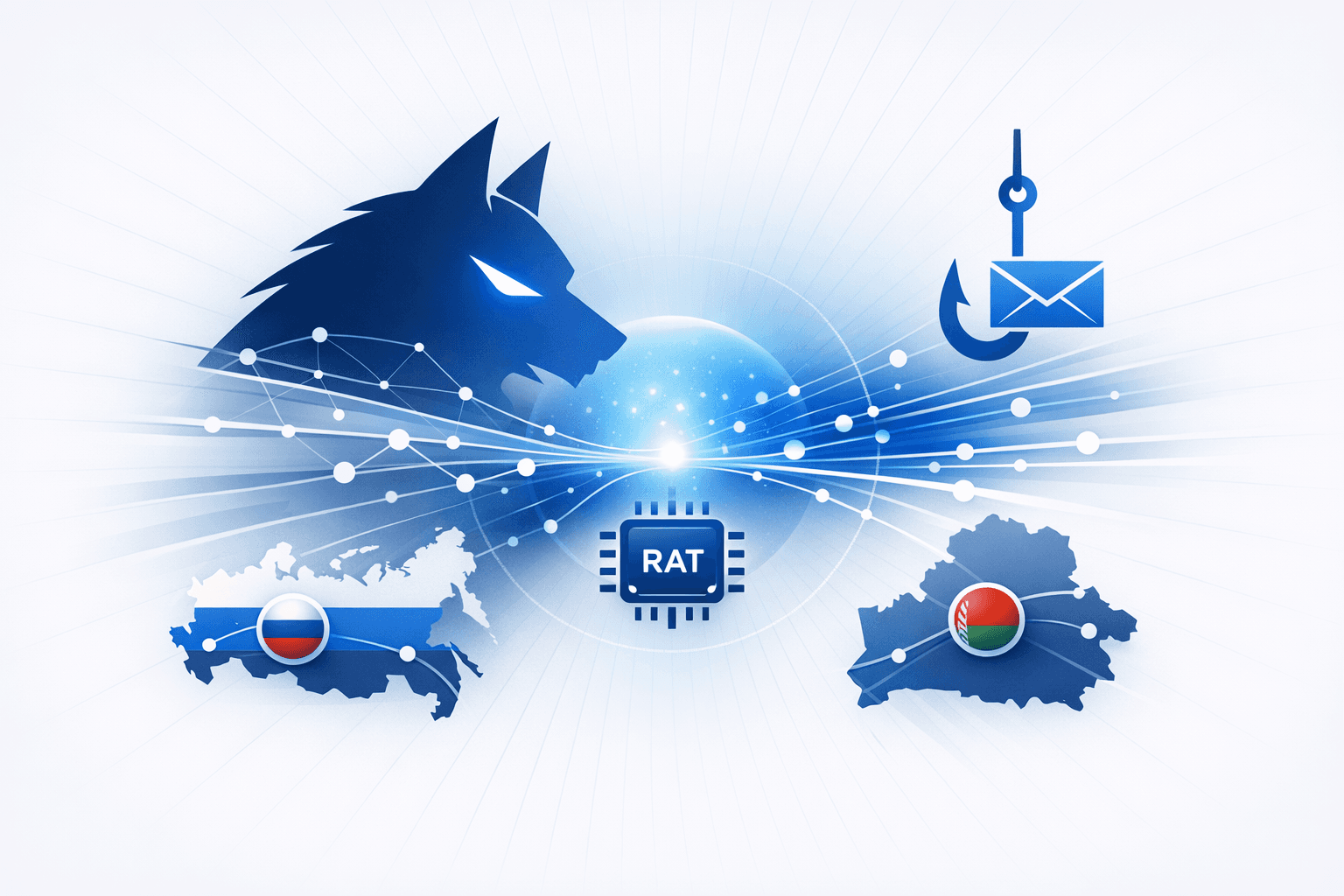
The Sticky Werewolf cyber-espionage group has been linked to phishing attacks against Russian scientific, industrial, and government organizations, with later reporting also identifying targets in Belarus. In one campaign, attackers impersonated Russia’s Ministry of Industry and Trade in emails carrying decoy documents and a password-protected archive; another wave used phishing links generated through IP Logger to disguise delivery URLs while collecting victim profiling data such as IP address, location, browser version, and operating system. Researchers also tied the activity to earlier spoofed-email operations themed around Russian state bodies including EMERCOM, the Ministry of Construction, and the FSB.
The intrusions ultimately deployed Ozone RAT, and in some cases Darktrack RAT, while showing victims decoy files to mask the infection. Analysts said the Ozone RAT loader was copied into %TEMP% under names such as utorrent.exe, established persistence through a shortcut in the Windows Startup folder, and used a modular chain in which it downloaded an encrypted DLL from a command-and-control server, saved it as data.dbf, decrypted it, and loaded it reflectively into memory via the Delphi API function BTMemoryModule. The malware was reported to support remote command execution, file and process management, registry changes, keylogging, screen, webcam, and microphone capture, password theft from browsers and mail clients, hidden virtual network computing (HVNC) control, reverse proxying, payload delivery, and self-deletion.
Why it matters
Impact assessment
Sticky Werewolf is conducting targeted phishing-led espionage against Russian and Belarusian government, scientific, industrial, and defense-related organizations. The impact is high for targeted entities because successful compromise delivers full-featured remote access malware capable of credential theft, surveillance, lateral enablement, and covert persistence.
The campaign appears targeted rather than indiscriminate, but it affects sectors with sensitive research, industrial, and state information. There is evidence of real-world activity and attempted exploitation, including a phishing email reportedly intercepted on 2025-01-13 and multiple themed campaigns impersonating Russian state bodies.
Affected organizations and users
- Russian government institutions
- Scientific and research organizations
- Industrial and production enterprises
- Defense-industrial sector entities
- Belarusian organizations
- Previously referenced targets in the pharmaceutical sector
Severity and business risk
- Credential theft risk from browsers, Outlook, Thunderbird, and other mail clients
- Espionage risk through keylogging, screen capture, webcam access, and microphone recording
- Operational risk from remote command execution, file/process/service management, and payload delivery
- Network abuse risk from reverse proxy capability and HVNC-based hidden remote control
- Persistence and anti-analysis features increase dwell time and complicate remediation
Scope and exploitation status
- Scope is targeted and campaign-driven, not broad opportunistic mass exploitation
- Multiple lure themes indicate sustained operations over time
- Known incidents include phishing waves spoofing the Ministry of Industry and Trade, EMERCOM, the Ministry of Construction, and the FSB
- One campaign used IP Logger-generated links to both disguise delivery and profile victims before payload delivery