UK Report Warns University Cyber Ties to China Expose Research to Security Risks
Threat Actor Intelligence · 3 sources · Updated 4mo ago · First seen Jul 29, 2026

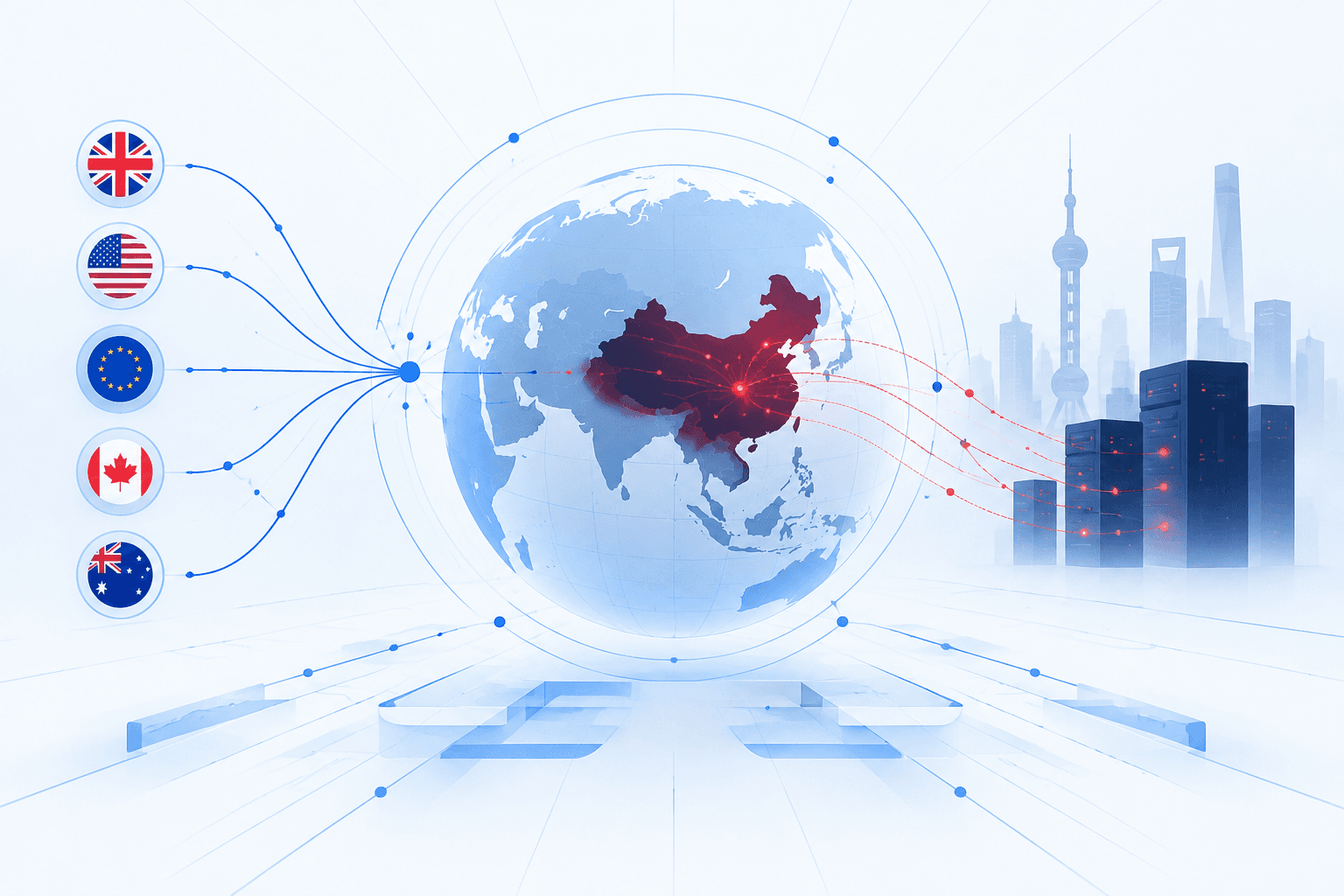
A UK-China Transparency report says UK universities maintain 34 cyber-related partnerships with Chinese institutions, including 13 links to universities closely tied to China’s defence research system, creating significant research security risks. The report argues that the UK is more exposed than any other European country because its open civilian academic model is being paired with Chinese institutions operating within Beijing’s military-civil fusion framework. It highlights Beijing University of Posts and Telecommunications (BUPT) and Beihang University as high-risk examples, citing links between their cyber research, faculty, and China’s military, intelligence, and defence-industrial networks.
The report identifies the Queen Mary University of London-BUPT relationship as the most deeply integrated UK-China cyber collaboration and says additional lower-visibility cooperation continues through co-authored research and strategic partnerships. It also points to Beihang’s joint cybersecurity laboratory with Beijing Integrity Technology Co., a company sanctioned by the US, UK, and EU for facilitating activity linked to Flax Typhoon. The authors say the UK’s current research security regime remains largely advisory and call for stronger institutional controls, including dedicated research security officers, clearer high-risk organization guidance, financial support to unwind risky partnerships, and tighter travel security measures.
Why it matters
Summary
The primary impact is research security exposure rather than an immediately exploitable software flaw. UK universities, research programs, and government-funded cyber-related academic collaborations are affected, with the report identifying 34 UK-China cyber partnerships and 13 involving Chinese institutions tied to China’s defence research system.
The risk is potentially severe in terms of intellectual property loss, dual-use technology transfer, strategic capability leakage, reputational damage, and future regulatory or funding consequences. The exposure appears broad across the UK academic sector rather than a single isolated case, but the story does not describe a new confirmed intrusion or active exploitation campaign against the universities themselves.
Supporting details
Affected entities
- UK universities engaged in cyber-related partnerships with Chinese institutions.
- Named UK entities: Queen Mary University of London, University of Manchester, University of Surrey, University of Reading, University of Aberdeen, and Birkbeck, University of London.
- Named Chinese entities: Beijing University of Posts and Telecommunications (BUPT), Beihang University, Beijing Institute of Technology, Harbin Engineering University, and Nanjing University of Aeronautics and Astronautics.
- Potentially affected stakeholders: academic researchers, doctoral programs, joint laboratories, grant sponsors, and government agencies funding university cyber research.
Severity and business impact
- Strategic risk includes transfer of cyber research, dual-use technology, and defence-relevant knowledge into China’s military-civil fusion ecosystem.
- Operational impact may include forced review, restructuring, or termination of partnerships, grant disruption, compliance overhead, and travel-security burdens.
- Reputational impact is significant for universities publicly linked to defence-connected or sanctioned partner ecosystems.
- Financial impact may arise from loss of funding eligibility, remediation costs, and unwind costs for high-risk partnerships.
Scope and exposure
- The report states the UK has more cyber partnerships with China’s highest-risk defence-linked universities than any other country in Europe.
- The report identifies 34 UK-China cyber partnerships, including 13 with close ties to China’s defence research system.
- Four of the 13 reportedly involve Top Secret-cleared Chinese universities; nine more involve Secret-cleared universities or SASTIND-affiliated institutions.
- The Queen Mary University of London-BUPT relationship is described as the most deeply integrated collaboration, indicating long-term and large-scale exposure.
Exploitation in the wild
- No new in-the-wild exploitation of a software vulnerability is described.
- The story does reference Beijing Integrity Technology Co. as sanctioned by the US, UK, and EU for facilitating operations linked to Flax Typhoon.
- Flax Typhoon is described as having targeted government agencies, critical infrastructure, and technology networks globally, but the article does not tie that activity to a new incident affecting the named UK universities.