KARR Bluetooth Flaw Lets Nearby Attackers Unlock and Immobilize Millions of Cars
Vulnerability Disclosure · 9 sources · Updated 4mo ago · First seen Jul 21, 2026
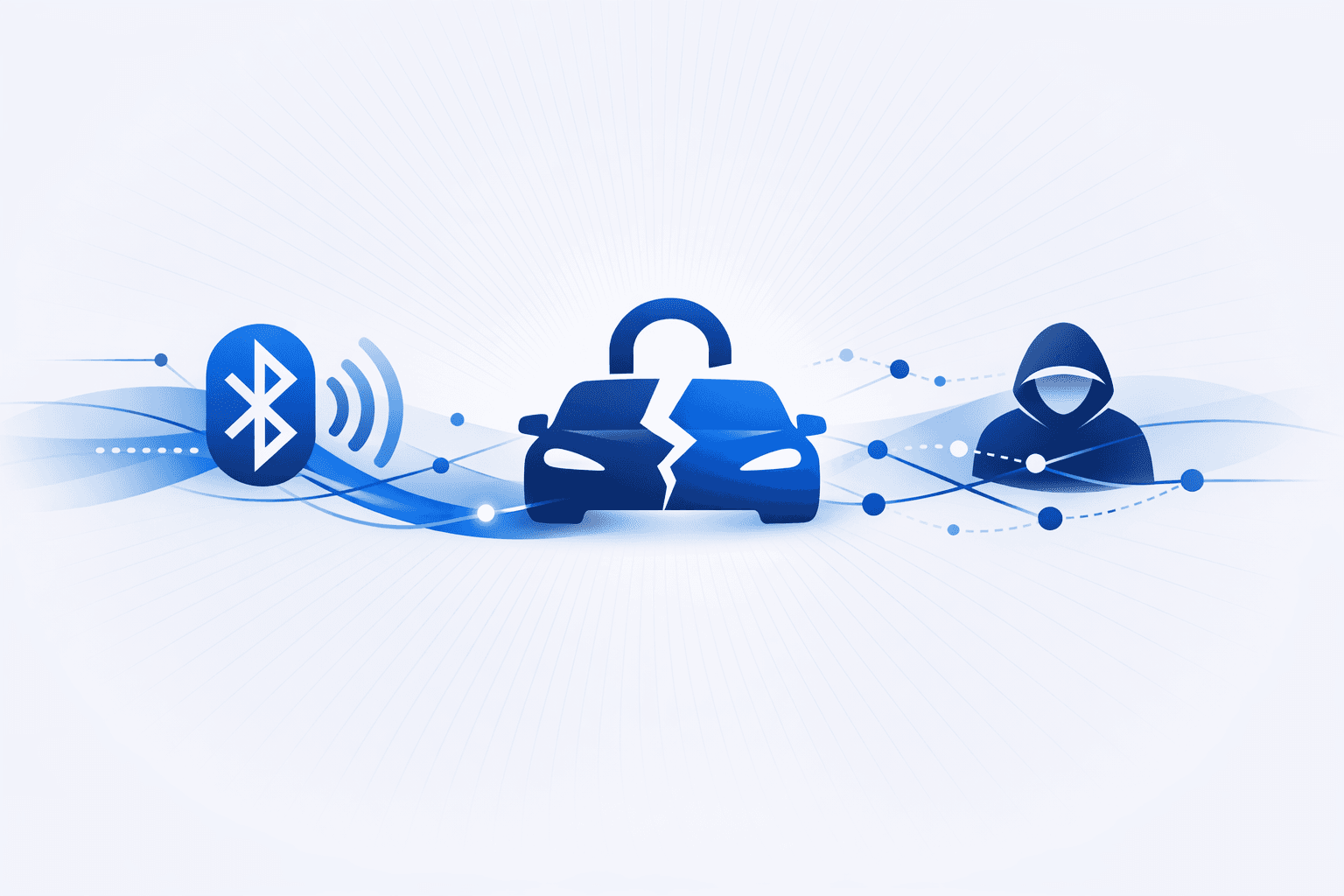
Researchers at the University of California San Diego disclosed severe flaws in the dealer-installed aftermarket KARR Security System, a Bluetooth-enabled alarm and anti-theft device estimated to be present in more than 2 million U.S. vehicles. The vulnerabilities allow an attacker within Bluetooth range to silently unlock doors, disable alarms, trigger horns and lights, and even block the engine from starting, creating both theft and roadside immobilization risks. The researchers said the issue stems in part from a shared embedded authentication key used across KARR devices, which they extracted by reverse-engineering the official mobile app and validating with a proof-of-concept Android tool.
The findings also raised privacy concerns because KARR devices broadcast identifiable Bluetooth signals that could be correlated with public WiGLE data to estimate deployment and potentially infer vehicle movements or frequently visited locations. Acrisure Protection Group, which sells the KARR system, released a firmware update after responsible disclosure, but remediation requires owners or dealerships to identify the hardware and manually apply the patch through the KARR smartphone app. Researchers warned that many drivers may not realize the device is installed, because it is often added by dealerships and can remain in vehicles after resale.
Why it matters
Impact assessment
The affected population is owners and operators of vehicles fitted with dealer-installed KARR or SWDS aftermarket security hardware, with exposure estimated at roughly 2.2 million vehicles. Risk is concentrated in vehicles sold through Southern California dealerships since 2017, especially Honda, Toyota, Mazda, Ford, and Jeep dealers, but resale has expanded exposure across the U.S. and internationally.
The impact is primarily physical security and operational disruption rather than enterprise IT compromise: nearby attackers can silently unlock doors, disable alarms, trigger nuisance actions, and prevent a parked vehicle from starting. This creates theft-enablement, driver safety, roadside immobilization, privacy, and reputational risk for dealerships and the vendor. No confirmed in-the-wild criminal exploitation has been reported, but the attack requirements are low enough after key extraction that broad opportunistic abuse is plausible.
Supporting facts
- Affected product: KARR Security System and associated SWDS-branded dealer-installed aftermarket vehicle security devices.
- Vendor/entity names: Acrisure Protection Group; SouthWest Dealer Services (SWDS); University of California San Diego researchers.
- Estimated scope: about 2.2 million deployed systems in U.S. vehicles.
- Exposure pattern: primarily dealership-installed hardware, often left connected even when buyers declined or never activated the service.
- Geographic concentration: Southern California dealerships, with spread nationwide and internationally through resale.
- Affected brands called out in reporting: Honda, Toyota, Mazda, Ford, Jeep.
- Business impacts:
- Unauthorized vehicle access
- Theft facilitation
- Vehicle immobilization / inability to start
- Alarm suppression
- Privacy exposure from Bluetooth beaconing and location inference
- Known exploitation status: no evidence of criminal exploitation reported by UC San Diego or Wired.
- Not affected: factory-installed vehicle software, Apple CarPlay, and Apple iPhone platform itself.