Mallory
← Back to News
ai-platform-securityidentity-authentication-vulnerabilitycloud-service-vulnerabilityprivacy-surveillance-policy

AI Connectors Raise Enterprise Risk Through Broad Data Access and Trusted Actions

Emerging Technology Risk · 7 sources · Updated 4mo ago · First seen Jul 19, 2026
AI Connectors Raise Enterprise Risk Through Broad Data Access and Trusted Actions

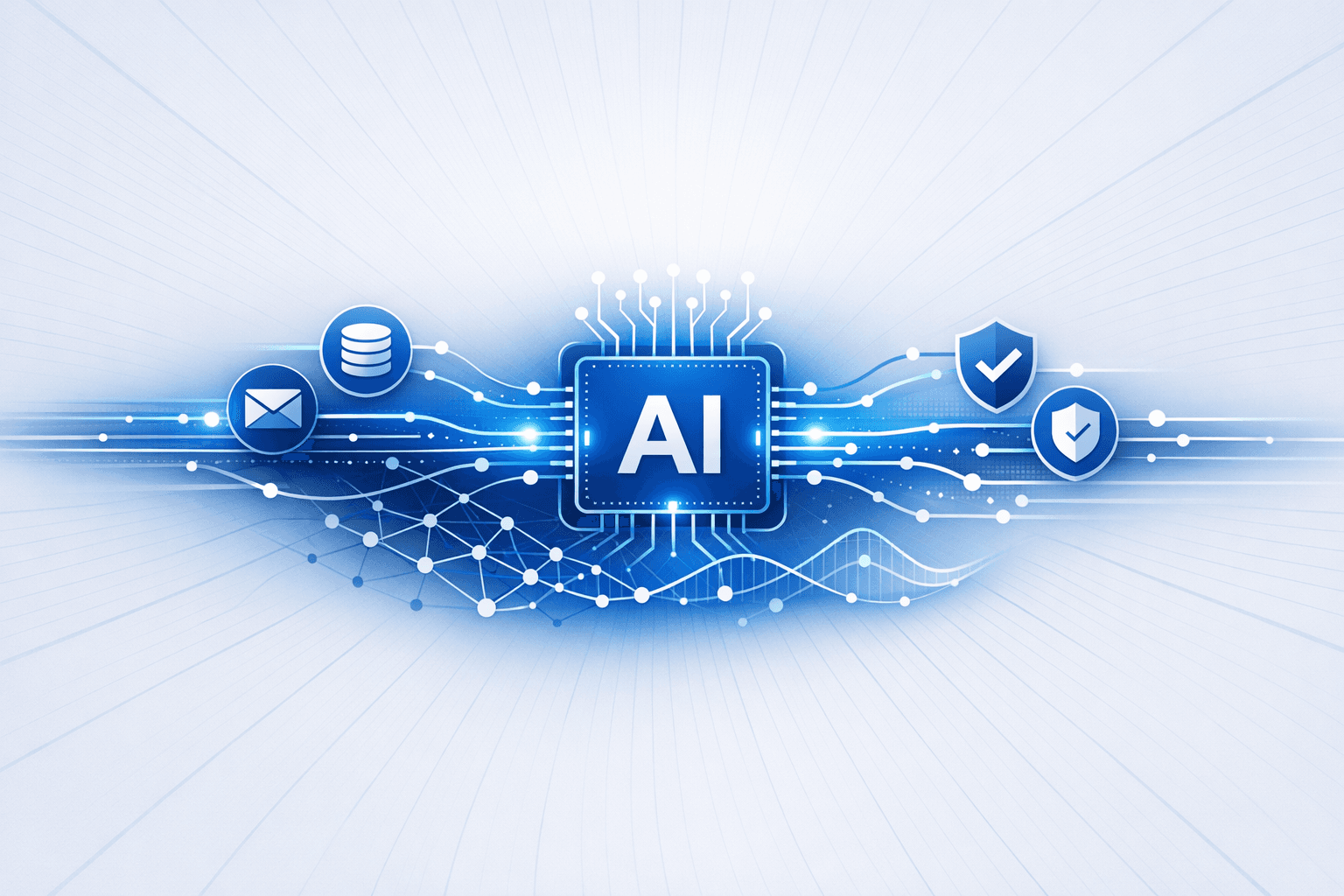
Security researchers and enterprise administrators are warning that connecting AI assistants such as Claude, ChatGPT, and Copilot to business platforms like Microsoft 365, Gmail, Slack, Dropbox, Zoom, Outlook, SharePoint, and OneDrive can sharply expand the attack surface. Reporting on the connector ecosystem said hundreds of integrations changed within weeks and many can pass data to additional AI services or subprocessors, complicating governance and creating hidden exposure outside primary enterprise controls. Anthropic documentation also notes that connected services process data on their own infrastructure and under their own terms, adding compliance concerns for organizations handling sensitive or regulated information.

The operational risk is not limited to data access: security coverage described "authority laundering", where untrusted input is transformed by one AI system into trusted instructions for another system authorized to act, including a cited case involving fund movement. Sysadmin discussions echoed those concerns, with organizations debating whether to allow broad OAuth access to Outlook, Teams, calendars, files, and even local device control, especially in HIPAA-regulated environments. Microsoft is meanwhile replacing Outlook's confusing Meeting Insights feature with a deeper Microsoft 365 Copilot meeting-prep experience, while vendors such as Ledger are promoting safer agent designs that keep AI actions read-only until a human approves sensitive operations on hardware.

Why it matters

Impact assessment

AI connectors materially increase enterprise exposure by combining broad access to business data with the ability to trigger trusted downstream actions. The most affected organizations are those enabling Claude, ChatGPT, Copilot, or similar assistants against Microsoft 365, Google Workspace, Slack, Dropbox, Zoom, Outlook, SharePoint, OneDrive, and regulated datasets such as PHI.

The impact can include sensitive data leakage, compliance violations, unauthorized business actions, and reputational damage. Exposure is potentially widespread because connectors are common and rapidly changing, while known reporting describes real-world exploit patterns involving AI-mediated fund movement rather than only theoretical risk.

Supporting details

  • Affected populations:
    • Enterprises deploying AI assistants with OAuth or native connectors into collaboration, email, file storage, calendar, and meeting platforms.
    • Regulated sectors handling PHI, legal, financial, or proprietary data, including HIPAA-covered environments.
    • SMBs and larger enterprises where executives are pushing rapid AI rollout without mature governance.
  • Severity drivers:
    • Data exposure can extend beyond the primary AI vendor to additional AI services and subprocessors.
    • Connectors can expose sensitive data, ingest untrusted content, and perform write-capable or destructive actions.
    • Misleading UX, such as Outlook Meeting Insights surfacing internal files in meeting context, can create perceived or actual disclosure events.
    • AI-mediated trusted actions can enable financial loss or operational disruption if outputs are treated as authorized commands.
  • Scope:
    • Broad and growing exposure across common SaaS ecosystems rather than a narrowly targeted campaign.
    • PromptArmor reported rapid connector drift over six weeks, undermining one-time security reviews.
  • Known incidents and examples:
    • Dark Reading cited an attack pattern where Morse-code input manipulated one AI agent into generating instructions for another system that moved funds.
    • Reporting referenced prior concern that even a single email connector could enable exfiltration of legal and financial communications.
    • User reports around Outlook Meeting Insights described internal files being surfaced in ways users mistook for shared attachments.
  • Relevant entities:
    • Anthropic Claude, OpenAI ChatGPT, Microsoft 365 Copilot, Outlook, SharePoint, OneDrive, Gmail, Slack, Dropbox, Zoom, Datadog, GitHub, Chrome.
    • PromptArmor, Microsoft, Anthropic, Ledger SAS.

New surface, new adversariesTrack how attackers are adapting to this technology.
Track this risk
Event timeline

How this story unfolded

Events from the most recent confirmed update back to the earliest known activity.

6 events · Apr 23, 2026 – Jul 19, 2026
  1. Jul 19, 20264mo ago

    PromptArmor research highlighted rapid connector ecosystem changes

    PromptArmor found that 931 of 2,517 AI connectors changed over a six-week period and that 1,686 new tools were added to already-live connectors. The research also warned that connectors can route data to additional AI services and subprocessors, increasing hidden third-party exposure.

    Connecting AI agents to outside services explodes the risk radius
  2. Jul 18, 20264mo ago

    Microsoft confirmed retirement of Outlook Meeting Insights

    Microsoft confirmed that Outlook's Meeting Insights feature will be retired and replaced by a Microsoft 365 Copilot-based meeting preparation experience. The company said the replacement would begin rolling out in early September 2026.

    Microsoft is retiring the Outlook feature that made users think they leaked documents, replacing it with Copilot
  3. Jul 18, 20264mo ago

    Microsoft introduced Outlook Meeting Insights

    Microsoft introduced the Outlook Meeting Insights feature in 2020. The feature used machine learning to surface files, emails, and other content relevant to upcoming meetings in the meeting invite interface.

    Microsoft is retiring the Outlook feature that made users think they leaked documents, replacing it with Copilot
  4. Jul 17, 20264mo ago

    Dark Reading reported Morse-code AI agent attack pattern

    Dark Reading described a recent attack in which Morse code text manipulated one AI agent into generating a legitimate-looking instruction for another AI system authorized to move funds. The article characterized the pattern as 'authority laundering' and warned against trusting AI outputs as authorized commands.

    The Real AI Threat Is Blind Trust
  5. Jul 17, 20264mo ago

    Ledger launched Ledger Agent Stack

    Ledger SAS launched Ledger Agent Stack, an open-source toolkit for AI agents that can read cryptocurrency balances and draft transactions while requiring human authorization on Ledger hardware before funds can move. The release also included supporting tools for developer and enterprise policy enforcement use cases.

    Ledger launches open-source toolkit for secure AI agents | brief | SC Media
  6. Apr 23, 20267mo ago

    Anthropic published Claude connectors help documentation

    Anthropic published Help Center documentation describing how to use connectors to extend Claude's capabilities. The documentation notes that connected services process data on their own infrastructure and under their own terms.

    Use connectors to extend Claude's capabilities | Claude Help Center
Linked entities

Related entities

Vulnerabilities, threat actors, malware, products, organizations, and breaches Mallory has linked to this story.

Open in app →

Affected products

4 linked
ChatgptCopilotClaudeAnthropic

Organizations

2 linked
AnthropicOpenai
Do you run this?Follow how adversaries are adapting to this technology, and where it touches your stack today.
Track This Risk
Mallory platform

See the full picture, correlated to your attack surface.

This page covers what’s public. Mallory adds the parts that aren’t: which of your assets are affected, which threat actors are using it right now, and what to deploy next.

Exposure mappingMap indicators from this story to your assets and identify affected systems in minutes.
Threat actor evidenceEvery observed campaign, victim, and pivot linked to actors named in this story.
Associated malwareMalware, exploits, and IOCs connected to the activity described here.
Detection signaturesYARA, Sigma, and Snort rules deployed to your SIEM as soon as they’re published.
Scheduled alertsGet matching new stories delivered to your team as they break, not the next morning.
AI threadsAsk questions about this story and take action on the answers.