DPRK-Linked Contagious Interview Hid Malware in SVG Files in Fake Coding Challenges
Malware Intelligence · 7 sources · Updated 4mo ago · First seen Jul 18, 2026
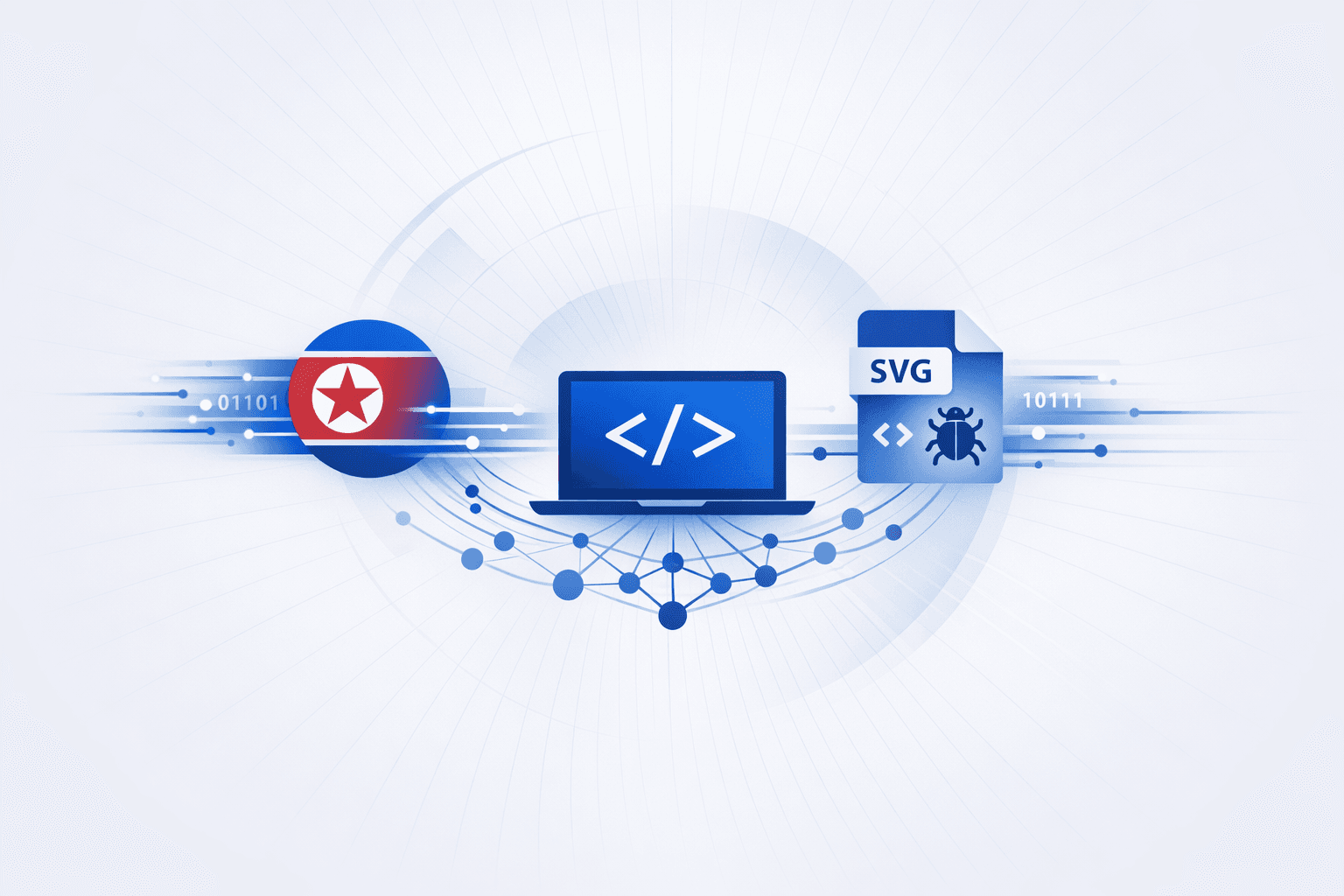
Elastic Security Labs reported a Contagious Interview intrusion tied to a DPRK-aligned threat cluster after suspicious activity targeted Elastic’s community Slack workspace. Using a fake recruiter persona named Maxwell, the operator posted a fraudulent job opportunity and coding challenge that directed victims to trojanized Next.js e-commerce repositories. The malicious code hid payload components inside SVG image files using steganography, embedding Base64 fragments in flag images that were reassembled by serverValidation.js and executed with eval() when the local development server started.
The campaign matches the broader Contagious Interview tradecraft tracked in MITRE ATT&CK as G1052, which relies on fake hiring outreach, code-repository lures, and social engineering to infect developers across Windows, macOS, and Linux. Elastic said the infection chain deployed a browser credential and crypto-wallet stealer, a file stealer, a persistent Socket.IO RAT, and a clipboard stealer capable of fetching Windows PE payloads, while code similarities to OTTERCOOKIE and infrastructure overlaps previously documented by JFrog reinforced the attribution. MITRE also associates the cluster with malware such as BeaverTail and InvisibleFerret, along with credential theft, financial theft, persistence through platform-specific startup mechanisms, and exfiltration over C2 and cloud or messaging services.
Why it matters
Impact assessment
This campaign affects software developers who download and run coding-test repositories, with elevated risk for cryptocurrency, Web3, and engineering teams that hold source code, cloud credentials, browser sessions, and wallet data. Impact is high because the malware combines credential theft, wallet theft, file exfiltration, clipboard theft, and persistent remote shell access, and compromised developer workstations can become a pivot point for downstream software supply-chain compromise.
Exposure is targeted rather than indiscriminate, but the blast radius can expand when victims redistribute trojanized repositories or push compromised code to GitHub. Elastic reported active targeting in the wild through community Slack job lures, and some victims reportedly re-shared infected repositories, increasing secondary exposure.
Supporting facts
- Target population: software developers across Windows, macOS, and Linux.
- Higher-value victims: developers in cryptocurrency and Web3 environments.
- Initial lure: fake recruiter outreach and fraudulent coding challenges.
- Observed persona: Maxwell.
- Delivery context: malicious job post in Elastic community Slack, then direct messages.
- Business impact:
- Theft of browser credentials and autofill data.
- Theft of cryptocurrency wallet data and LevelDB data from wallet extensions.
- Theft of developer files including keys, configs, and source code.
- Clipboard monitoring for copied secrets.
- Persistent remote shell access via Socket.IO RAT.
- Supply-chain risk:
- Some victims pushed backdoored repositories to GitHub.
- Trojanized projects appeared functional, increasing likelihood of reuse and redistribution.
- Attribution:
- Elastic tracks the cluster as REF9403.
- Attribution to a DPRK-aligned threat actor is assessed with medium-to-high confidence.
- Reporting cites code overlap and infrastructure overlap with OTTERCOOKIE and broader Contagious Interview activity.
- Known exploitation:
- Elastic observed active intrusion activity targeting its Slack workspace.
- Antivirus visibility was reportedly poor, with identified archives showing 0 detections on VirusTotal at time of analysis.