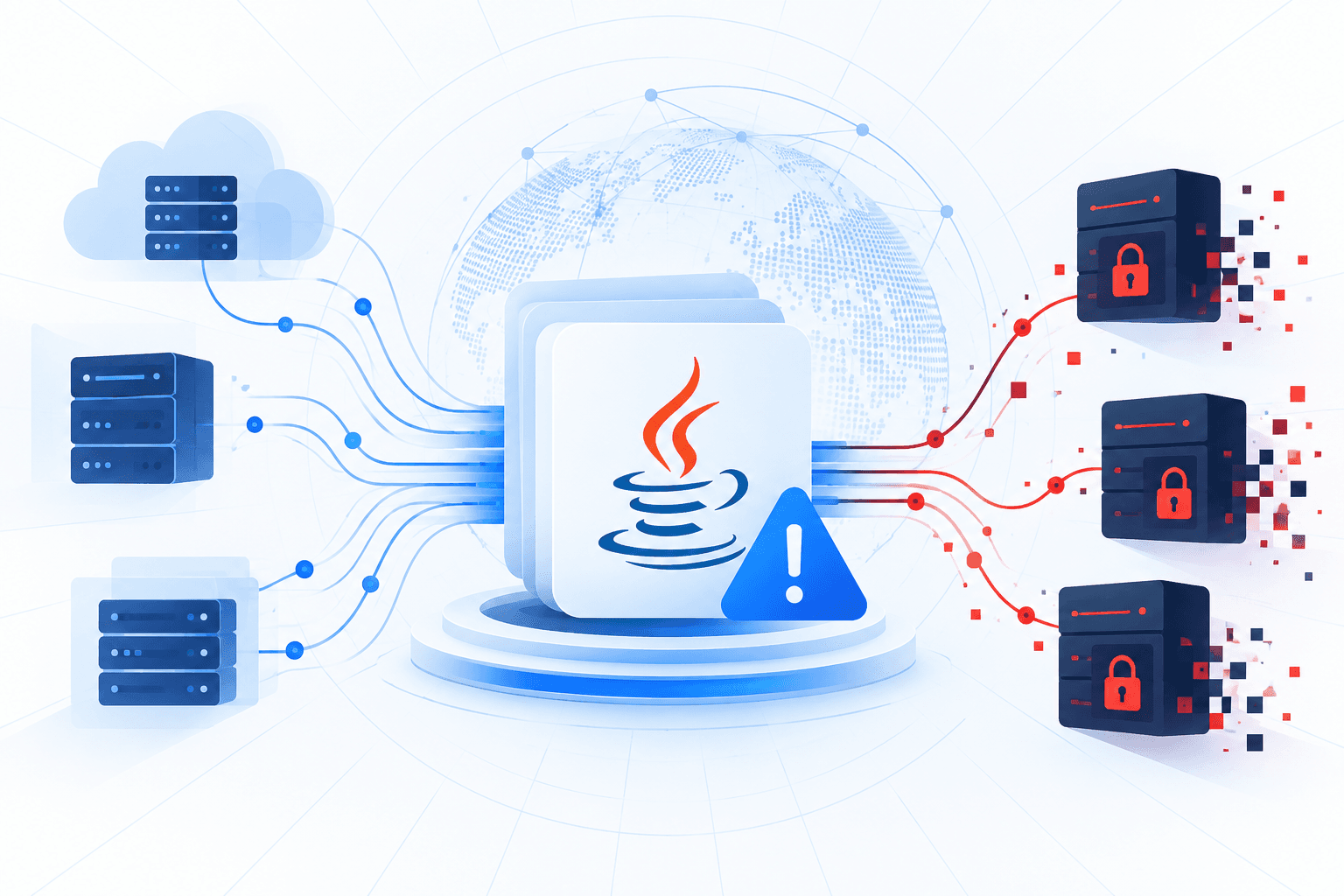
Log4Shell and Follow-On Log4j Flaws Drove Broad Enterprise Exposure
Active Exploitation · 12 sources · Updated 3mo ago · First seen Feb 2, 2023

Apache Log4j remained at the center of a major software supply chain security crisis after Log4Shell (CVE-2021-44228) exposed Java applications to remote code execution through crafted requests that could force vulnerable systems to retrieve and run attacker-controlled payloads. The flaw affected Log4j 2.0-beta9 through 2.14.1, was reported as easy to exploit, and was observed in widespread attacks across enterprise networks, prompting urgent calls to identify exposed assets and apply vendor fixes or mitigations.
Remediation proved more complex as Apache issued updates and additional Log4j vulnerabilities emerged, including CVE-2021-45046, CVE-2021-45105, and CVE-2021-44832, raising concerns that patching alone would not address prior compromise or attacker persistence. Organizations were pushed to combine software updates with threat hunting and incident response, while defenders also relied on community tracking of affected products through resources such as CISA's log4j-affected-db, which has since been archived as read-only.
Why it matters
Impact assessment
Log4Shell and the follow-on Log4j flaws created broad enterprise exposure across any organization running Java applications or third-party products embedding vulnerable Log4j components. Impact ranges from remote code execution and data theft to persistence, lateral movement, ransomware deployment, and service disruption, with exploitation observed widely in the wild rather than limited to targeted victims.
Summary
The exposure is widespread because Log4j was deeply embedded in first-party and third-party software, making asset identification and remediation difficult. Severity is critical: CVE-2021-44228 enabled unauthenticated remote code execution, later flaws complicated remediation, and patching alone did not address prior compromise.
Affected populations and products
- Organizations operating Java applications using Apache Log4j 2.x.
- Enterprises relying on third-party software and supply-chain dependencies that bundled Log4j.
- Cloud-hosted workloads, including AWS-hosted internet-facing applications and internal Java services.
- Industries are not narrowly scoped; the issue affected broad enterprise populations globally.
Severity and business consequences
- Unauthenticated remote code execution can enable full server compromise.
- Follow-on attacker actions may include file access, command execution, database access, credential theft, persistence, cloud discovery, and lateral movement.
- Operational disruption includes emergency patching, service instability from rushed upgrades, and possible denial of service from CVE-2021-45105.
- Financial and reputational impact can result from incident response costs, outages, data exposure, and downstream supply-chain remediation.
Scope and exploitation status
- Exploitation was observed at scale across enterprise networks.
- One cited estimate reported exploit attempts on more than 31.5% of corporate networks globally.
- Reporting states both nation-state actors and criminal actors exploited the vulnerability.
- The long-tail risk remained high because vulnerable components persisted in dependency chains and archived product tracking resources reduced centralized visibility over time.
Structured facts extracted from references
- CVE-2021-44228 affected Log4j versions 2.0-beta9 through 2.14.1.
- Apache released Log4j 2.15.0 to address CVE-2021-44228.
- Additional flaws emerged: CVE-2021-45046, CVE-2021-45105, CVE-2021-44832.
- CISA maintained the log4j-affected-db for vendor/product tracking; the repository was archived and made read-only on 2023-02-02.
- AWS-focused forensic guidance states attackers may have exploited vulnerable systems before organizations completed patching and may have established persistence.