UK and EU Sanction Russian Cyber Network Over Poland Grid Sabotage Attempt
Regulatory & Policy · 13 sources · Updated 4mo ago · First seen Jul 13, 2026
The United Kingdom and European Union imposed their first joint cyber sanctions package against Russian state operators, proxy hackers, and influence actors, formally attributing an attempted attack on Poland’s energy grid to Russia’s FSB Centre 16. Officials said the failed operation could have cut electricity to as many as 500,000 people during winter, and linked the same Russian cyber ecosystem to intrusions targeting water treatment facilities, government networks, defense organizations, and other critical infrastructure across Europe. The EU also publicly identified the FSB’s 16th Centre as controlling several threat groups, including Turla, and cited a failed attack on Poland’s critical infrastructure.
The sanctions cover 24 individuals and entities, including GRU leaders Vyacheslav Stafeyev, Ivan Senin, and Ivan Kasyanenko, as well as IMPULS, which Western officials said helped GRU Unit 29155 recruit hackers and cyber specialists. The package also targets operators tied to Lumma Stealer, which UK authorities said has been used to harvest stolen credentials for espionage and affected at least 2,100 UK victims in six months, and 10 people linked to Rybar LLC, accused of supporting pro-Kremlin disinformation and election interference in Moldova and Armenia. France separately announced additional sanctions, released a technical report on Centre 16 activity, and said it would summon the Russian ambassador over ongoing cyber espionage and sabotage.
Why it matters
Impact assessment
The activity affects European critical infrastructure operators, government networks, defense organizations, judicial and diplomatic entities, and sectors identified by UK and allied authorities as most at risk: energy, communications, defense, financial services, government, and healthcare. The most severe reported risk is disruptive OT impact, including an attempted December 2025 attack on Poland’s energy infrastructure that officials said could have cut electricity to up to 500,000 people during winter; broader impacts include espionage, credential theft, financial loss, and reputational damage.
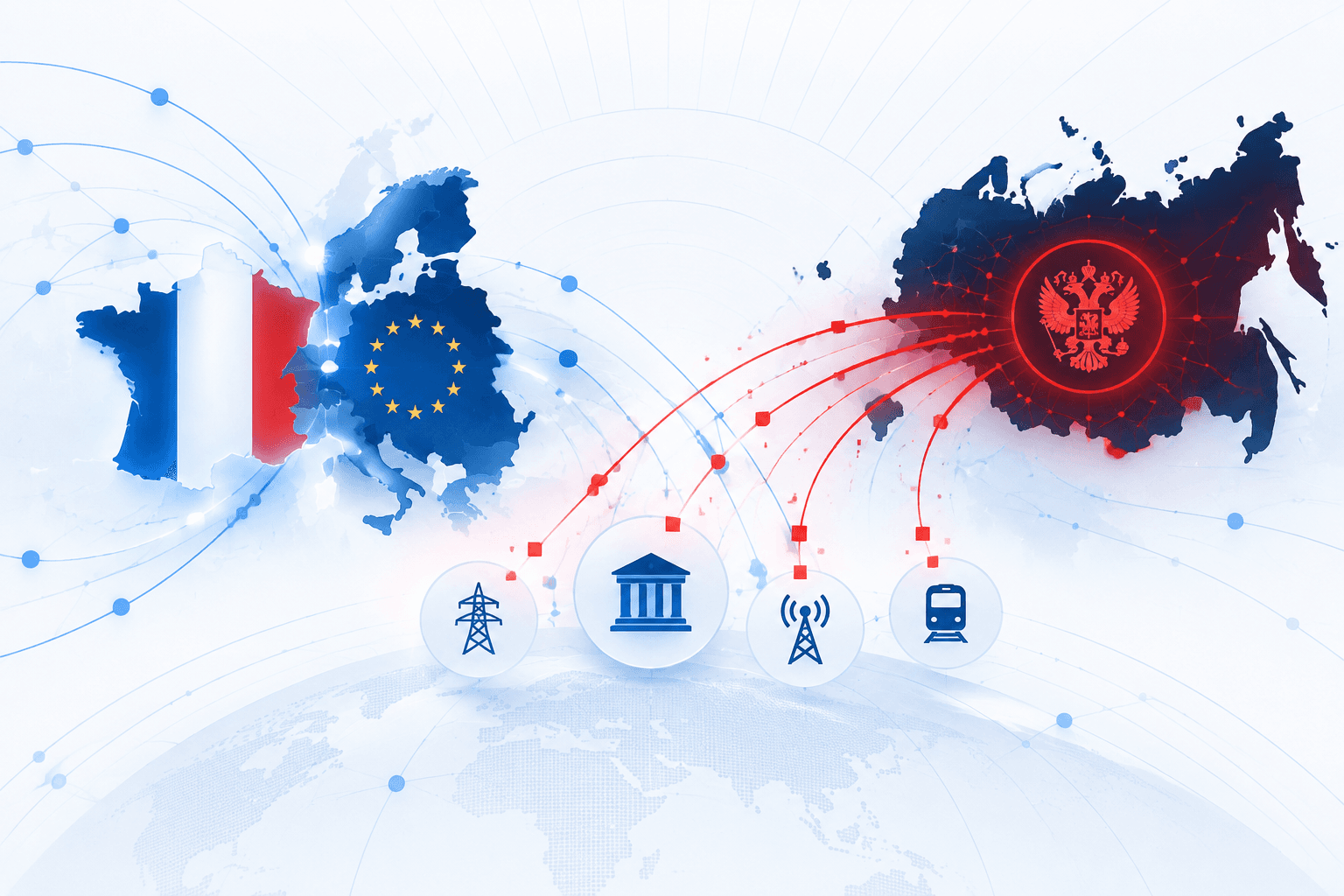
The scope is multinational and sustained, with activity attributed to Russia’s FSB Centre 16/16th Centre dating back to 2010 and affecting France, Germany, Poland, Cyprus, the Netherlands, Austria, Slovakia, Romania, Finland, and Ukraine. Authorities publicly state there were attempted disruptive operations and espionage incidents in the wild, including attacks on Polish combined heat and power plants, water treatment-related targeting, French government and defense-linked entities, and use of Lumma Stealer against at least 2,100 UK victims in six months.
Supporting facts
- Attributed actor: Russia’s FSB Centre 16 / 16th Centre.
- Linked groups/entities: Turla, Unit 61240, IMPULS, Rybar LLC, Lumma Stealer operators.
- Affected countries named: France, Germany, Poland, Cyprus, the Netherlands, Austria, Slovakia, Romania, Finland, Ukraine.
- Affected sectors/entities named across references:
- Energy and power grid operators
- Combined heat and power plants
- Wind and solar farms
- Water treatment facilities
- Government ministries and public sector networks
- Defense industry and defense organizations
- Judicial systems
- Diplomatic entities including the French Embassy in Moscow
- National Centre for Nuclear Research in Poland
- Reported incidents:
- Attempted shutdown/disruption of Poland’s electricity grid in December 2025
- Attempted sabotage against Polish critical infrastructure and water-related targets
- Long-running espionage against French strategic public entities since 2010
- Breach of a secure server used by France’s national judicial system in 2019
- Data theft from a French research institute partnered with the defense industry in 2025
- Lumma Stealer infections affecting at least 2,100 UK victims over six months
- Severity indicators:
- Potential loss of electricity for up to 500,000 people during winter
- Potential interruption to heat supply
- Theft of credentials and sensitive data
- Operational disruption risk to OT/ICS environments