Boss Scam Hijacks WhatsApp Web Sessions for Executive Impersonation Fraud
Social Engineering & Fraud · 2 sources · Updated 5mo ago · First seen Jun 30, 2026

A campaign dubbed Boss Scam is targeting Indian enterprises by hijacking senior executives’ WhatsApp Web sessions and using the real accounts to send fraudulent payment requests. Attackers reportedly lure victims with urgent compliance-themed messages, including notices impersonating regulators such as the Reserve Bank of India, and deliver malicious ZIP archives that executives are tricked into forwarding to finance staff. Indian authorities said the scheme has led to rapid transfers to mule accounts, with some cases involving losses of up to Rs. 2,45,00,000.
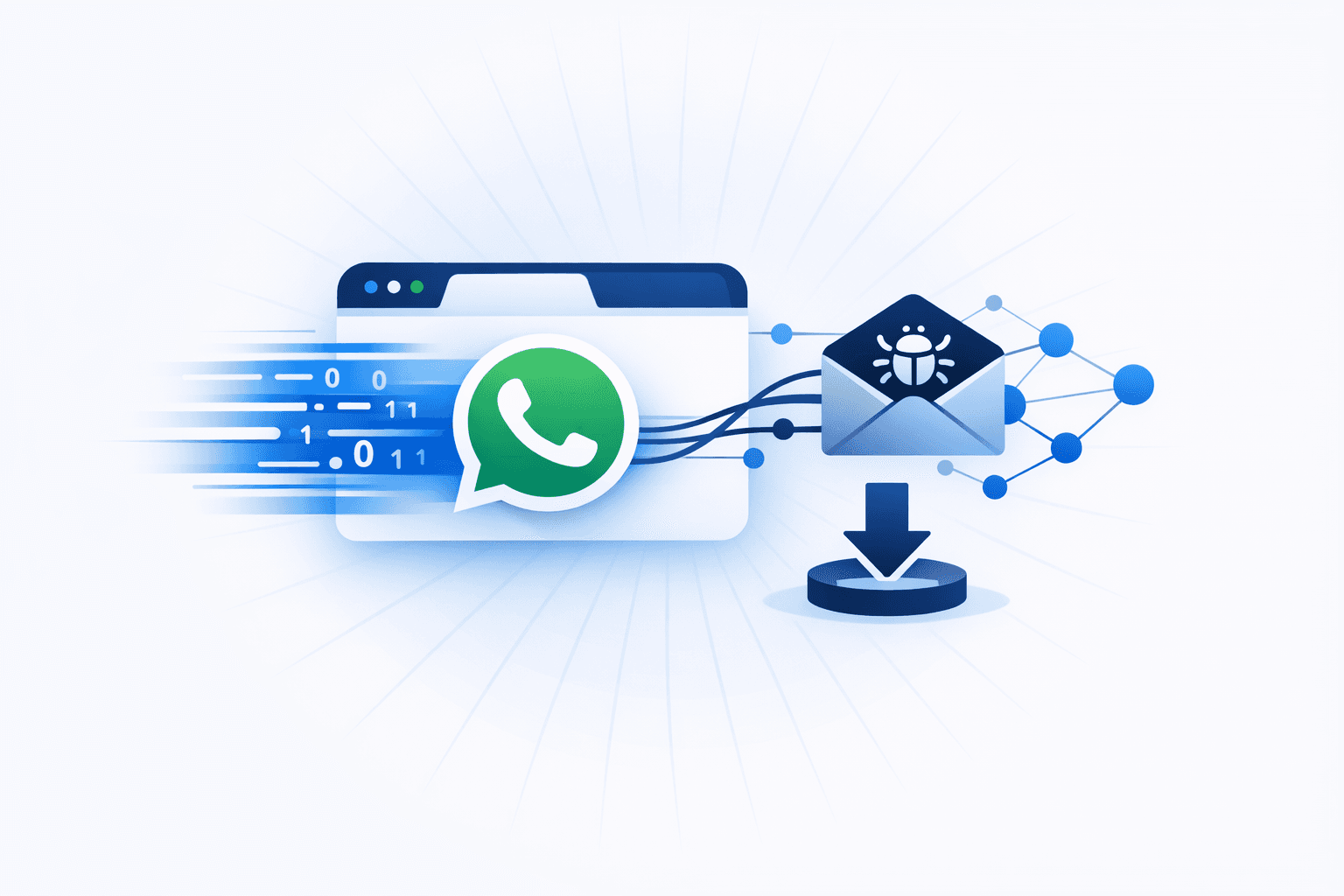
The ZIP files contain a legitimate signed executable paired with a malicious DLL that abuses DLL sideloading on Windows. Once executed, the malware can establish persistence, search Chromium-based browsers for active WhatsApp Web sessions, and steal cookies, authentication tokens, IndexedDB data, saved credentials, and encryption material; some reports say the data is archived with tar.exe and exfiltrated over TCP to clone the victim’s session. The attackers then impersonate executives or trusted employees to request wire transfers, spread additional malicious messages, or steal corporate information, and may fall back to saving an attacker-controlled number under the executive’s name if the hijacked session is cut off.
Why it matters
Summary
This campaign primarily affects Indian enterprises, especially executives, finance teams, and organizations that use WhatsApp for business communications on Windows endpoints with Chromium-based browsers. Impact is high because attackers use real hijacked WhatsApp Web sessions to issue convincing payment instructions, steal sensitive business data, and propagate further compromise; reported losses reached Rs. 2,45,00,000 in individual cases.
Supporting details
Affected populations and sectors
- Indian enterprises are the stated target set.
- Senior executives, CEOs, managers, finance officers, and trusted employees are specifically targeted.
- Finance departments are high-risk because they can rapidly execute wire transfers.
- Organizations using WhatsApp for operational or financial approvals are especially exposed.
- Windows users with active WhatsApp Web sessions in Google Chrome or Microsoft Edge are directly at risk.
Severity and business impact
- Fraudulent transfers can be executed within minutes to mule accounts.
- Reported financial losses reached up to Rs. 2,45,00,000.
- Attackers gain read/send access to active WhatsApp conversations through session hijacking.
- Compromised accounts can be used to request payments, obtain confidential business documents, banking information, customer records, and employee records.
- Secondary impacts include reputational damage, internal trust erosion, and potential follow-on malware delivery.
Scope and exposure
- The campaign appears targeted rather than indiscriminate, with social engineering tailored to executives and finance workflows.
- Exposure may be broader inside affected organizations because malicious messages originate from trusted internal contacts.
- The technique does not require compromise of the victim's mobile phone or bypass of mobile MFA, increasing practical exposure where WhatsApp Web is in use.
Known exploitation
- Indian authorities issued an advisory through the Indian Cyber Crime Coordination Centre.
- The reporting cites documented real-world fraud cases and active use of the technique in the wild.