OpenAI Restricts GPT-5.6 Sol Preview Amid Cybersecurity Misuse Concerns
Emerging Technology Risk · 7 sources · Updated 5mo ago · First seen Jun 29, 2026

OpenAI has launched a limited preview of its GPT-5.6 model family—Sol, Terra, and Luna—with access initially restricted to a small group of trusted partners through the API and Codex. The company described Sol as its most advanced cybersecurity-focused model and said the rollout follows consultations with the U.S. government while broader national-security risk assessment frameworks for cyber-capable AI are developed. OpenAI said wider availability across ChatGPT, Codex, and API offerings is planned in the coming weeks.
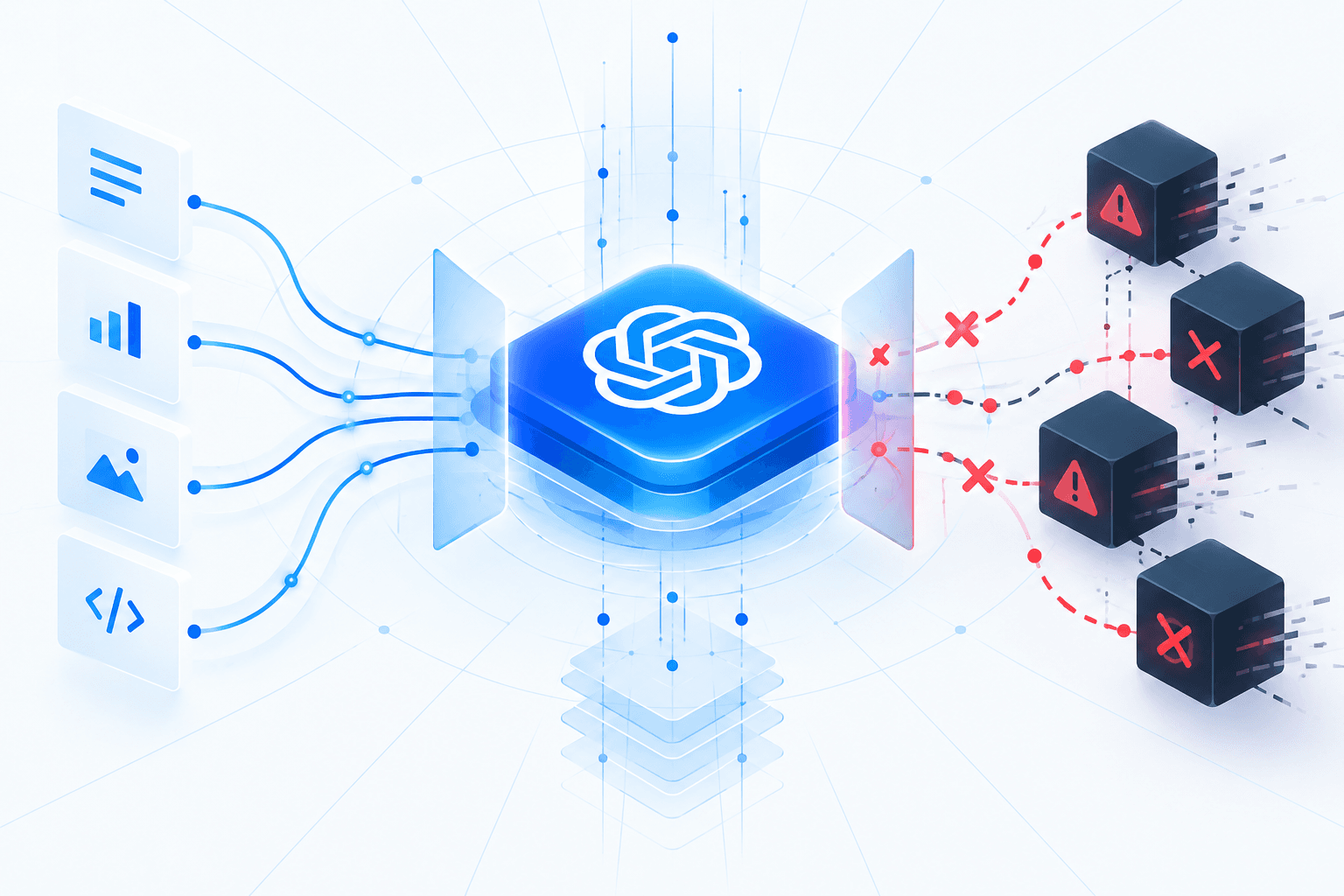
OpenAI said GPT-5.6 Sol improves vulnerability discovery, patch development, and exploit-related research, and internal as well as third-party testing indicated it can identify security flaws, generate credible memory-safety leads, and in some cases uncover previously unknown vulnerabilities. At the same time, the company said the model is not yet capable of reliably carrying out autonomous end-to-end attacks against hardened targets, and it has added layered safeguards including refusal training, output screening, real-time classifiers, secondary review models, account-level evaluations, misuse monitoring, and large-scale automated red-teaming to limit abuse of sensitive cyber capabilities.
Why it matters
Impact assessment
OpenAI's GPT-5.6 Sol preview is a cyber-capable AI release management story, not a newly disclosed software compromise or vulnerability affecting enterprise environments. The immediate impact falls on organizations planning to use OpenAI API, Codex, or future ChatGPT access for defensive security workflows, software engineering, and vulnerability research, with operational effects limited to delayed adoption and planning uncertainty rather than direct data loss or service disruption.
Summary
The affected population is primarily enterprises, developers, and security teams intending to consume OpenAI's new model family, especially GPT-5.6 Sol for vulnerability discovery and patch development. Severity is moderate from an operational planning perspective but low from an immediate cyber-risk perspective because no breach, exploit campaign, or vulnerable product exposure is described. Scope is broad across prospective OpenAI customers, but there are no reported incidents of exploitation in the wild tied to GPT-5.6 itself.
Supporting details
- Affected entities:
- OpenAI customers and prospective users of API, Codex, and later ChatGPT access
- Security teams using AI for vulnerability discovery, patch generation, debugging, and defensive testing
- Developers and enterprise IT teams planning application updates around GPT-5.6 APIs
- Business impact described:
- Delayed access to GPT-5.6 Sol, Terra, and Luna due to restricted preview
- Planning uncertainty for workflow automation, internal security optimization, and prototyping
- Potential slowdown in defensive cybersecurity adoption if pre-clearance becomes persistent
- Severity and scope:
- No direct evidence of compromise, ransomware, destructive activity, or customer data exposure
- Broad relevance to AI-consuming enterprises, but not an exposure event requiring incident response
- Restrictions are temporary according to OpenAI, with broader rollout planned in coming weeks
- Exploitation status:
- No in-the-wild exploitation, malicious campaign, or abuse infrastructure was published
- OpenAI states the model is not yet capable of reliable autonomous end-to-end attacks against hardened targets