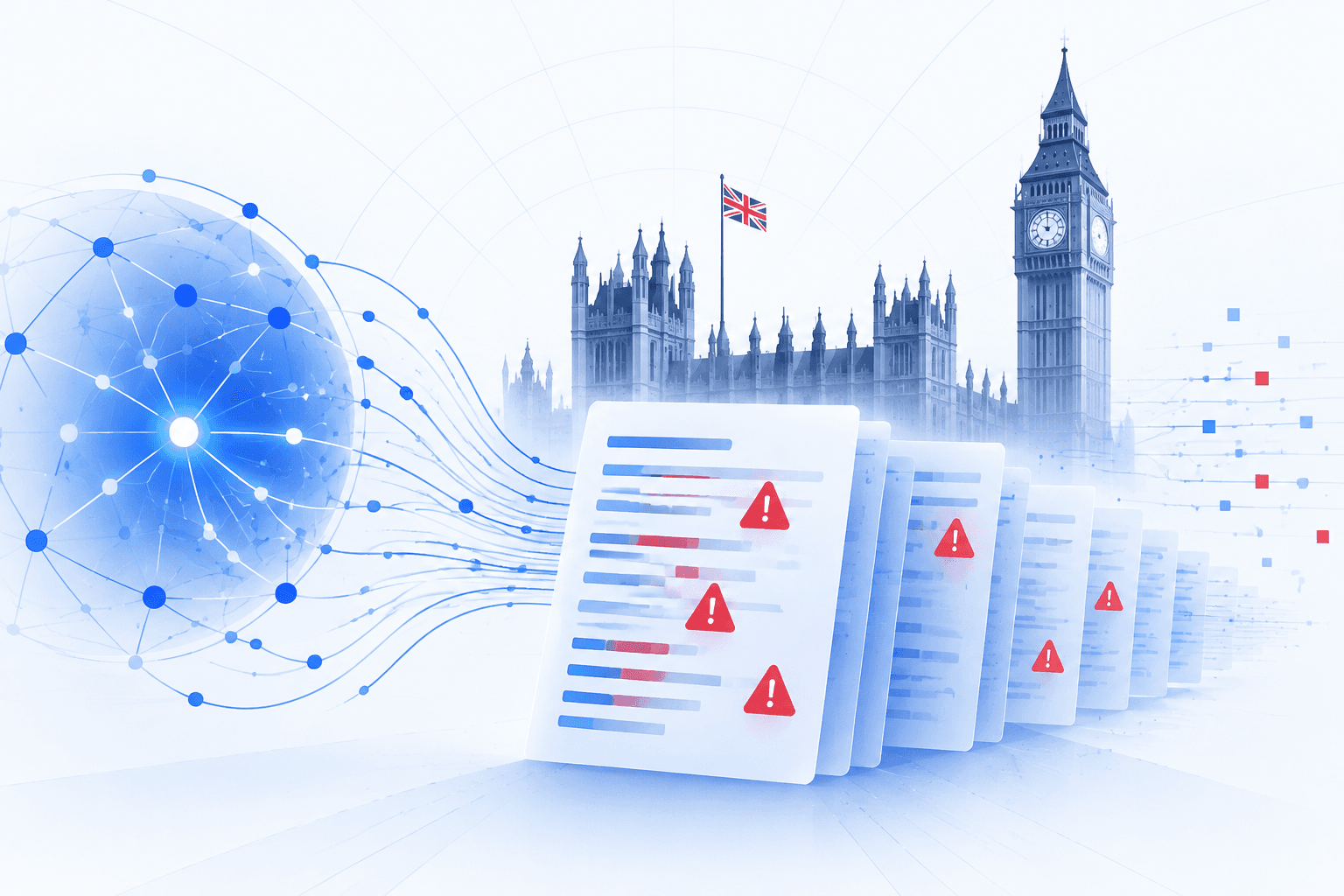
UK Government AI Hackathons Uncover 407 Vulnerabilities in Public Code Repositories
Emerging Technology Risk · 2 sources · Updated 4mo ago · First seen Jun 12, 2026

The UK Government Cyber Coordination Centre, working with the UK AI Security Institute and the National Cyber Security Centre, used frontier AI models in a month-long series of in-person hackathons to test public government code repositories across nine organisations. The exercise uncovered 407 findings, including authentication bypass, data exposure, and remote code execution flaws; some were previously unknown zero-days, while others had already been identified and were protected by compensating controls. Officials said all critical and high-risk exploitable weaknesses were remediated and found no evidence that the vulnerabilities had been abused.
The pilot evaluated several workflows, including multi-stage agentic pipelines, deterministic scanners enhanced with AI triage, and reusable domain-specific Claude Skills, with humans kept in the loop for validation and escalation. One notable critical issue involved legacy GitHub Actions workflows that allowed an external user to trigger arbitrary code execution on a runner through a crafted comment on an open pull request. The government said the project used about £13,000 in model tokens and concluded that structured architecture, triage, and human oversight mattered more than the specific model, with a second phase planned to expand testing to more departments, more models, and closed-source environments.
Why it matters
Impact assessment
The immediate affected population was nine UK government organisations with public code repositories, particularly teams operating CI/CD workflows and GitHub Actions. The reported impact included critical authentication bypass, data exposure, and remote code execution weaknesses, but the UK government states all critical and high-risk exploitable issues were remediated and no exploitation was observed.
This appears to be a broad internal exposure-discovery exercise rather than an active threat campaign. Business risk was potentially severe because the highlighted GitHub Actions flaw could have enabled runner-level code execution, secret theft, and downstream repository compromise, but current reporting indicates the exposure was contained and remediated before known abuse.
Supporting facts
- Entities involved: Government Cyber Coordination Centre (GC3), UK AI Security Institute, National Cyber Security Centre (NCSC), Department for Science, Innovation and Technology (DSIT).
- Scope: 407 findings across public repositories in nine UK government organisations.
- Vulnerability categories reported: authentication bypass, data exposure, remote code execution.
- Exposure type: mixture of previously unknown issues and already-known findings protected by compensating controls.
- Known exploitation: none reported; the government stated there was no evidence of exploitation.
- Severity implication: the notable GitHub Actions issue could have enabled arbitrary code execution on a runner and access to workflow secrets and tokens.
- Potential downstream impact from the GitHub Actions issue: repository manipulation, approval of workflow activity, alteration of trusted contributor status, and access to additional secrets.