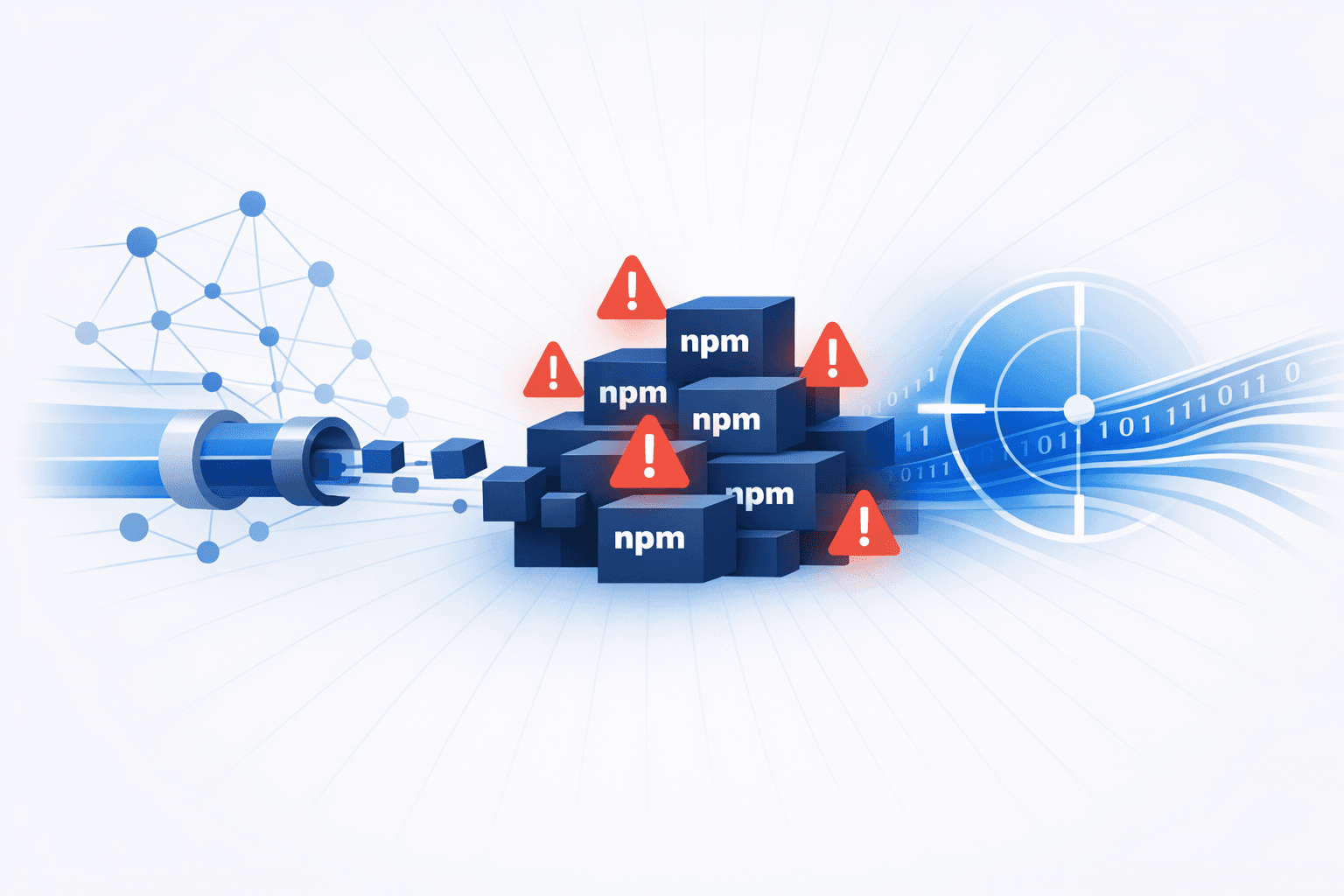
Malicious npm Packages Spread Through `binding.gyp` Across Popular JavaScript Libraries
Supply Chain Risk · 3 sources · Updated 5mo ago · First seen Jun 4, 2026

Security researchers reported a renewed npm supply-chain campaign affecting a wide range of JavaScript and TypeScript packages, with malicious versions published across families including autotel, awaitly, executable-stories, node-env-resolver, AI SDK components, telemetry libraries, and ESLint-related tooling. StepSecurity described the activity as a binding.gyp-based attack that spreads "like a worm," while OX Security linked the activity to the returning Miasma campaign and said the affected packages collectively account for roughly 647,000 monthly downloads.
The published notices focus on package exposure rather than a CVE-style vulnerability disclosure, listing compromised package names and exact version numbers as the primary indicators of risk. Across both reports, the incident is characterized as a software supply-chain compromise in the npm ecosystem, with no confirmed threat actor attribution, malware family details beyond the Miasma label, or technical exploit chain disclosed in the available summaries.
Why it matters
Impact assessment
This is a broad npm software supply-chain compromise affecting JavaScript and TypeScript development ecosystems, including AI SDKs, telemetry libraries, ESLint plugins, test tooling, and environment resolver packages. Organizations that build, test, or deploy software with any of the listed package versions are exposed to malicious code execution in developer workstations, CI/CD pipelines, and potentially production build systems.
The impact is potentially severe because compromised npm dependencies can lead to credential theft, source code exposure, build pipeline compromise, and downstream software tampering. The campaign appears widespread rather than narrowly targeted, with OX Security reporting roughly 647,000 monthly downloads across affected packages; the reporting describes active malicious package publication but does not confirm specific victim intrusions or post-compromise outcomes.
Affected entities and exposure
- Ecosystem: npm / JavaScript / TypeScript supply chain
- Affected user populations: developers, DevOps teams, CI/CD operators, software vendors, SaaS providers
- High-risk environments: build servers, GitHub Actions runners, package mirrors, developer laptops, release engineering systems
- Package families called out across references:
- autotel
- awaitly
- executable-stories
- node-env-resolver
- ESLint-related plugins
- AI SDK components
Severity and scope
- Exposure type: malicious package publication, not a conventional CVE-tracked product flaw
- Scope: broad ecosystem exposure across many package families and versions
- Reported scale: approximately 647,000 monthly downloads across affected packages
- Exploitation status: malicious versions were published to npm; no confirmed victim incident details were provided in the source summaries
Structured facts extracted from references
- OX Security linked the activity to the returning Miasma campaign.
- StepSecurity described the activity as a binding.gyp-based attack that spreads "like a worm."
- No CVE identifier, CVSS score, or vendor severity rating was provided in the cited notices.
- Affected standalone packages include:
- @evolvconsulting/evolv-coder-lite 1.2.0
- @jagreehal/workflow 1.16.1
- @vapi-ai/server-sdk 0.11.1, 0.11.2, 1.2.1, 1.2.2
- ai-sdk-ollama 0.13.1, 1.1.1, 2.2.1, 3.8.5
- effect-analyzer 0.3.1
- http-uploader-dev 1.0.7
- mountly 0.2.2
- mountly-tailwind 0.1.3
- wrangler-deploy 1.5.5