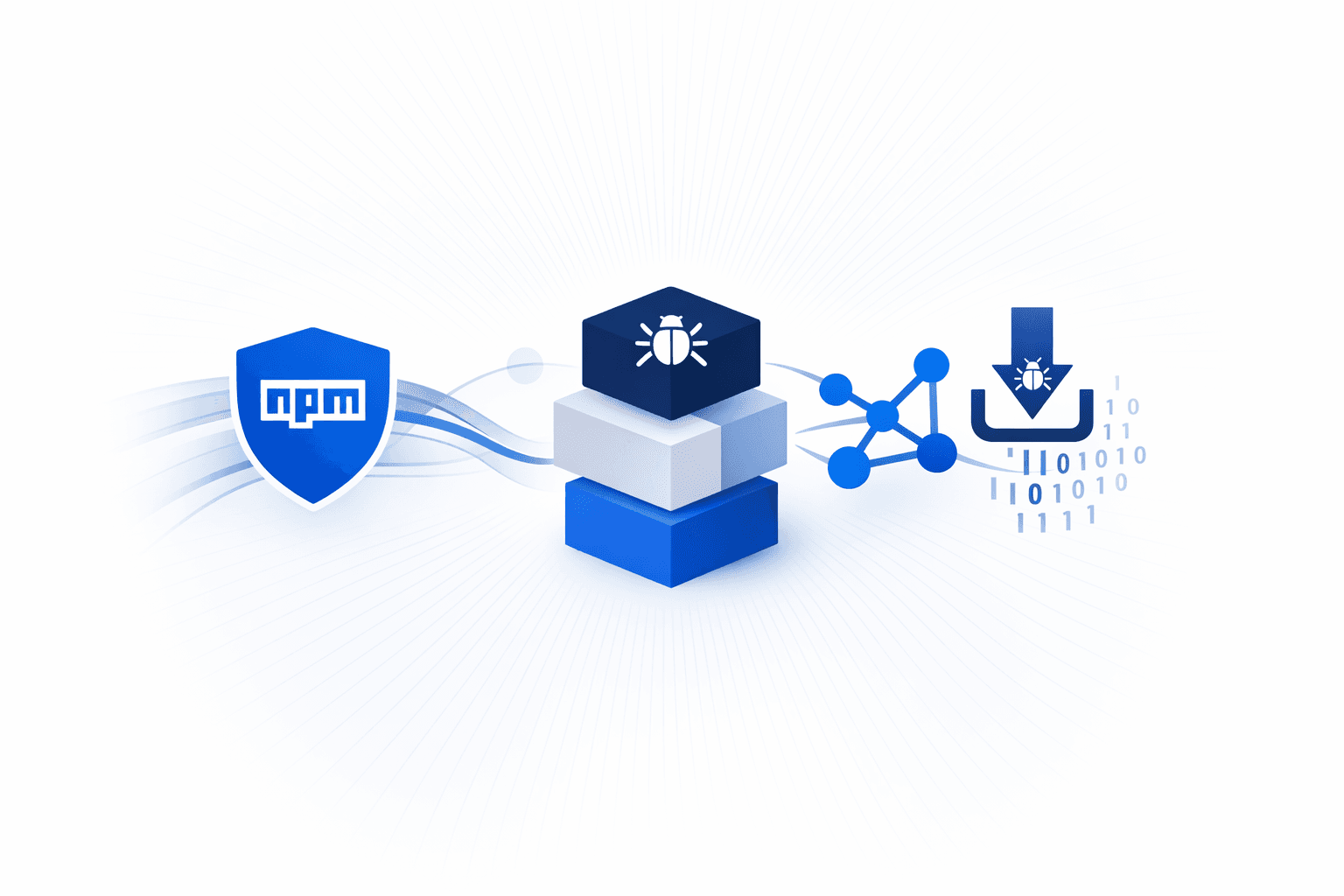
Compromised Axios npm Releases Delivered Cross-Platform RAT via Malicious Dependency
Supply Chain Risk · 102 sources · Updated 4mo ago · First seen Mar 31, 2026

Attackers hijacked the npm account of Axios maintainer Jason Saayman and published malicious axios@1.14.1 and axios@0.30.4, bypassing the project’s normal GitHub Actions OIDC publishing flow and adding the staged dependency plain-crypto-js@4.2.1. That package’s postinstall logic fetched platform-specific payloads from sfrclak[.]com:8000, deploying a remote access trojan on Windows, macOS, and Linux while deleting installer artifacts and restoring benign-looking package metadata to hinder detection. The poisoned releases were available for roughly three hours before removal, but Axios’s massive downstream use meant developer workstations, CI/CD pipelines, ephemeral builds, and transitive dependencies could all have resolved the malicious versions during the exposure window.
Researchers and vendors including Socket, StepSecurity, Elastic, Huntress, Microsoft, Google Threat Intelligence Group, and others said affected systems should be treated as fully compromised because the malware enabled reconnaissance, command execution, persistence on Windows, payload retrieval, and likely credential theft. Multiple reports tied the operation to a North Korea-linked actor—most prominently UNC1069, with other vendors using names such as Sapphire Sleet and STARDUST CHOLLIMA—while Axios later confirmed the maintainer had been compromised through a targeted social-engineering campaign involving fake corporate outreach and a bogus meeting workflow. Organizations were urged to roll back to safe versions such as 1.14.0 or 0.30.3, remove plain-crypto-js, rebuild impacted hosts, rotate all accessible secrets, review lockfiles and CI logs, and block traffic to the identified command-and-control infrastructure.
Why it matters
Impact assessment
A widely used npm dependency, Axios, was compromised through maintainer account takeover and malicious publishes of axios@1.14.1 and axios@0.30.4. The impact is severe because installation of those versions could deploy a cross-platform RAT on developer workstations, CI/CD runners, ephemeral build systems, and downstream applications, exposing source code, secrets, signing material, and cloud credentials.
The exposure window was short, roughly three hours on March 31, 2026, but scope was broad due to Axios’s massive direct and transitive adoption. Exploitation in the wild is confirmed: Huntress observed at least 135 endpoints contacting attacker infrastructure, StepSecurity observed anomalous C2 contact across thousands of projects, and OpenAI disclosed impact to a macOS signing workflow.
Affected populations
- Organizations using Axios directly or transitively in JavaScript, Node.js, CI/CD, build, CLI, and cloud development workflows
- Developer endpoints on Windows, macOS, and Linux
- CI/CD runners, ephemeral build agents, package install pipelines, and npx/global install workflows
- Industries explicitly reported as affected include government, finance, healthcare, manufacturing, retail, technology, business services, insurance, media, higher education, and professional services
Severity and business risk
- Full host compromise risk on systems that installed the malicious versions
- Credential theft risk for npm tokens, GitHub tokens, SSH keys, cloud keys, CI/CD secrets, .env values, browser sessions, and signing material
- Potential downstream impacts include source code theft, SaaS compromise, lateral movement, extortion, ransomware enablement, and cryptocurrency theft
- Reputational and operational risk is high for software producers because compromised build systems can taint releases and trust chains
Scope and observed incidents
- Malicious versions: axios@1.14.1 and axios@0.30.4
- Exposure window: approximately 00:21 UTC to 03:15 UTC on 2026-03-31
- Axios adoption cited across reporting: roughly 80M-100M weekly downloads and extensive transitive use
- Huntress observed at least 135 endpoints contacting C2
- Wiz observed execution in about 3% of affected environments
- OpenAI reported a GitHub Actions workflow executed the malicious package and rotated macOS signing certificates as a precaution
Threat actor attribution
- Strong multi-vendor attribution to DPRK-linked activity
- Names used across reporting: UNC1069, Sapphire Sleet, STARDUST CHOLLIMA, BlueNoroff, TA444
- Attribution confidence varies by vendor, but malware, infrastructure, and tradecraft overlaps consistently point to North Korea-linked operators